


























0
Views
0
Downloads

0.0
0
0 Likes
Part-Part-Whole Math Practice
0 Views
0 Downloads
Paste this activity's link or code into your existing LMS (Google Classroom, Canvas, Teams, Schoology, Moodle, etc.).
Students can open and work on the activity right away, with no student login required.
You'll still be able to track student progress and results from your teacher account.
Information
Description
What It Is:
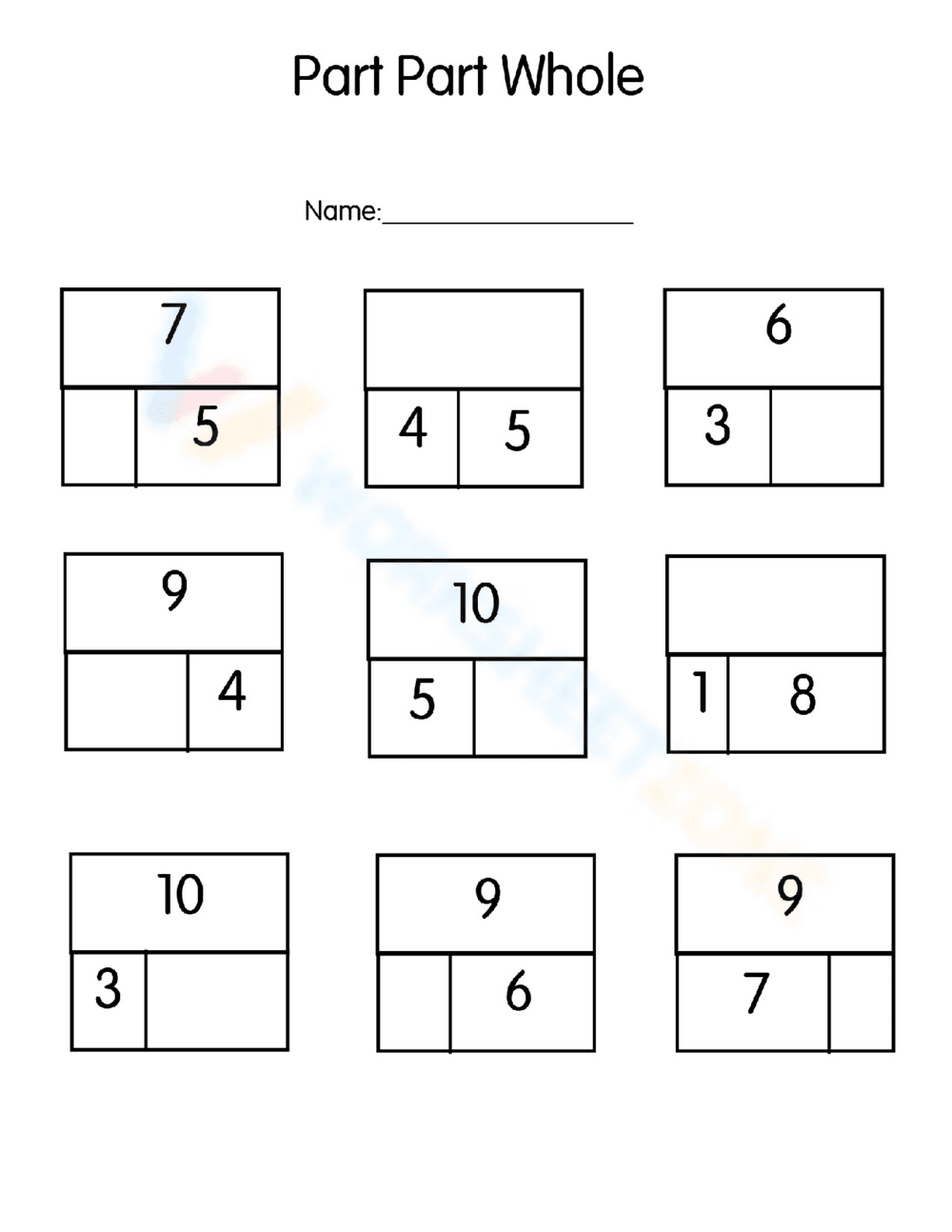
This is a math worksheet titled 'Part Part Whole.' It features a series of boxes divided into a larger top section and two smaller bottom sections. Some boxes are already filled with numbers, representing either the 'whole' at the top or 'parts' in the bottom sections. The worksheet requires the student to fill in the missing number, either the whole or a missing part. For example, one box shows 7 at the top and 5 in one bottom section, requiring the student to determine the missing part. Another shows 4 and 5 as parts, needing the student to calculate the whole.
Grade Level Suitability:
This worksheet is suitable for Kindergarten and 1st grade. It focuses on basic addition and subtraction concepts within 10, which are foundational skills taught in these early grades. The visual representation of 'part-part-whole' makes it easy for young learners to grasp the relationship between numbers.
Why Use It:
This worksheet helps children understand the relationship between parts and wholes, reinforcing addition and subtraction skills. It promotes number sense, problem-solving abilities, and the ability to visualize mathematical concepts. It provides a hands-on approach to learning basic arithmetic.
How to Use It:
Students should examine each box individually. If the 'whole' number at the top is missing, they should add the two 'parts' at the bottom. If one of the 'parts' is missing, they should subtract the known 'part' from the 'whole' to find the missing number. Students can write their answers in the empty boxes.
Target Users:
This worksheet is ideal for kindergarten and first-grade students learning about addition and subtraction. It's also beneficial for students who need extra practice with number sense and understanding the part-part-whole concept. It can be used in the classroom or at home for supplemental learning.
This is a math worksheet titled 'Part Part Whole.' It features a series of boxes divided into a larger top section and two smaller bottom sections. Some boxes are already filled with numbers, representing either the 'whole' at the top or 'parts' in the bottom sections. The worksheet requires the student to fill in the missing number, either the whole or a missing part. For example, one box shows 7 at the top and 5 in one bottom section, requiring the student to determine the missing part. Another shows 4 and 5 as parts, needing the student to calculate the whole.
Grade Level Suitability:
This worksheet is suitable for Kindergarten and 1st grade. It focuses on basic addition and subtraction concepts within 10, which are foundational skills taught in these early grades. The visual representation of 'part-part-whole' makes it easy for young learners to grasp the relationship between numbers.
Why Use It:
This worksheet helps children understand the relationship between parts and wholes, reinforcing addition and subtraction skills. It promotes number sense, problem-solving abilities, and the ability to visualize mathematical concepts. It provides a hands-on approach to learning basic arithmetic.
How to Use It:
Students should examine each box individually. If the 'whole' number at the top is missing, they should add the two 'parts' at the bottom. If one of the 'parts' is missing, they should subtract the known 'part' from the 'whole' to find the missing number. Students can write their answers in the empty boxes.
Target Users:
This worksheet is ideal for kindergarten and first-grade students learning about addition and subtraction. It's also beneficial for students who need extra practice with number sense and understanding the part-part-whole concept. It can be used in the classroom or at home for supplemental learning.


