


























1 / 2
0
Views
0
Downloads

0.0
0
0 Likes
Passive, Aggressive & Assertive Communication
0 Views
0 Downloads
Paste this activity's link or code into your existing LMS (Google Classroom, Canvas, Teams, Schoology, Moodle, etc.).
Students can open and work on the activity right away, with no student login required.
You'll still be able to track student progress and results from your teacher account.
Information
Description
What It Is:
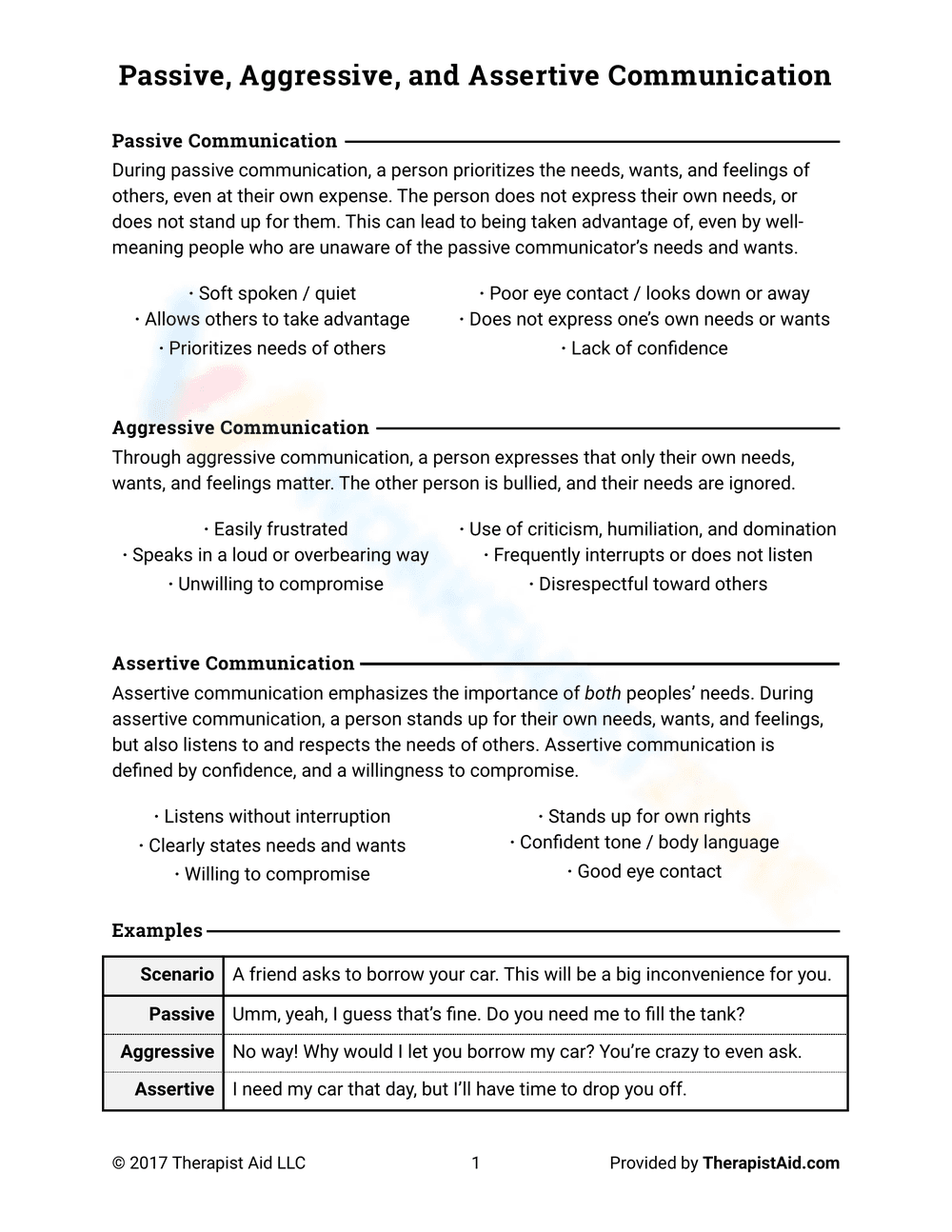
This is an educational worksheet that explains the differences between passive, aggressive, and assertive communication styles. It defines each style with a brief description and bullet points highlighting key characteristics. It provides an example scenario (a friend asking to borrow a car) and demonstrates how each communication style would respond.
Grade Level Suitability:
This worksheet is suitable for grades 7-12 and adult learners. The concepts require a certain level of maturity and understanding of social dynamics. The vocabulary is also geared towards older students and adults.
Why Use It:
This worksheet helps individuals learn to identify different communication styles and understand their impact. It promotes self-awareness and helps develop more effective communication skills. It can improve interpersonal relationships and conflict resolution abilities.
How to Use It:
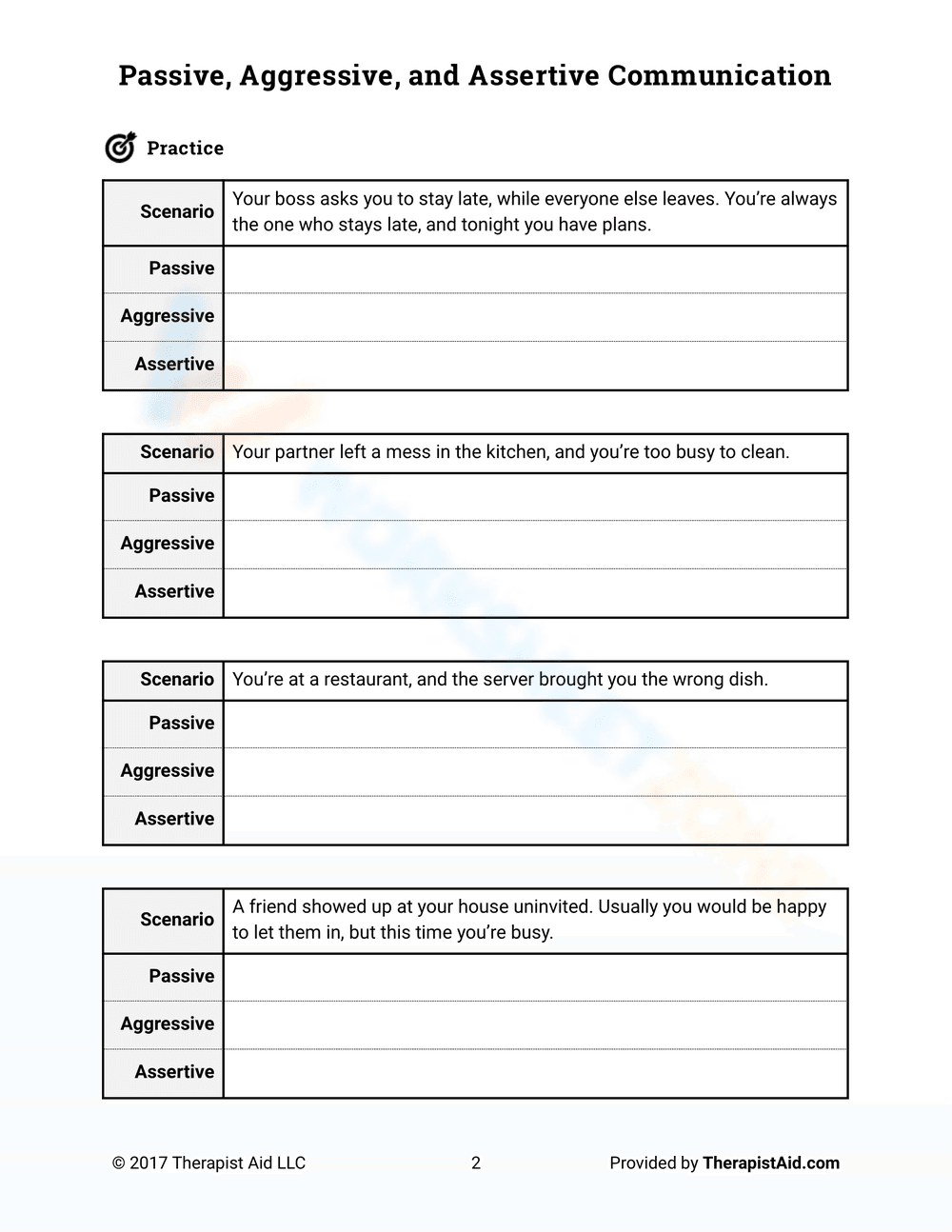
Read the definitions of passive, aggressive, and assertive communication. Review the bullet points for each style. Analyze the example scenario and the responses for each style. Reflect on your own communication style and identify areas for improvement. It can be used individually or in a group setting for discussion and role-playing.
Target Users:
This worksheet is beneficial for students, adults, therapists, counselors, and anyone looking to improve their communication skills and build healthier relationships. It is also useful for social skills training and conflict resolution workshops.
This is an educational worksheet that explains the differences between passive, aggressive, and assertive communication styles. It defines each style with a brief description and bullet points highlighting key characteristics. It provides an example scenario (a friend asking to borrow a car) and demonstrates how each communication style would respond.
Grade Level Suitability:
This worksheet is suitable for grades 7-12 and adult learners. The concepts require a certain level of maturity and understanding of social dynamics. The vocabulary is also geared towards older students and adults.
Why Use It:
This worksheet helps individuals learn to identify different communication styles and understand their impact. It promotes self-awareness and helps develop more effective communication skills. It can improve interpersonal relationships and conflict resolution abilities.
How to Use It:
Read the definitions of passive, aggressive, and assertive communication. Review the bullet points for each style. Analyze the example scenario and the responses for each style. Reflect on your own communication style and identify areas for improvement. It can be used individually or in a group setting for discussion and role-playing.
Target Users:
This worksheet is beneficial for students, adults, therapists, counselors, and anyone looking to improve their communication skills and build healthier relationships. It is also useful for social skills training and conflict resolution workshops.


