


























1 / 2
0
Views
0
Downloads

0.0
0
0 Likes
Introduction to Phase Diagrams
0 Views
0 Downloads
Paste this activity's link or code into your existing LMS (Google Classroom, Canvas, Teams, Schoology, Moodle, etc.).
Students can open and work on the activity right away, with no student login required.
You'll still be able to track student progress and results from your teacher account.
Information
Description
What It Is:
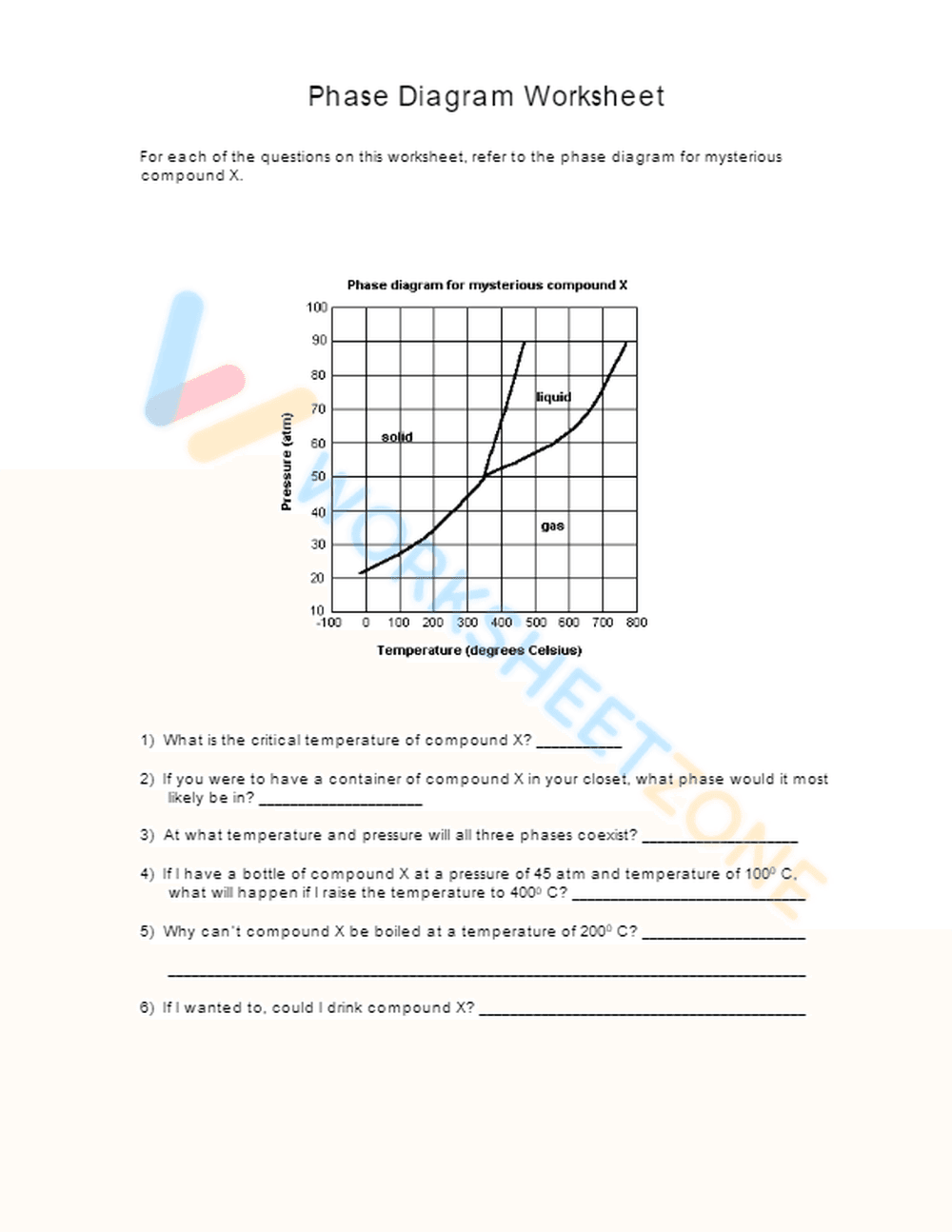
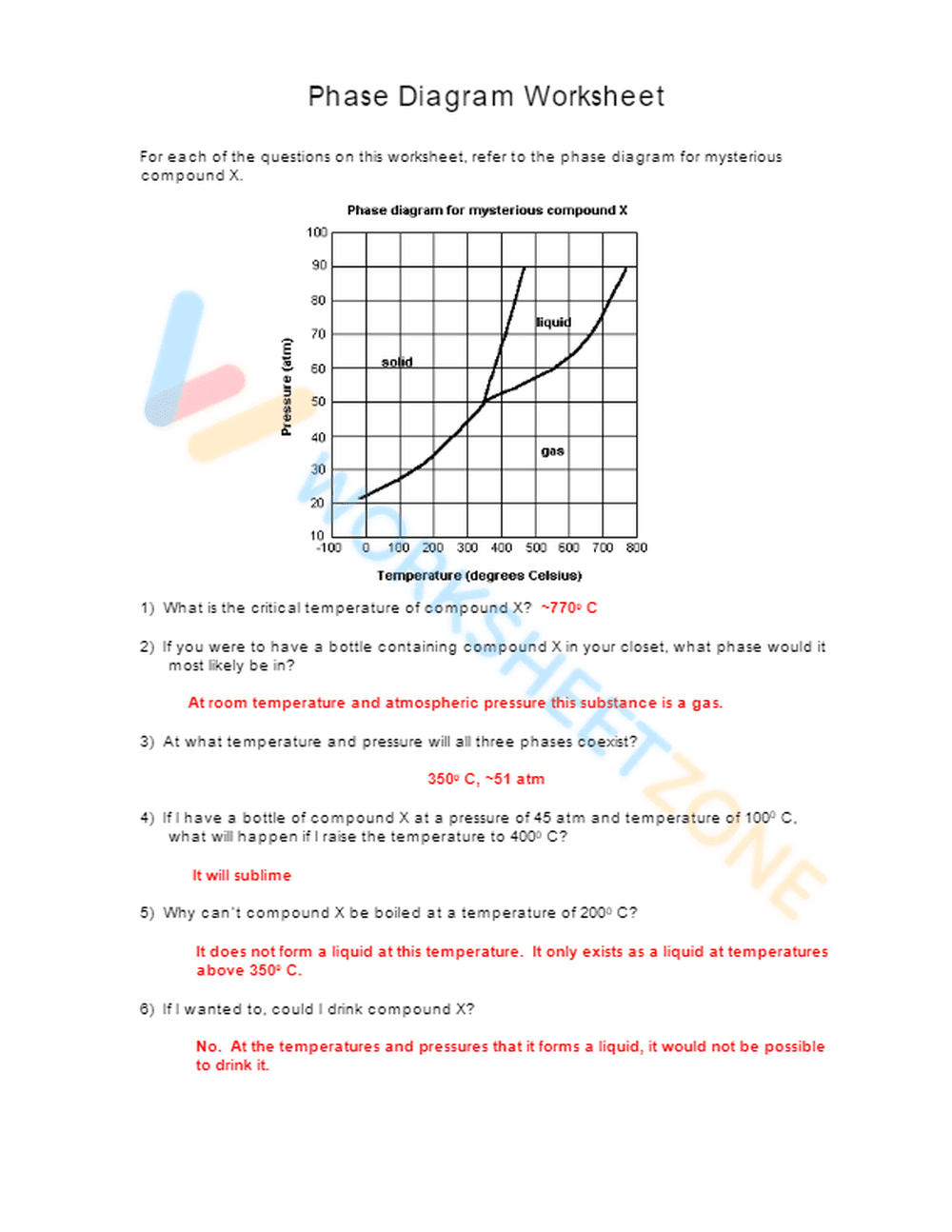
This is a 'Phase Diagram Worksheet' featuring a phase diagram for a mysterious compound X, plotting pressure (in MPa) against temperature (in degrees Celsius). The diagram shows the regions where the compound exists as a solid, liquid, or gas. Below the diagram are six questions that require students to interpret the phase diagram to determine properties such as critical temperature, phases at certain conditions, and boiling points. One question has a humorous tone.
Grade Level Suitability:
This worksheet is suitable for high school (Grades 9-12) or introductory college-level chemistry or physics courses. It requires understanding of phase diagrams, pressure, temperature, and the states of matter.
Why Use It:
This worksheet helps students develop skills in reading and interpreting phase diagrams. It reinforces their understanding of the relationship between pressure, temperature, and the physical state of a substance. It also encourages critical thinking and problem-solving skills by applying the information from the diagram to answer specific questions.
How to Use It:
Students should first carefully examine the phase diagram provided. They should then use the diagram to answer each of the six questions, paying close attention to the units of pressure and temperature. Students can draw lines on the diagram to help them determine the phase at specific conditions.
Target Users:
This worksheet is ideal for high school and college students studying chemistry or physics. It can be used as a classroom activity, homework assignment, or as a review tool for exams. Teachers can use it to assess students' understanding of phase diagrams and phase transitions.
This is a 'Phase Diagram Worksheet' featuring a phase diagram for a mysterious compound X, plotting pressure (in MPa) against temperature (in degrees Celsius). The diagram shows the regions where the compound exists as a solid, liquid, or gas. Below the diagram are six questions that require students to interpret the phase diagram to determine properties such as critical temperature, phases at certain conditions, and boiling points. One question has a humorous tone.
Grade Level Suitability:
This worksheet is suitable for high school (Grades 9-12) or introductory college-level chemistry or physics courses. It requires understanding of phase diagrams, pressure, temperature, and the states of matter.
Why Use It:
This worksheet helps students develop skills in reading and interpreting phase diagrams. It reinforces their understanding of the relationship between pressure, temperature, and the physical state of a substance. It also encourages critical thinking and problem-solving skills by applying the information from the diagram to answer specific questions.
How to Use It:
Students should first carefully examine the phase diagram provided. They should then use the diagram to answer each of the six questions, paying close attention to the units of pressure and temperature. Students can draw lines on the diagram to help them determine the phase at specific conditions.
Target Users:
This worksheet is ideal for high school and college students studying chemistry or physics. It can be used as a classroom activity, homework assignment, or as a review tool for exams. Teachers can use it to assess students' understanding of phase diagrams and phase transitions.


