


























1 / 2
0
Views
0
Downloads

0.0
0
0 Likes
Learn About Photosynthesis
0 Views
0 Downloads
Paste this activity's link or code into your existing LMS (Google Classroom, Canvas, Teams, Schoology, Moodle, etc.).
Students can open and work on the activity right away, with no student login required.
You'll still be able to track student progress and results from your teacher account.
Information
Description
What It Is:
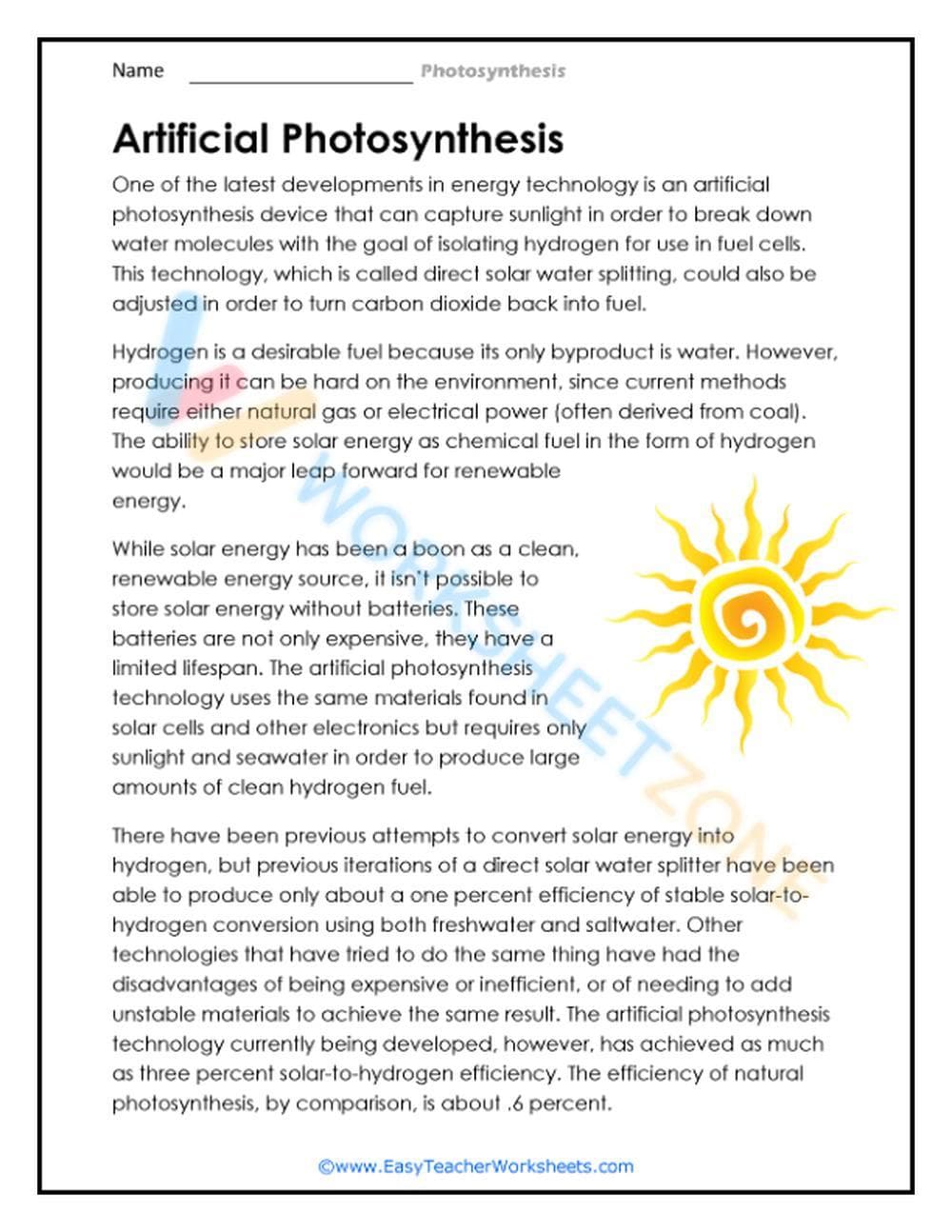
This is a reading comprehension worksheet about Artificial Photosynthesis. It presents a text explaining how artificial photosynthesis devices capture sunlight to break down water molecules and isolate hydrogen for fuel cells. The worksheet discusses the benefits and challenges of this technology, comparing it to natural photosynthesis and other solar energy conversion methods. A sun graphic is visible on the page.
Grade Level Suitability:
This worksheet is suitable for grades 9-12. The complex vocabulary and scientific concepts related to energy technology and chemical processes make it appropriate for high school students studying science or environmental science.
Why Use It:
This worksheet helps students improve their reading comprehension skills while learning about current developments in renewable energy technology. It fosters critical thinking by comparing different energy sources and their efficiencies. It introduces the concept of artificial photosynthesis and its potential to address energy challenges.
How to Use It:
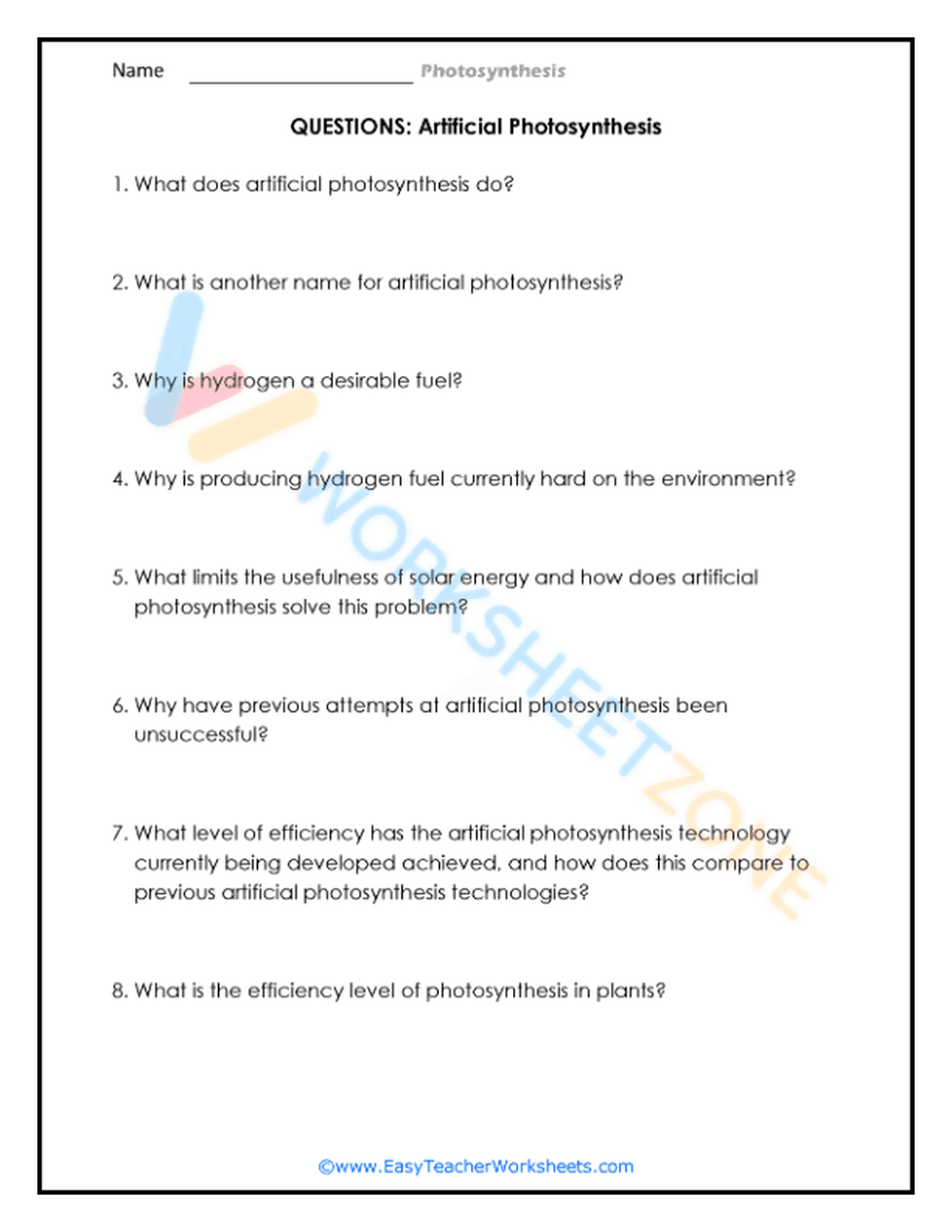
Students should read the passage carefully and then answer comprehension questions (not visible in the image but assumed to be present). The worksheet can be used as an in-class activity, homework assignment, or as part of a larger unit on renewable energy. Students should also be encouraged to research the topic further.
Target Users:
This worksheet is designed for high school students in science or environmental science classes. It would also benefit students interested in learning about renewable energy technologies and their impact on the environment. Teachers can use it to supplement their lessons on photosynthesis, energy, and sustainability.
This is a reading comprehension worksheet about Artificial Photosynthesis. It presents a text explaining how artificial photosynthesis devices capture sunlight to break down water molecules and isolate hydrogen for fuel cells. The worksheet discusses the benefits and challenges of this technology, comparing it to natural photosynthesis and other solar energy conversion methods. A sun graphic is visible on the page.
Grade Level Suitability:
This worksheet is suitable for grades 9-12. The complex vocabulary and scientific concepts related to energy technology and chemical processes make it appropriate for high school students studying science or environmental science.
Why Use It:
This worksheet helps students improve their reading comprehension skills while learning about current developments in renewable energy technology. It fosters critical thinking by comparing different energy sources and their efficiencies. It introduces the concept of artificial photosynthesis and its potential to address energy challenges.
How to Use It:
Students should read the passage carefully and then answer comprehension questions (not visible in the image but assumed to be present). The worksheet can be used as an in-class activity, homework assignment, or as part of a larger unit on renewable energy. Students should also be encouraged to research the topic further.
Target Users:
This worksheet is designed for high school students in science or environmental science classes. It would also benefit students interested in learning about renewable energy technologies and their impact on the environment. Teachers can use it to supplement their lessons on photosynthesis, energy, and sustainability.


