


























1 / 2
0
Views
0
Downloads

0.0
0
0 Likes
Basics of Plant Photosynthesis
0 Views
0 Downloads
Paste this activity's link or code into your existing LMS (Google Classroom, Canvas, Teams, Schoology, Moodle, etc.).
Students can open and work on the activity right away, with no student login required.
You'll still be able to track student progress and results from your teacher account.
Information
Description
What It Is:
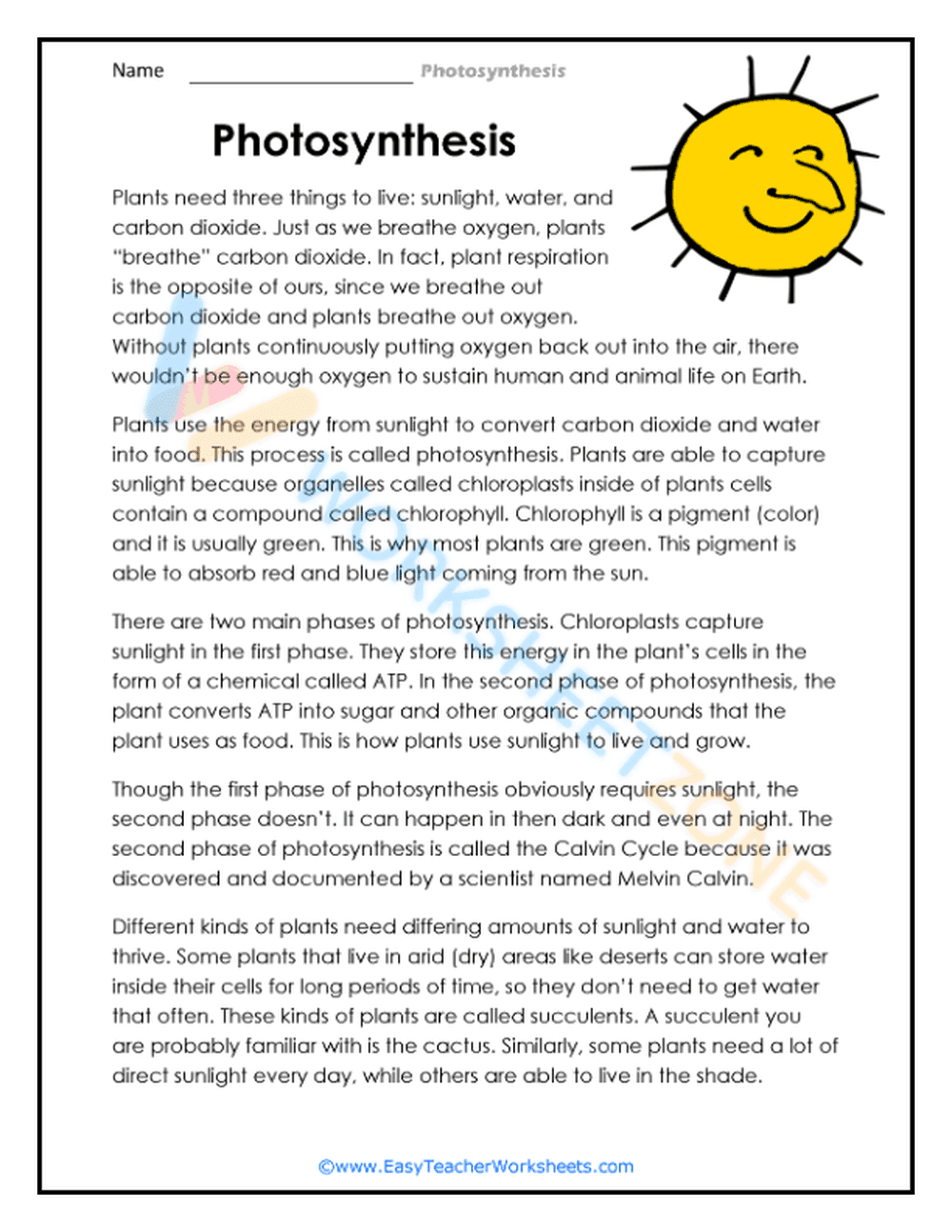
This is an educational worksheet featuring a reading comprehension passage about photosynthesis. The text explains what plants need to survive (sunlight, water, carbon dioxide), how plants convert sunlight into food using chloroplasts and chlorophyll, the two phases of photosynthesis, the Calvin Cycle, and how different plants have different sunlight and water needs. There is a cartoon sun graphic in the upper right corner.
Grade Level Suitability:
This worksheet is suitable for grades 4-6. The vocabulary and sentence structure are appropriate for this age range, and the content covers basic concepts related to plant biology and photosynthesis. The text provides enough information to be informative without being overly complex.
Why Use It:
This worksheet helps students learn about photosynthesis, including the necessary elements, the process, and the different types of plants and their needs. It improves reading comprehension skills and introduces key scientific vocabulary like chloroplasts, chlorophyll, ATP, and the Calvin Cycle.
How to Use It:
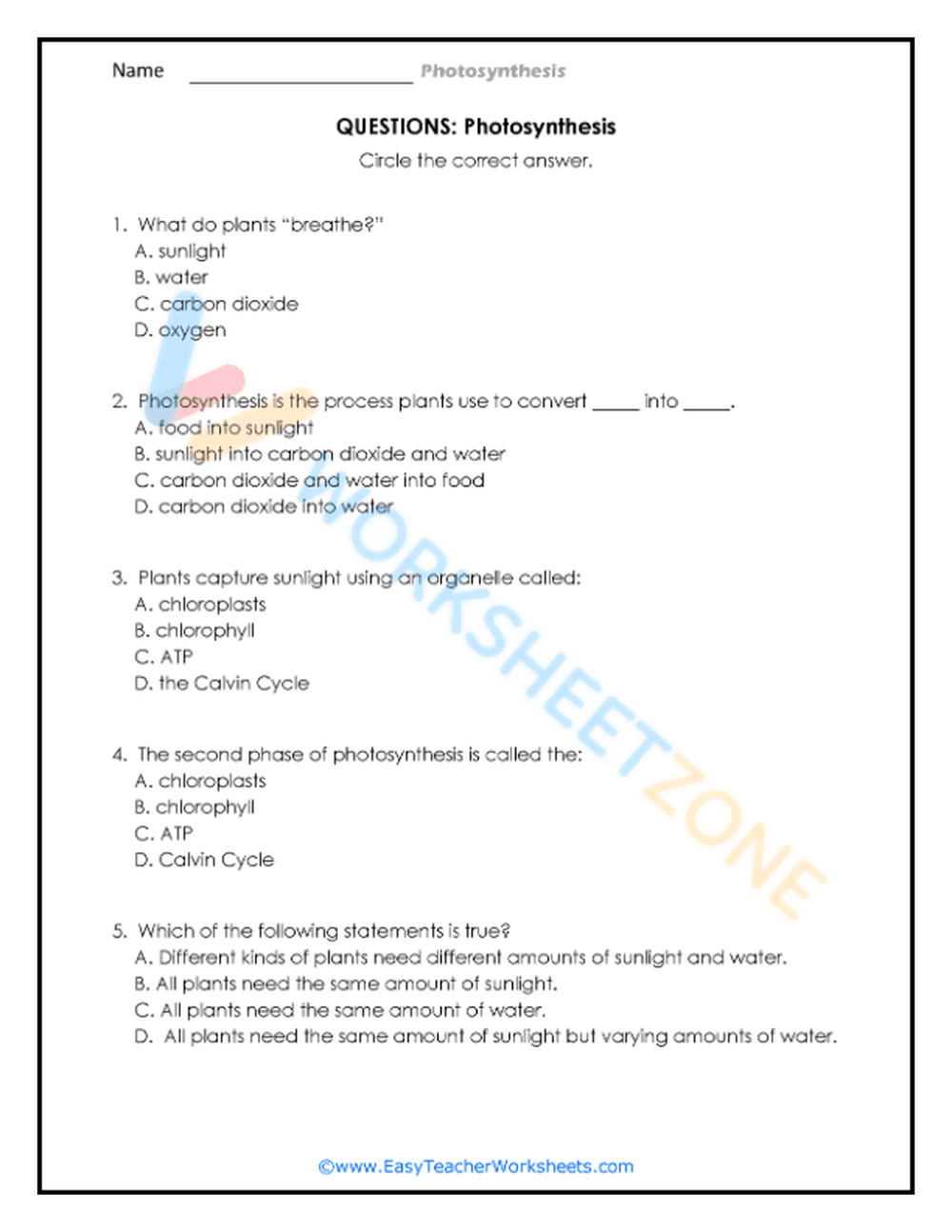
Students should first read the passage carefully. After reading, they can be asked comprehension questions (not included on the visible worksheet) or to summarize the main points. The worksheet can be used for individual work, group activities, or as a classroom reading assignment.
Target Users:
This worksheet is targeted towards elementary and middle school students who are learning about plant biology and photosynthesis. It is also suitable for teachers looking for reading comprehension materials related to science topics.
This is an educational worksheet featuring a reading comprehension passage about photosynthesis. The text explains what plants need to survive (sunlight, water, carbon dioxide), how plants convert sunlight into food using chloroplasts and chlorophyll, the two phases of photosynthesis, the Calvin Cycle, and how different plants have different sunlight and water needs. There is a cartoon sun graphic in the upper right corner.
Grade Level Suitability:
This worksheet is suitable for grades 4-6. The vocabulary and sentence structure are appropriate for this age range, and the content covers basic concepts related to plant biology and photosynthesis. The text provides enough information to be informative without being overly complex.
Why Use It:
This worksheet helps students learn about photosynthesis, including the necessary elements, the process, and the different types of plants and their needs. It improves reading comprehension skills and introduces key scientific vocabulary like chloroplasts, chlorophyll, ATP, and the Calvin Cycle.
How to Use It:
Students should first read the passage carefully. After reading, they can be asked comprehension questions (not included on the visible worksheet) or to summarize the main points. The worksheet can be used for individual work, group activities, or as a classroom reading assignment.
Target Users:
This worksheet is targeted towards elementary and middle school students who are learning about plant biology and photosynthesis. It is also suitable for teachers looking for reading comprehension materials related to science topics.


