


























1 / 5
0
Views
0
Downloads



0.0
0
0 Likes
Practice Positional Words and Spatial Concepts
0 Views
0 Downloads
Paste this activity's link or code into your existing LMS (Google Classroom, Canvas, Teams, Schoology, Moodle, etc.).
Students can open and work on the activity right away, with no student login required.
You'll still be able to track student progress and results from your teacher account.
Information
Description
What It Is:
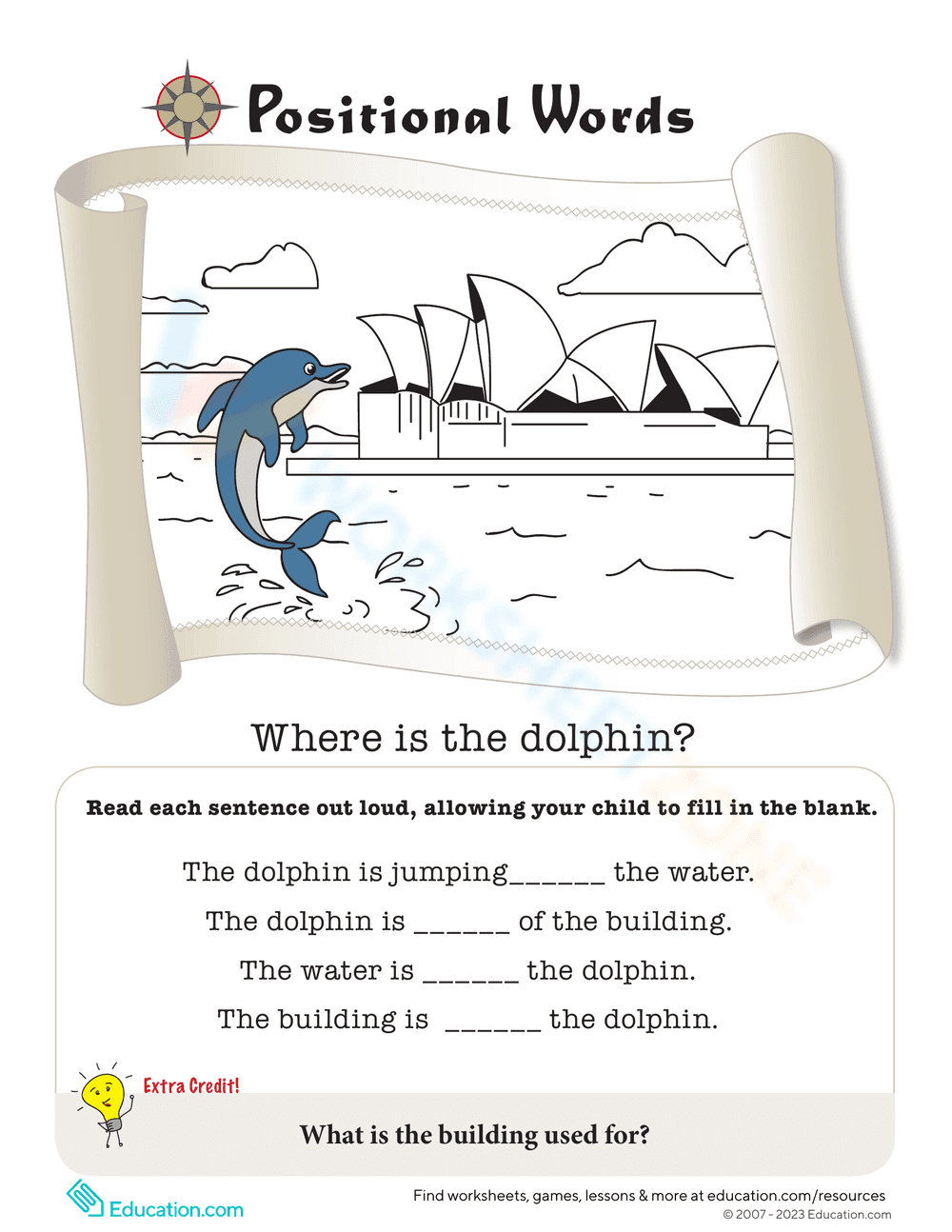
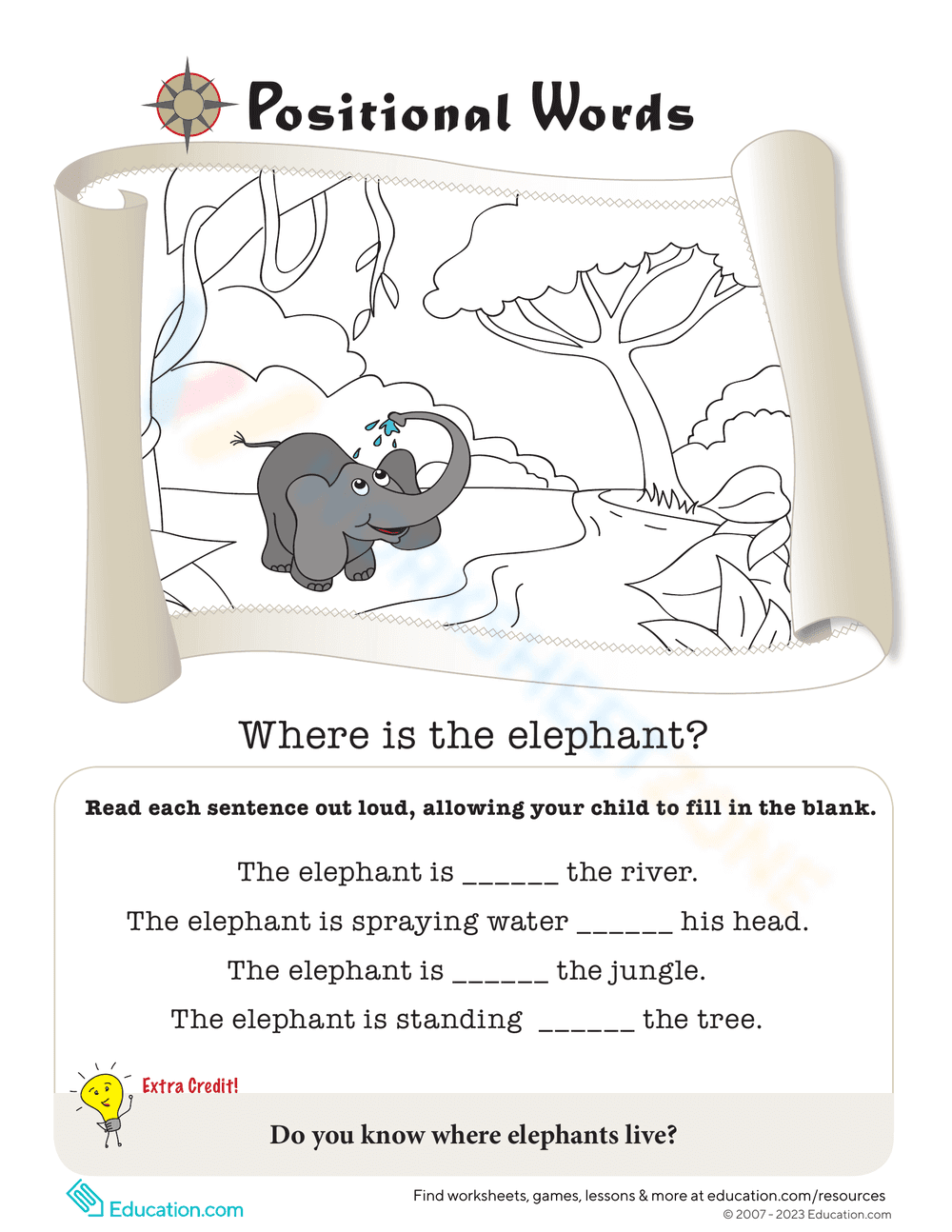
This is a positional words worksheet featuring a drawing of the Great Wall of China with a panda bear. The worksheet asks 'Where is the panda bear?' and includes fill-in-the-blank sentences such as 'The panda is sitting the wall' to practice using positional words. There is also an extra credit question: 'Do you know what country the panda bear is in?'.
Grade Level Suitability:
This worksheet is suitable for kindergarten and 1st grade. The sentences are simple and focus on basic positional words. The visual aid of the panda bear and Great Wall of China helps with understanding.
Why Use It:
This worksheet helps children learn and practice positional words (e.g., on, in, under, next to, behind, in front of). It improves reading comprehension and vocabulary skills. The panda bear and Great Wall theme adds an element of fun and cultural awareness.
How to Use It:
Read each sentence aloud to the child. Have the child fill in the blank with the correct positional word based on the picture and sentence context. Encourage the child to explain their answer. For extra credit, discuss the country where pandas live.
Target Users:
This worksheet is designed for kindergarten and first-grade students who are learning about positional words. It is also helpful for ESL students learning English vocabulary. Parents and teachers can use it for extra practice or as a fun learning activity.
This is a positional words worksheet featuring a drawing of the Great Wall of China with a panda bear. The worksheet asks 'Where is the panda bear?' and includes fill-in-the-blank sentences such as 'The panda is sitting the wall' to practice using positional words. There is also an extra credit question: 'Do you know what country the panda bear is in?'.
Grade Level Suitability:
This worksheet is suitable for kindergarten and 1st grade. The sentences are simple and focus on basic positional words. The visual aid of the panda bear and Great Wall of China helps with understanding.
Why Use It:
This worksheet helps children learn and practice positional words (e.g., on, in, under, next to, behind, in front of). It improves reading comprehension and vocabulary skills. The panda bear and Great Wall theme adds an element of fun and cultural awareness.
How to Use It:
Read each sentence aloud to the child. Have the child fill in the blank with the correct positional word based on the picture and sentence context. Encourage the child to explain their answer. For extra credit, discuss the country where pandas live.
Target Users:
This worksheet is designed for kindergarten and first-grade students who are learning about positional words. It is also helpful for ESL students learning English vocabulary. Parents and teachers can use it for extra practice or as a fun learning activity.


