


























0
Views
0
Downloads

0.0
0
0 Likes
Practice Claim, Evidence, and Reasoning Worksheet
0 Views
0 Downloads
Paste this activity's link or code into your existing LMS (Google Classroom, Canvas, Teams, Schoology, Moodle, etc.).
Students can open and work on the activity right away, with no student login required.
You'll still be able to track student progress and results from your teacher account.
Information
Description
What It Is:
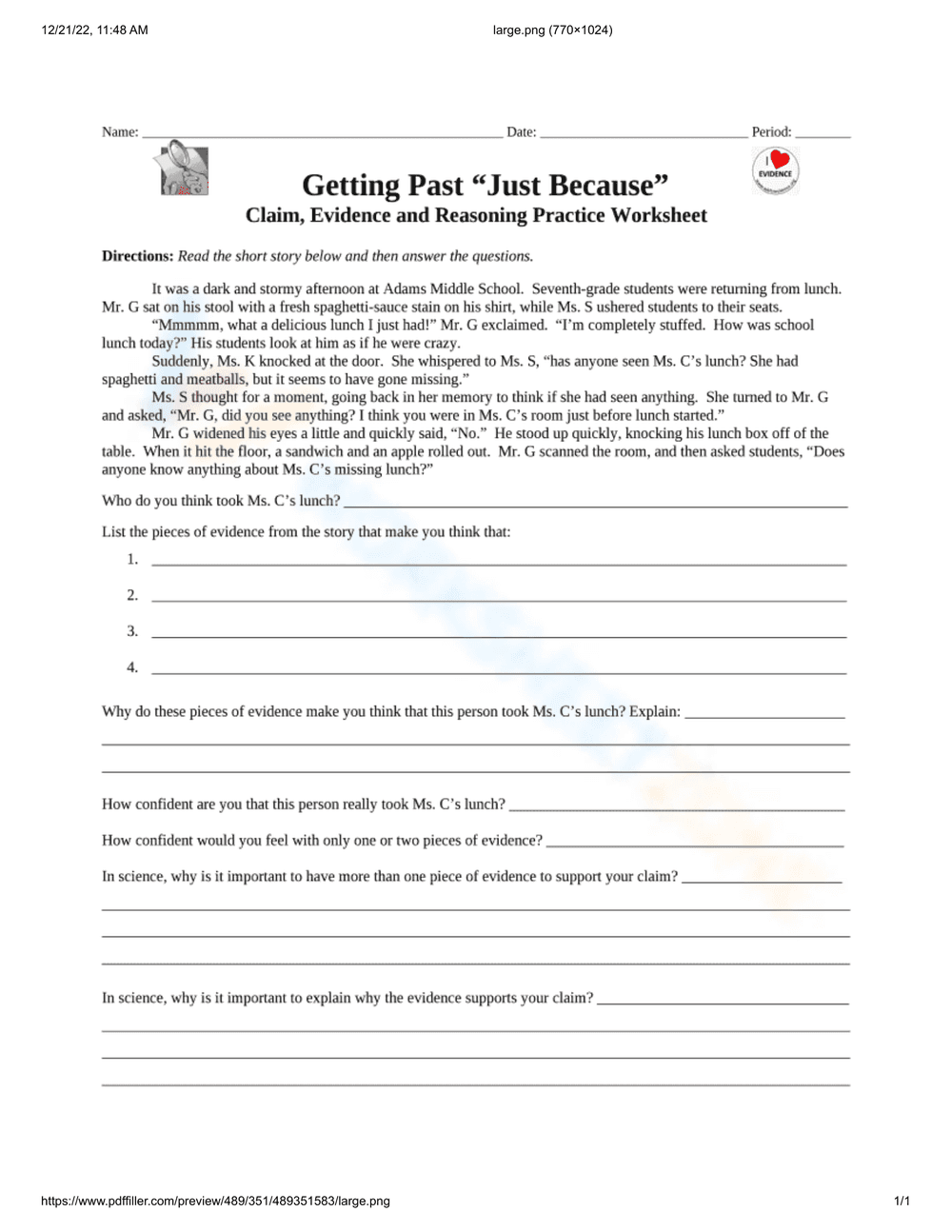
This is a worksheet titled 'Getting Past 'Just Because': Claim, Evidence and Reasoning Practice Worksheet.' It includes a short story about a missing lunch at Adams Middle School involving characters like Mr. G and Ms. S. Students are asked to read the story and then answer questions related to identifying who took Ms. C's lunch, listing pieces of evidence from the story, explaining how the evidence supports their conclusion, and discussing the importance of multiple pieces of evidence in science.
Grade Level Suitability:
This worksheet appears suitable for grades 6-8. The reading level of the short story and the complexity of the reasoning questions are appropriate for middle school students learning about making claims supported by evidence.
Why Use It:
This worksheet helps students develop critical thinking skills by requiring them to analyze a narrative, identify evidence, and construct an argument. It reinforces the importance of using evidence to support claims and introduces the concept of reasoning in both a literary and scientific context. It also encourages students to evaluate the strength of their evidence.
How to Use It:
Students should first read the short story carefully. Then, they should answer the questions, citing specific details from the story as evidence to support their answers. Encourage students to explain their reasoning clearly and to consider multiple perspectives. The worksheet can be used as an individual activity, a group discussion prompt, or a homework assignment.
Target Users:
This worksheet is designed for middle school students (grades 6-8) who are learning about claim, evidence, and reasoning. It is also suitable for students who need practice in reading comprehension, critical thinking, and argumentative writing. Teachers can use it as part of a lesson on scientific inquiry or literary analysis.
This is a worksheet titled 'Getting Past 'Just Because': Claim, Evidence and Reasoning Practice Worksheet.' It includes a short story about a missing lunch at Adams Middle School involving characters like Mr. G and Ms. S. Students are asked to read the story and then answer questions related to identifying who took Ms. C's lunch, listing pieces of evidence from the story, explaining how the evidence supports their conclusion, and discussing the importance of multiple pieces of evidence in science.
Grade Level Suitability:
This worksheet appears suitable for grades 6-8. The reading level of the short story and the complexity of the reasoning questions are appropriate for middle school students learning about making claims supported by evidence.
Why Use It:
This worksheet helps students develop critical thinking skills by requiring them to analyze a narrative, identify evidence, and construct an argument. It reinforces the importance of using evidence to support claims and introduces the concept of reasoning in both a literary and scientific context. It also encourages students to evaluate the strength of their evidence.
How to Use It:
Students should first read the short story carefully. Then, they should answer the questions, citing specific details from the story as evidence to support their answers. Encourage students to explain their reasoning clearly and to consider multiple perspectives. The worksheet can be used as an individual activity, a group discussion prompt, or a homework assignment.
Target Users:
This worksheet is designed for middle school students (grades 6-8) who are learning about claim, evidence, and reasoning. It is also suitable for students who need practice in reading comprehension, critical thinking, and argumentative writing. Teachers can use it as part of a lesson on scientific inquiry or literary analysis.


