


























0
Views
0
Downloads

0 Likes
Practice Writing Effective Conclusions
0 Views
0 Downloads
Paste this activity's link or code into your existing LMS (Google Classroom, Canvas, Teams, Schoology, Moodle, etc.).
Students can open and work on the activity right away, with no student login required.
You'll still be able to track student progress and results from your teacher account.
Information
Description
What It Is:
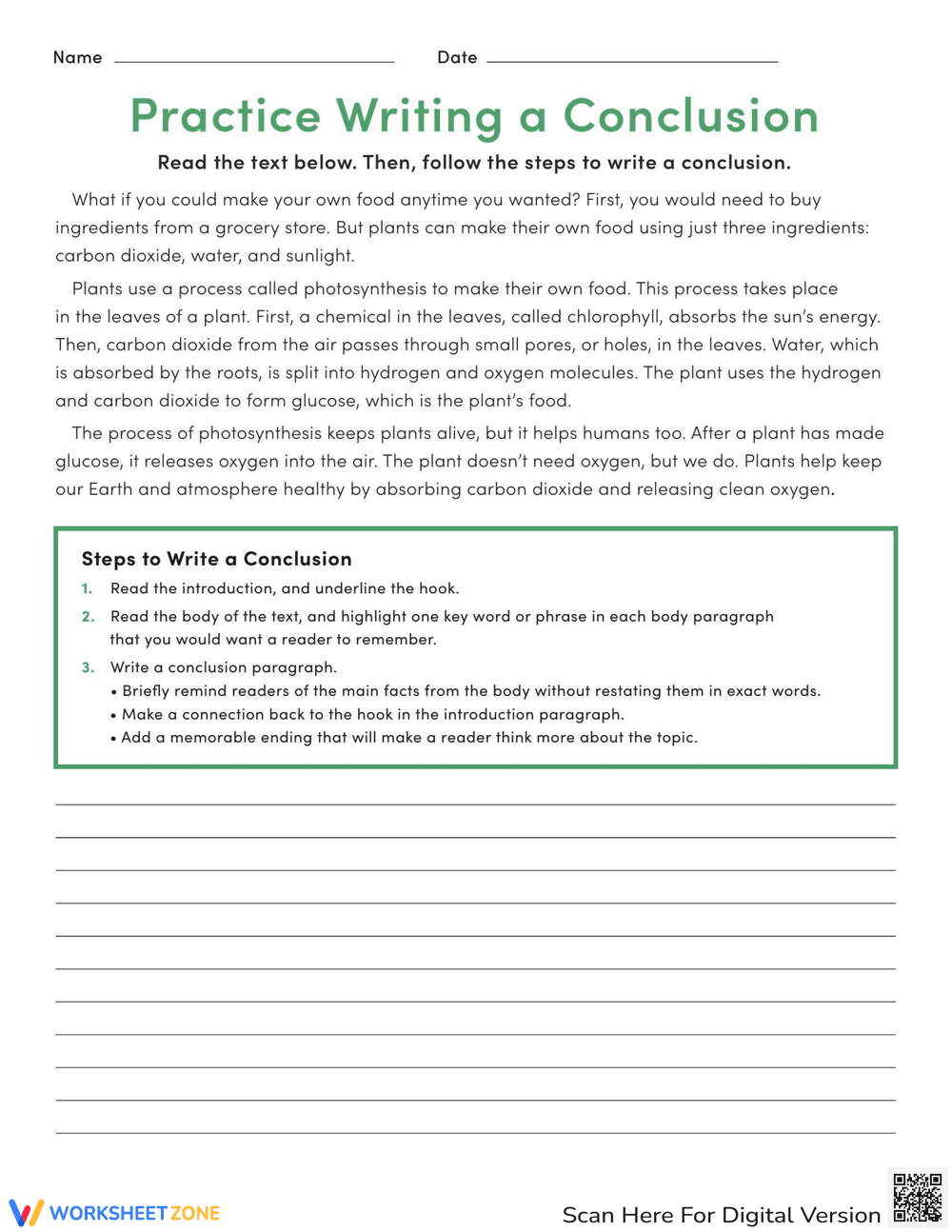
This is an educational worksheet titled 'Practice Writing a Conclusion'. It includes a short informational text about photosynthesis and how plants make their own food. The worksheet provides step-by-step instructions on how to write a conclusion paragraph based on the provided text, including underlining the hook, highlighting keywords, and connecting back to the introduction. There are lines provided at the bottom of the page for the student to write their conclusion.
Grade Level Suitability:
This worksheet is suitable for grades 4-6. The reading level of the text and the complexity of writing a conclusion paragraph are appropriate for this age range. The instructions are clear and scaffold the writing process, making it accessible to students in these grades.
Why Use It:
This worksheet helps students develop reading comprehension skills, identify key information in a text, and practice writing effective conclusion paragraphs. It reinforces the importance of connecting ideas and summarizing information. It also introduces students to the concept of photosynthesis in a simple and understandable way.
How to Use It:
First, have students read the informational text about photosynthesis. Next, guide them to follow the steps provided to write a conclusion paragraph. Encourage them to underline the hook in the introduction, highlight key words or phrases in the body paragraphs, and then write a conclusion that summarizes the main points and connects back to the hook. The lines at the bottom are for writing the conclusion paragraph.
Target Users:
This worksheet is designed for elementary and middle school students in grades 4-6 who are learning about writing conclusions and improving their reading comprehension skills. It is also useful for teachers who are teaching about photosynthesis and want to integrate writing activities into their science lessons.
This is an educational worksheet titled 'Practice Writing a Conclusion'. It includes a short informational text about photosynthesis and how plants make their own food. The worksheet provides step-by-step instructions on how to write a conclusion paragraph based on the provided text, including underlining the hook, highlighting keywords, and connecting back to the introduction. There are lines provided at the bottom of the page for the student to write their conclusion.
Grade Level Suitability:
This worksheet is suitable for grades 4-6. The reading level of the text and the complexity of writing a conclusion paragraph are appropriate for this age range. The instructions are clear and scaffold the writing process, making it accessible to students in these grades.
Why Use It:
This worksheet helps students develop reading comprehension skills, identify key information in a text, and practice writing effective conclusion paragraphs. It reinforces the importance of connecting ideas and summarizing information. It also introduces students to the concept of photosynthesis in a simple and understandable way.
How to Use It:
First, have students read the informational text about photosynthesis. Next, guide them to follow the steps provided to write a conclusion paragraph. Encourage them to underline the hook in the introduction, highlight key words or phrases in the body paragraphs, and then write a conclusion that summarizes the main points and connects back to the hook. The lines at the bottom are for writing the conclusion paragraph.
Target Users:
This worksheet is designed for elementary and middle school students in grades 4-6 who are learning about writing conclusions and improving their reading comprehension skills. It is also useful for teachers who are teaching about photosynthesis and want to integrate writing activities into their science lessons.


