


























1 / 7
0
Views
0
Plays




0.0
0
0 Likes
Identifying Action Verbs
0 Views
0 Plays
Paste this activity's link or code into your existing LMS (Google Classroom, Canvas, Teams, Schoology, Moodle, etc.).
Students can open and work on the activity right away, with no student login required.
You'll still be able to track student progress and results from your teacher account.
Information
Description
What It Is:
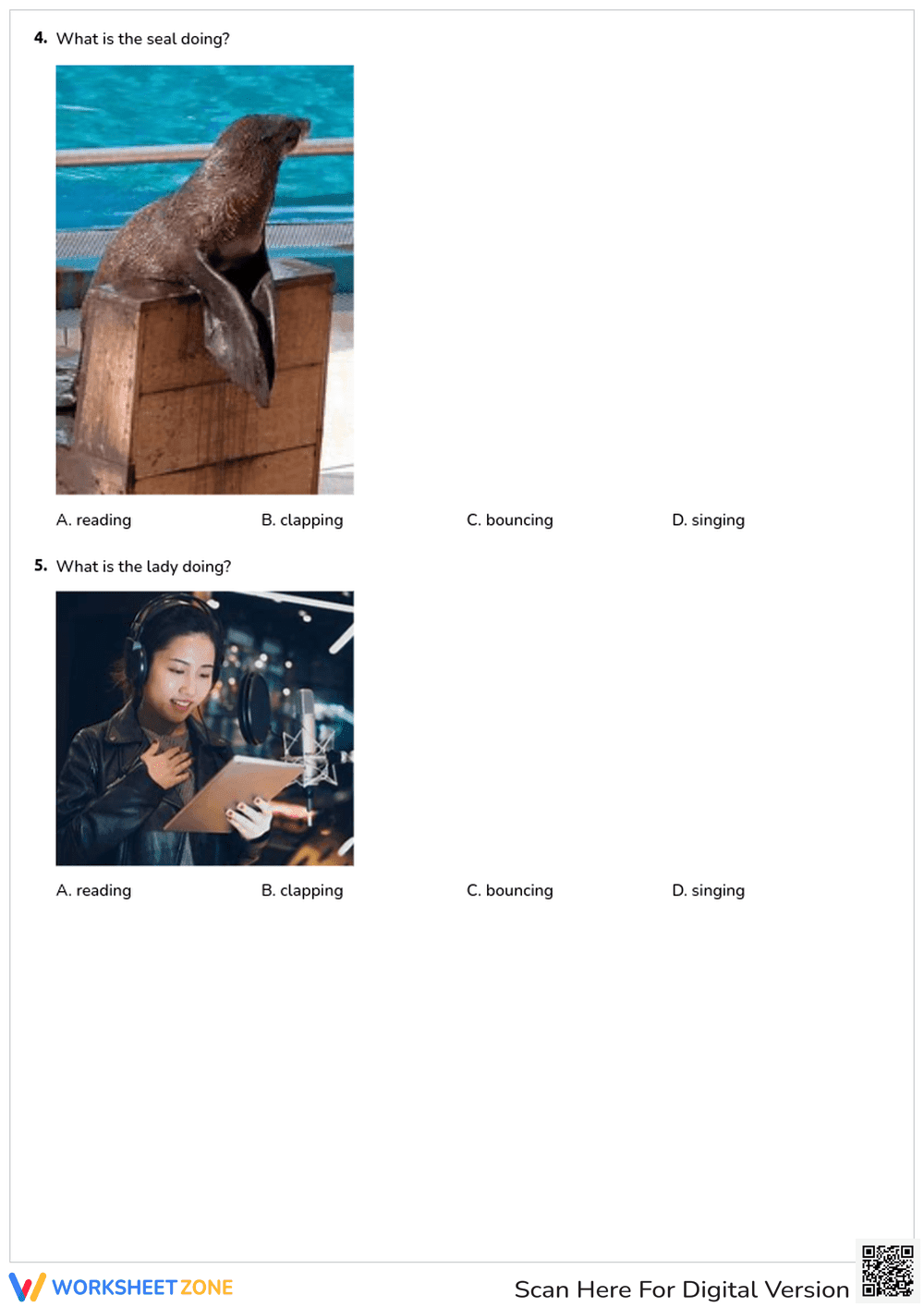
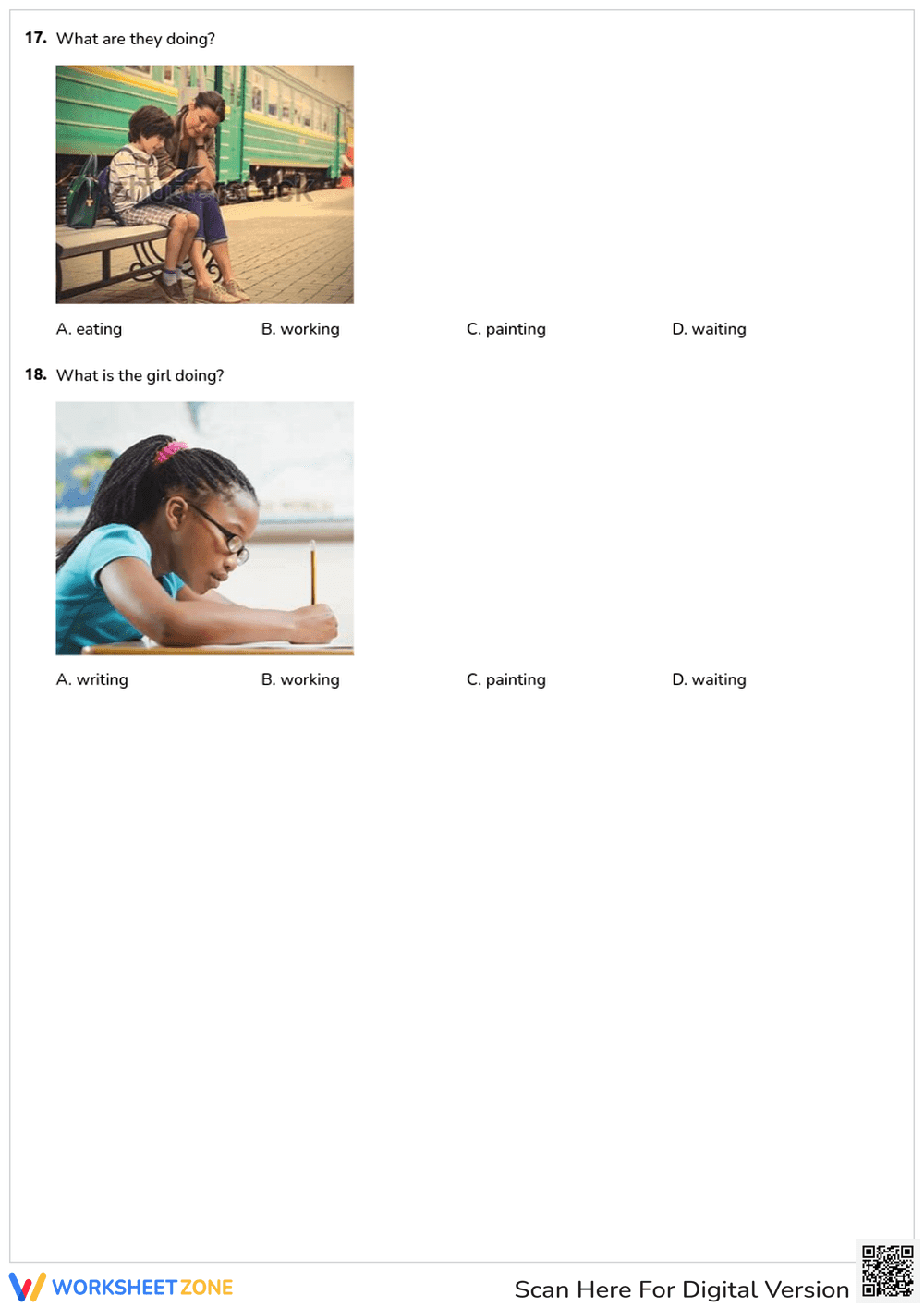
This worksheet focuses on present tense verbs, likely as part of a structured language arts curriculum (indicated by 'B4 L13,' suggesting 'Book 4, Lesson 13'). The activities would primarily involve identifying and correctly using verbs in the present tense. This could include tasks such as: underlining present tense verbs in sentences, filling in the blanks with the correct present tense form of a given verb (paying attention to subject-verb agreement for singular and plural subjects), or rewriting sentences to ensure verbs are in the present tense. The worksheet likely aims to reinforce the concept of actions happening now.
Grade Level Suitability:
This worksheet is most suitable for 2nd to 4th grade students. At these grade levels, students are actively learning about verb tenses, especially the present tense, and beginning to understand subject-verb agreement. The foundational nature of present tense verbs is typically covered during these years as part of basic grammar instruction. Younger students might find the subject-verb agreement aspect challenging, while older students would have typically mastered these concepts.
Why Use It:
Using this worksheet helps students master the correct usage of present tense verbs, which is fundamental to clear and accurate writing and speaking. It reinforces subject-verb agreement, ensuring students understand how verbs change based on the singularity or plurality of the subject. This practice improves their grammatical accuracy and builds a strong foundation for learning more complex verb tenses later on. It also aids in reading comprehension by helping students correctly interpret the timing of actions in sentences.
How to Use It:
Before starting the worksheet, review the concept of present tense verbs with students, emphasizing that they describe actions happening 'now' or habitually. Explain subject-verb agreement, particularly for third-person singular subjects (e.g., 'he runs,' 'she walks,' 'it barks'). Guide students through a few examples, demonstrating how to identify the verb and ensure it matches the subject. Students can then complete the exercises on the worksheet independently. Encourage them to read each sentence carefully and consider the subject before selecting or forming the verb. A review session after completion to discuss answers and address any common errors would be beneficial.
Target Users:
This worksheet is ideal for elementary school students (grades 2-4) learning basic grammar, ESL/ELL learners who need explicit instruction on verb tenses, and homeschooling parents seeking structured language arts activities. It's also a valuable tool for classroom teachers for reinforcing lessons on present tense verbs, providing independent practice, or as a quick assessment of understanding. Students who are beginning to develop their writing skills and need to solidify their understanding of verb usage will find this worksheet particularly helpful.
This worksheet focuses on present tense verbs, likely as part of a structured language arts curriculum (indicated by 'B4 L13,' suggesting 'Book 4, Lesson 13'). The activities would primarily involve identifying and correctly using verbs in the present tense. This could include tasks such as: underlining present tense verbs in sentences, filling in the blanks with the correct present tense form of a given verb (paying attention to subject-verb agreement for singular and plural subjects), or rewriting sentences to ensure verbs are in the present tense. The worksheet likely aims to reinforce the concept of actions happening now.
Grade Level Suitability:
This worksheet is most suitable for 2nd to 4th grade students. At these grade levels, students are actively learning about verb tenses, especially the present tense, and beginning to understand subject-verb agreement. The foundational nature of present tense verbs is typically covered during these years as part of basic grammar instruction. Younger students might find the subject-verb agreement aspect challenging, while older students would have typically mastered these concepts.
Why Use It:
Using this worksheet helps students master the correct usage of present tense verbs, which is fundamental to clear and accurate writing and speaking. It reinforces subject-verb agreement, ensuring students understand how verbs change based on the singularity or plurality of the subject. This practice improves their grammatical accuracy and builds a strong foundation for learning more complex verb tenses later on. It also aids in reading comprehension by helping students correctly interpret the timing of actions in sentences.
How to Use It:
Before starting the worksheet, review the concept of present tense verbs with students, emphasizing that they describe actions happening 'now' or habitually. Explain subject-verb agreement, particularly for third-person singular subjects (e.g., 'he runs,' 'she walks,' 'it barks'). Guide students through a few examples, demonstrating how to identify the verb and ensure it matches the subject. Students can then complete the exercises on the worksheet independently. Encourage them to read each sentence carefully and consider the subject before selecting or forming the verb. A review session after completion to discuss answers and address any common errors would be beneficial.
Target Users:
This worksheet is ideal for elementary school students (grades 2-4) learning basic grammar, ESL/ELL learners who need explicit instruction on verb tenses, and homeschooling parents seeking structured language arts activities. It's also a valuable tool for classroom teachers for reinforcing lessons on present tense verbs, providing independent practice, or as a quick assessment of understanding. Students who are beginning to develop their writing skills and need to solidify their understanding of verb usage will find this worksheet particularly helpful.


