


























1 / 13
0
Views
0
Downloads





0.0
0
0 Likes
Probability and Compound Events Examples Worksheet
0 Views
0 Downloads
Paste this activity's link or code into your existing LMS (Google Classroom, Canvas, Teams, Schoology, Moodle, etc.).
Students can open and work on the activity right away, with no student login required.
You'll still be able to track student progress and results from your teacher account.
Information
Description
What It Is:
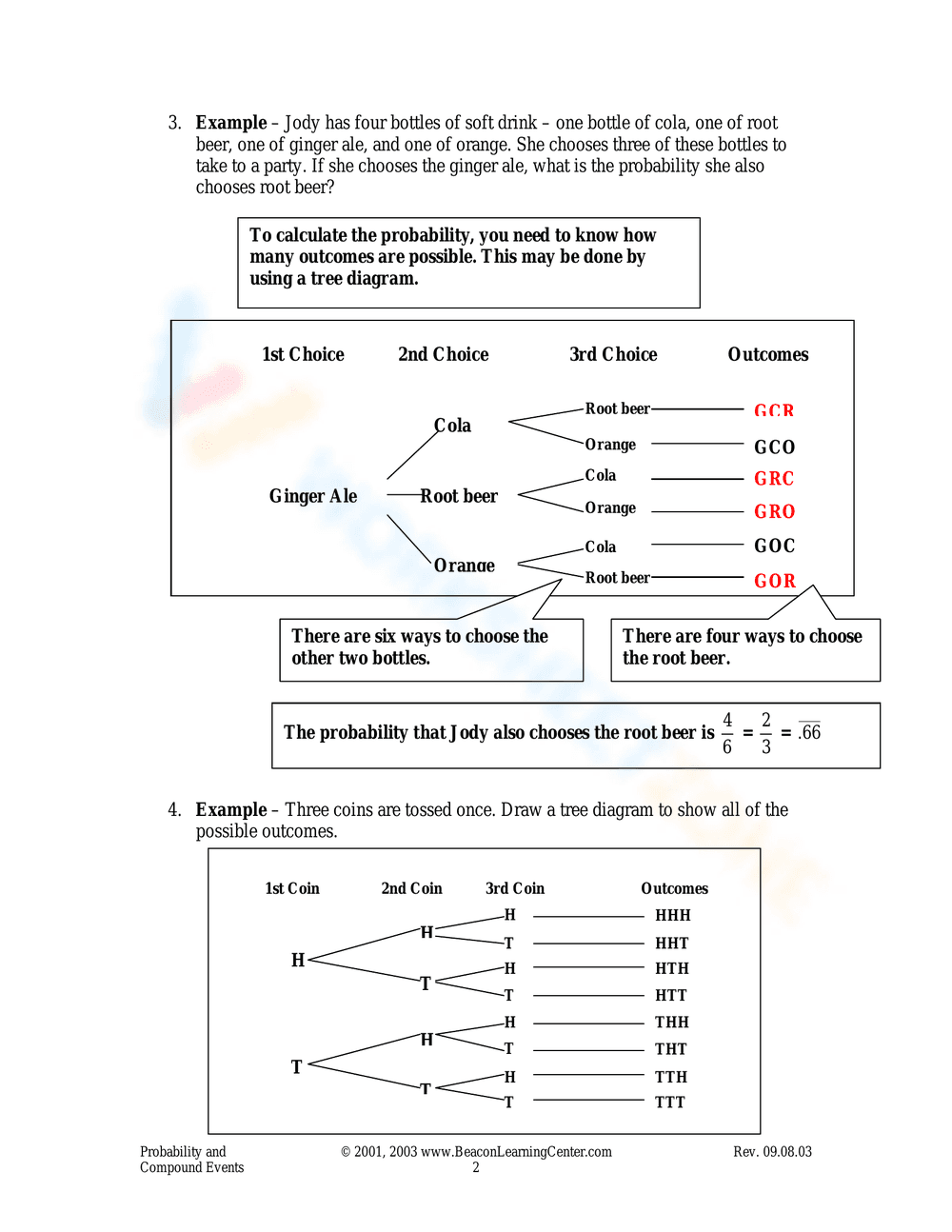
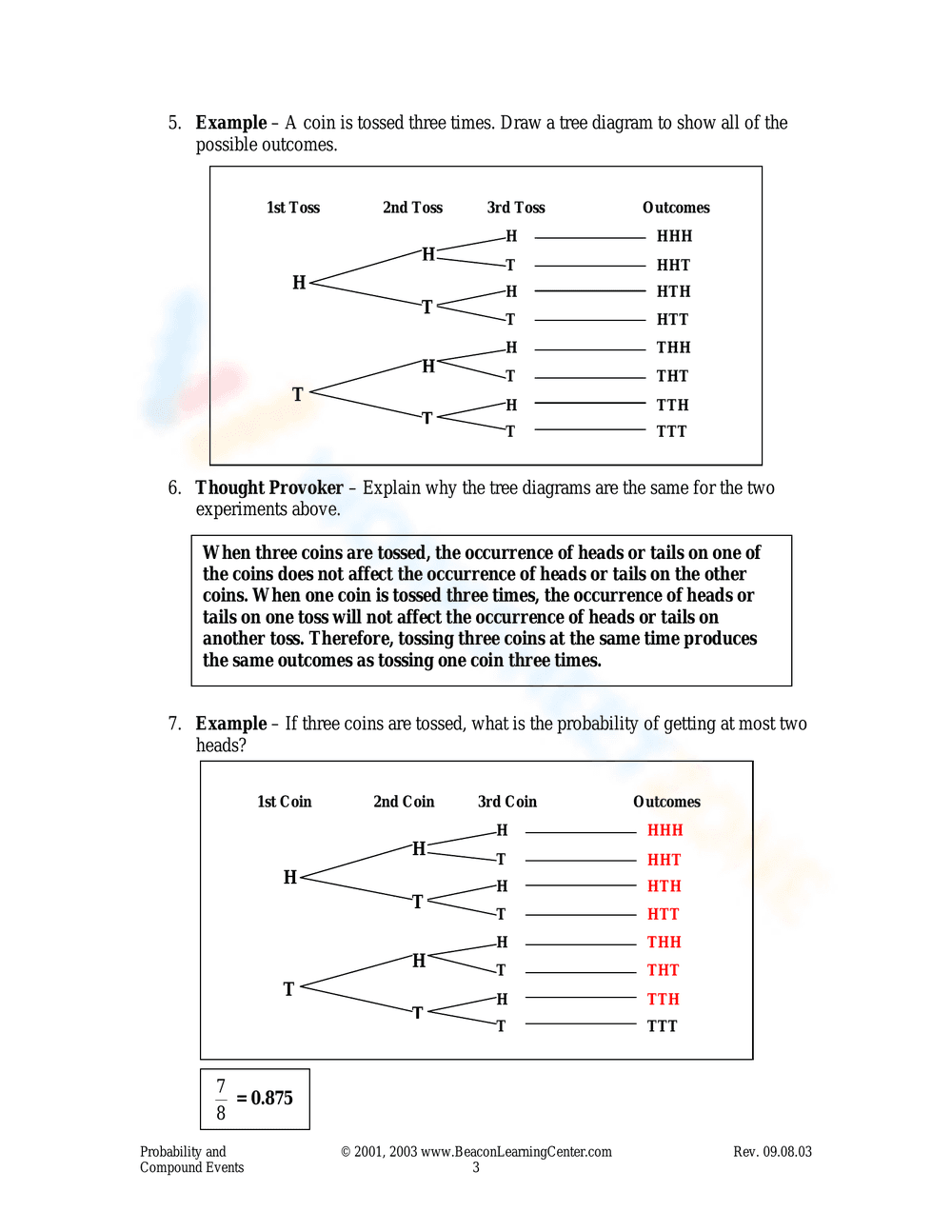
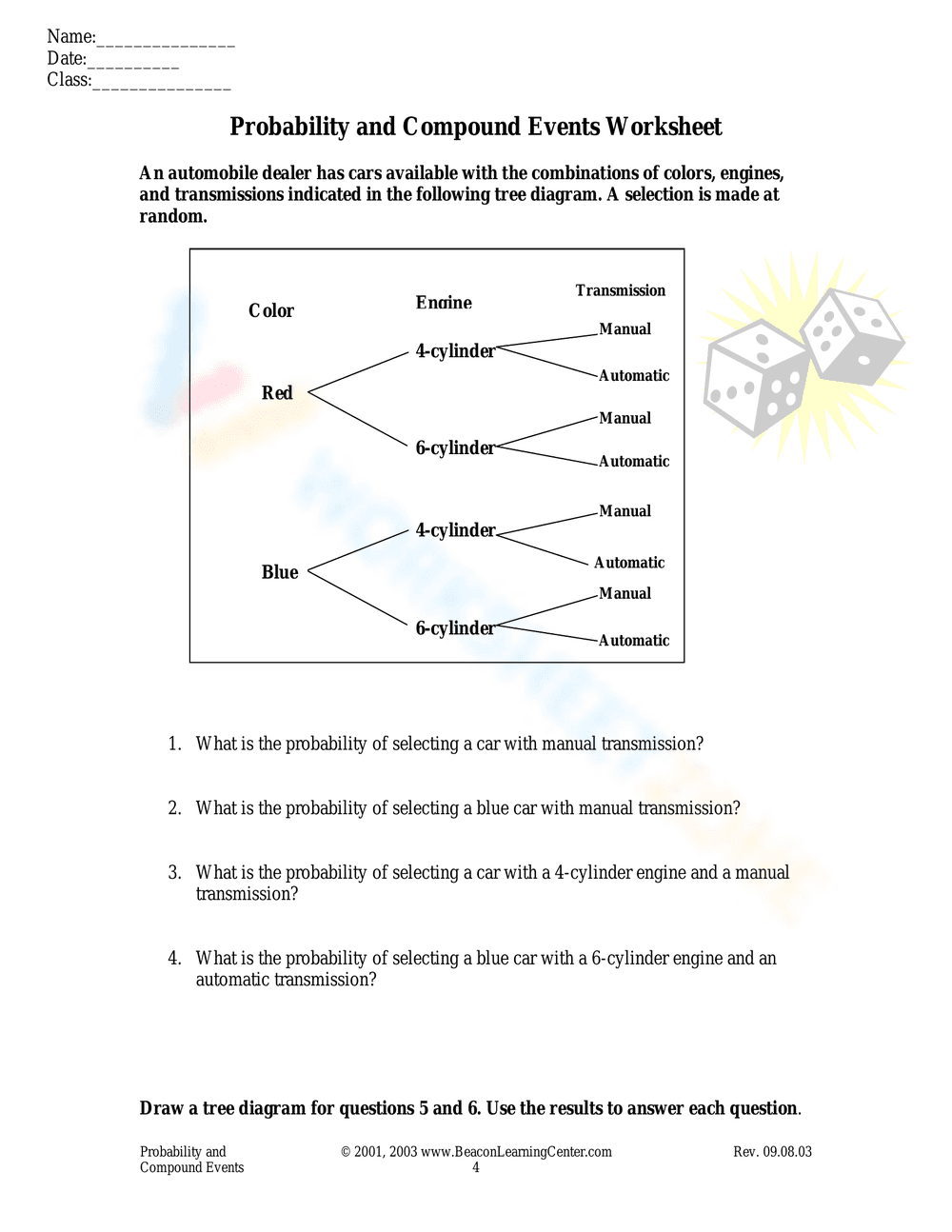
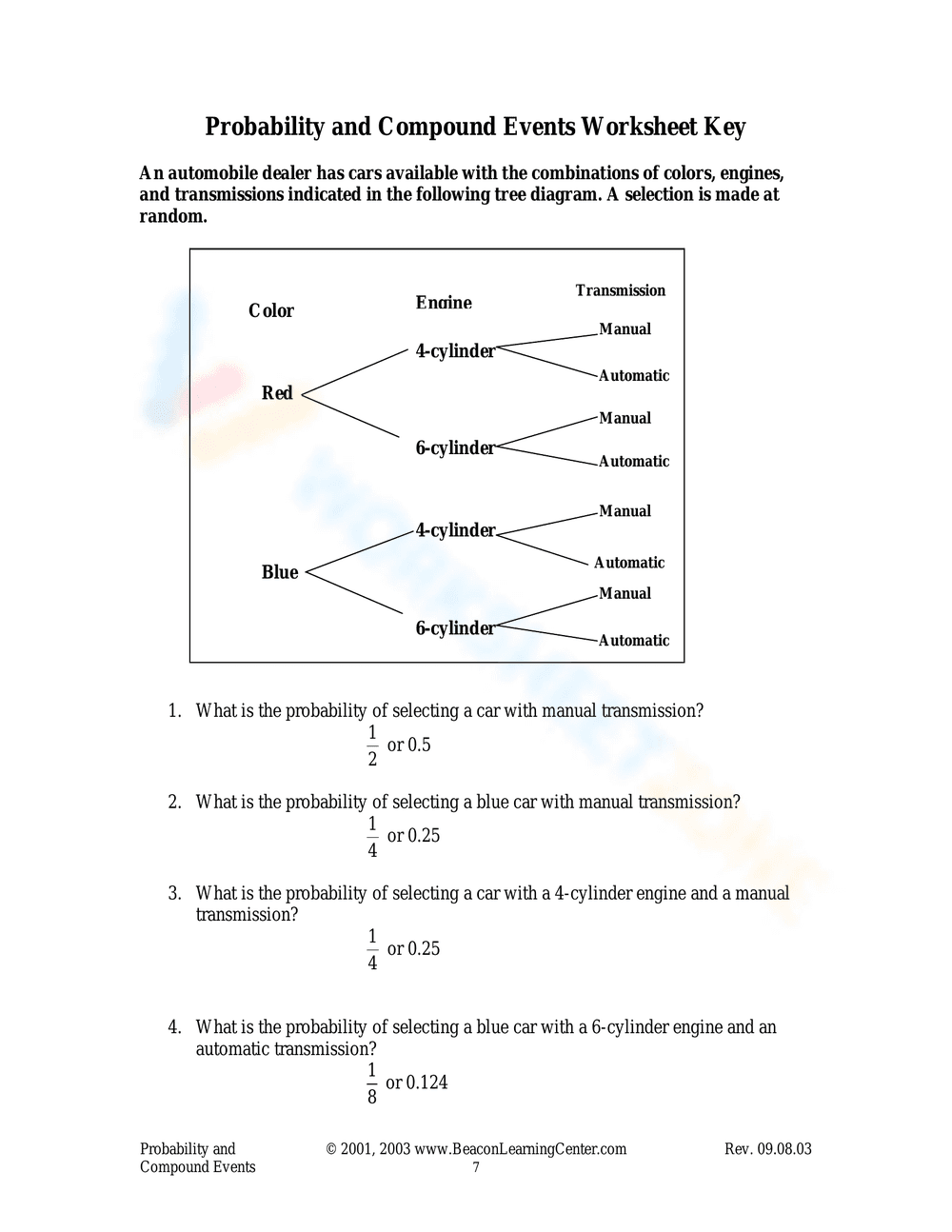
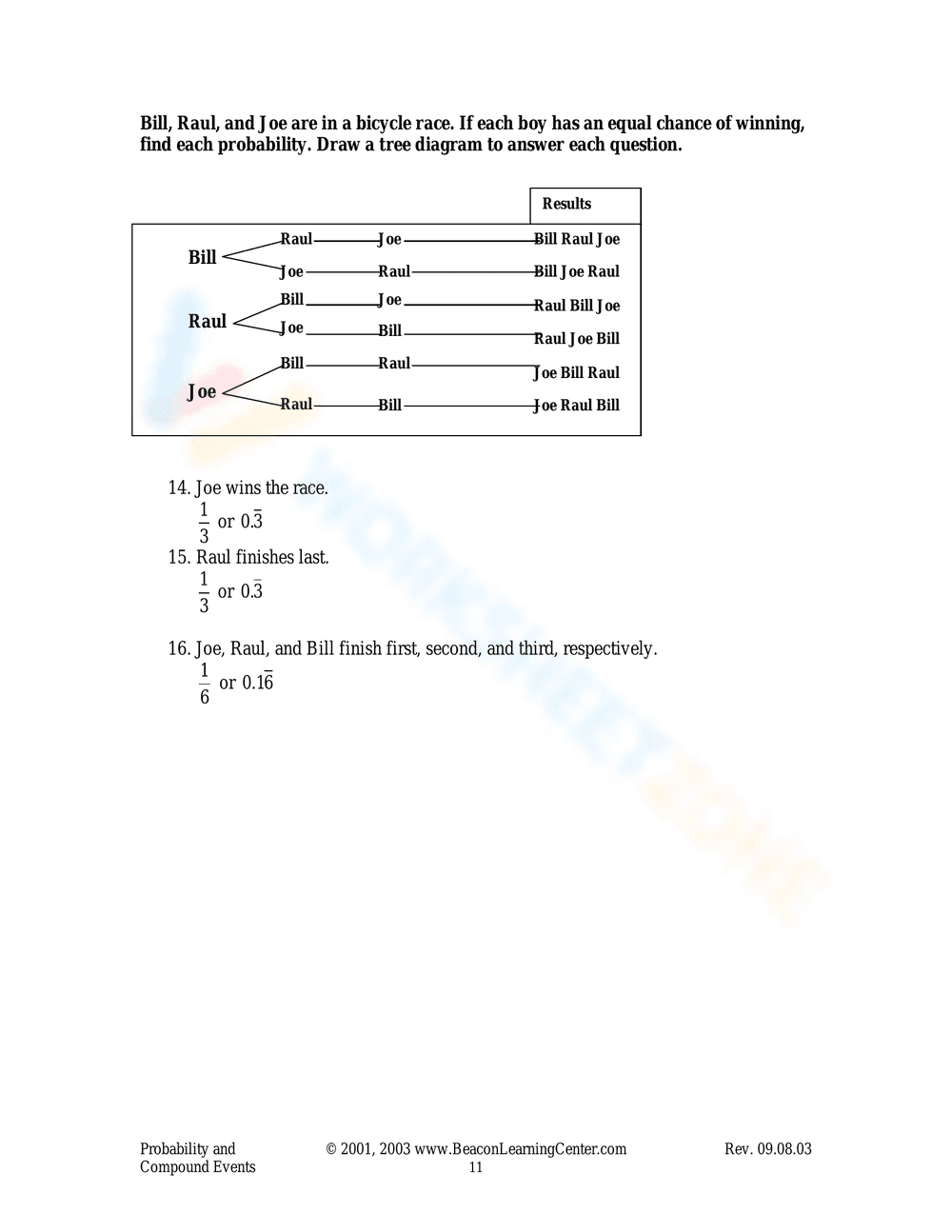
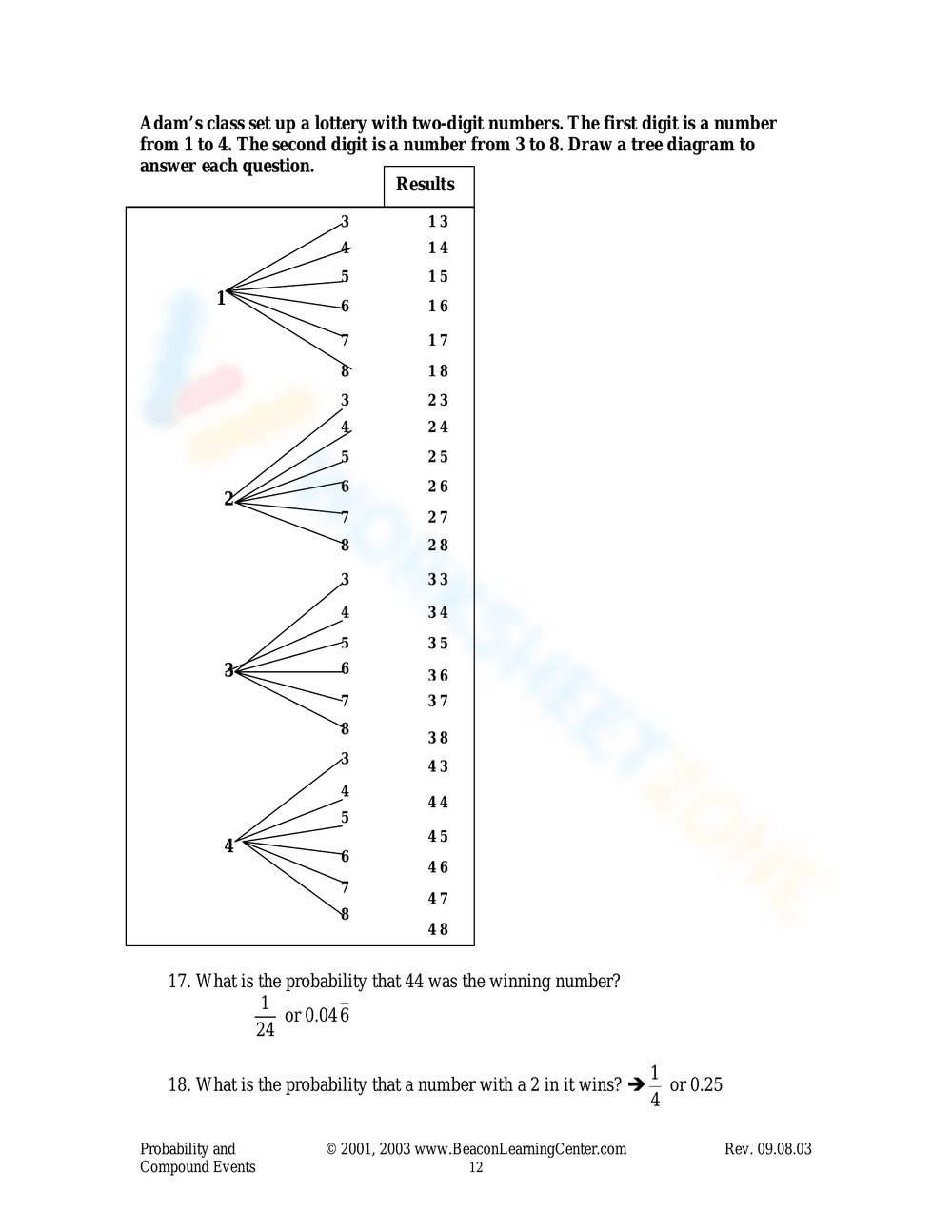
This is an educational worksheet demonstrating probability and compound events. It provides an example problem about calculating the probability of getting exactly two heads when tossing three coins. The worksheet uses a tree diagram to visually represent all possible outcomes (HHH, HHT, HTH, HTT, THH, THT, TTH, TTT) and identifies the outcomes with exactly two heads. It explains that there are 8 possible outcomes and 3 of them have exactly two heads, resulting in a probability of 3/8 or 0.375. The worksheet also includes a definition of a compound event.
Grade Level Suitability:
This worksheet is suitable for grades 7-9. It introduces the concepts of probability, compound events, and tree diagrams, which are typically covered in middle school mathematics. The example problem is straightforward and easy to understand, making it accessible to students in these grades.
Why Use It:
This worksheet helps students understand the concept of probability by using a visual representation of possible outcomes. It teaches them how to calculate the probability of a specific event within a compound event, and introduces the use of tree diagrams as a problem-solving tool. It also reinforces the idea of independent events.
How to Use It:
Students can use this worksheet as a guided example to understand how to calculate probability using tree diagrams. The teacher can use it as a teaching aid to explain compound events and demonstrate how to determine the probability of a specific outcome. Students can then apply the same method to solve similar probability problems.
Target Users:
The target users are middle school students (grades 7-9) learning about probability and compound events. It is also useful for math teachers looking for examples and teaching aids for these concepts.
This is an educational worksheet demonstrating probability and compound events. It provides an example problem about calculating the probability of getting exactly two heads when tossing three coins. The worksheet uses a tree diagram to visually represent all possible outcomes (HHH, HHT, HTH, HTT, THH, THT, TTH, TTT) and identifies the outcomes with exactly two heads. It explains that there are 8 possible outcomes and 3 of them have exactly two heads, resulting in a probability of 3/8 or 0.375. The worksheet also includes a definition of a compound event.
Grade Level Suitability:
This worksheet is suitable for grades 7-9. It introduces the concepts of probability, compound events, and tree diagrams, which are typically covered in middle school mathematics. The example problem is straightforward and easy to understand, making it accessible to students in these grades.
Why Use It:
This worksheet helps students understand the concept of probability by using a visual representation of possible outcomes. It teaches them how to calculate the probability of a specific event within a compound event, and introduces the use of tree diagrams as a problem-solving tool. It also reinforces the idea of independent events.
How to Use It:
Students can use this worksheet as a guided example to understand how to calculate probability using tree diagrams. The teacher can use it as a teaching aid to explain compound events and demonstrate how to determine the probability of a specific outcome. Students can then apply the same method to solve similar probability problems.
Target Users:
The target users are middle school students (grades 7-9) learning about probability and compound events. It is also useful for math teachers looking for examples and teaching aids for these concepts.


