


























0
Views
0
Downloads

0.0
0
0 Likes
Puns in Context: Understanding Language
0 Views
0 Downloads
Paste this activity's link or code into your existing LMS (Google Classroom, Canvas, Teams, Schoology, Moodle, etc.).
Students can open and work on the activity right away, with no student login required.
You'll still be able to track student progress and results from your teacher account.
Information
Description
What It Is:
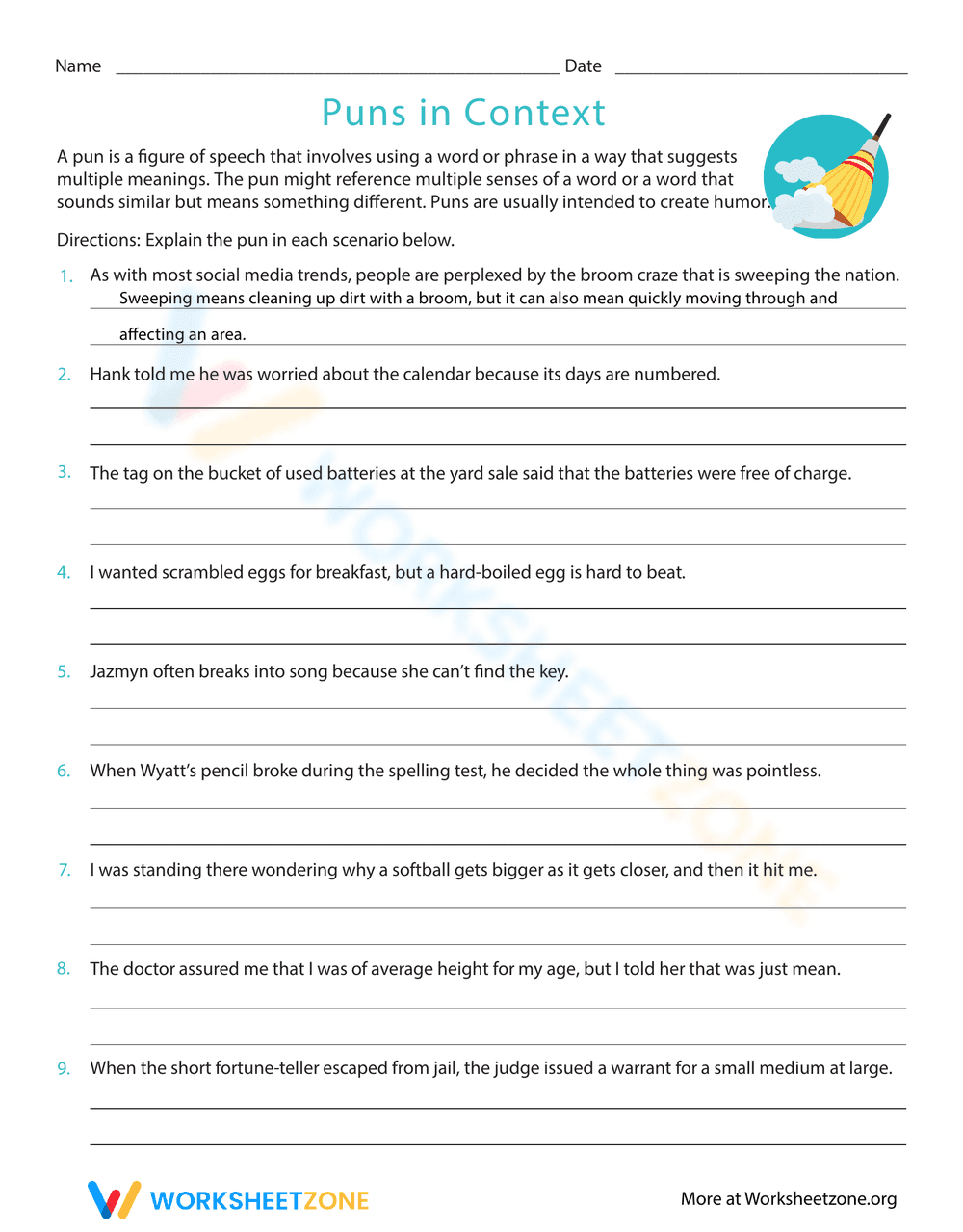
This is an educational worksheet titled 'Puns in Context'. It presents a definition of puns as a figure of speech that uses words with multiple meanings or similar sounds for humorous effect. The worksheet includes nine scenarios where students are asked to explain the pun used in each sentence or short paragraph. The scenarios range in topic, including social media trends, calendars, yard sales, breakfast, music, spelling tests, sports, doctors, and fortune-tellers.
Grade Level Suitability:
This worksheet is suitable for grades 6-9. The complexity of understanding puns and the subtle humor involved requires a certain level of language comprehension typically found in middle school students. The scenarios presented are also relatable to this age group.
Why Use It:
This worksheet helps students develop their understanding of figurative language, specifically puns. It encourages critical thinking as students analyze the multiple meanings of words and phrases. It also promotes vocabulary development and enhances reading comprehension skills by requiring students to interpret context and identify the intended humor.
How to Use It:
Students should read the definition of a pun provided at the top of the worksheet. Then, they should carefully read each scenario and write an explanation of the pun used in the space provided. Encourage students to consider the different meanings of the words or phrases involved and how they create a humorous effect.
Target Users:
This worksheet is ideal for middle school students learning about figurative language and literary devices. It can be used in English language arts classes, vocabulary lessons, or as a fun activity to promote critical thinking and humor appreciation. It is also suitable for students who enjoy wordplay and puzzles.
This is an educational worksheet titled 'Puns in Context'. It presents a definition of puns as a figure of speech that uses words with multiple meanings or similar sounds for humorous effect. The worksheet includes nine scenarios where students are asked to explain the pun used in each sentence or short paragraph. The scenarios range in topic, including social media trends, calendars, yard sales, breakfast, music, spelling tests, sports, doctors, and fortune-tellers.
Grade Level Suitability:
This worksheet is suitable for grades 6-9. The complexity of understanding puns and the subtle humor involved requires a certain level of language comprehension typically found in middle school students. The scenarios presented are also relatable to this age group.
Why Use It:
This worksheet helps students develop their understanding of figurative language, specifically puns. It encourages critical thinking as students analyze the multiple meanings of words and phrases. It also promotes vocabulary development and enhances reading comprehension skills by requiring students to interpret context and identify the intended humor.
How to Use It:
Students should read the definition of a pun provided at the top of the worksheet. Then, they should carefully read each scenario and write an explanation of the pun used in the space provided. Encourage students to consider the different meanings of the words or phrases involved and how they create a humorous effect.
Target Users:
This worksheet is ideal for middle school students learning about figurative language and literary devices. It can be used in English language arts classes, vocabulary lessons, or as a fun activity to promote critical thinking and humor appreciation. It is also suitable for students who enjoy wordplay and puzzles.


