


























0
Views
0
Downloads

0.0
0
0 Likes
Sentence Diagramming Practice 9
0 Views
0 Downloads
Paste this activity's link or code into your existing LMS (Google Classroom, Canvas, Teams, Schoology, Moodle, etc.).
Students can open and work on the activity right away, with no student login required.
You'll still be able to track student progress and results from your teacher account.
Information
Description
What It Is:
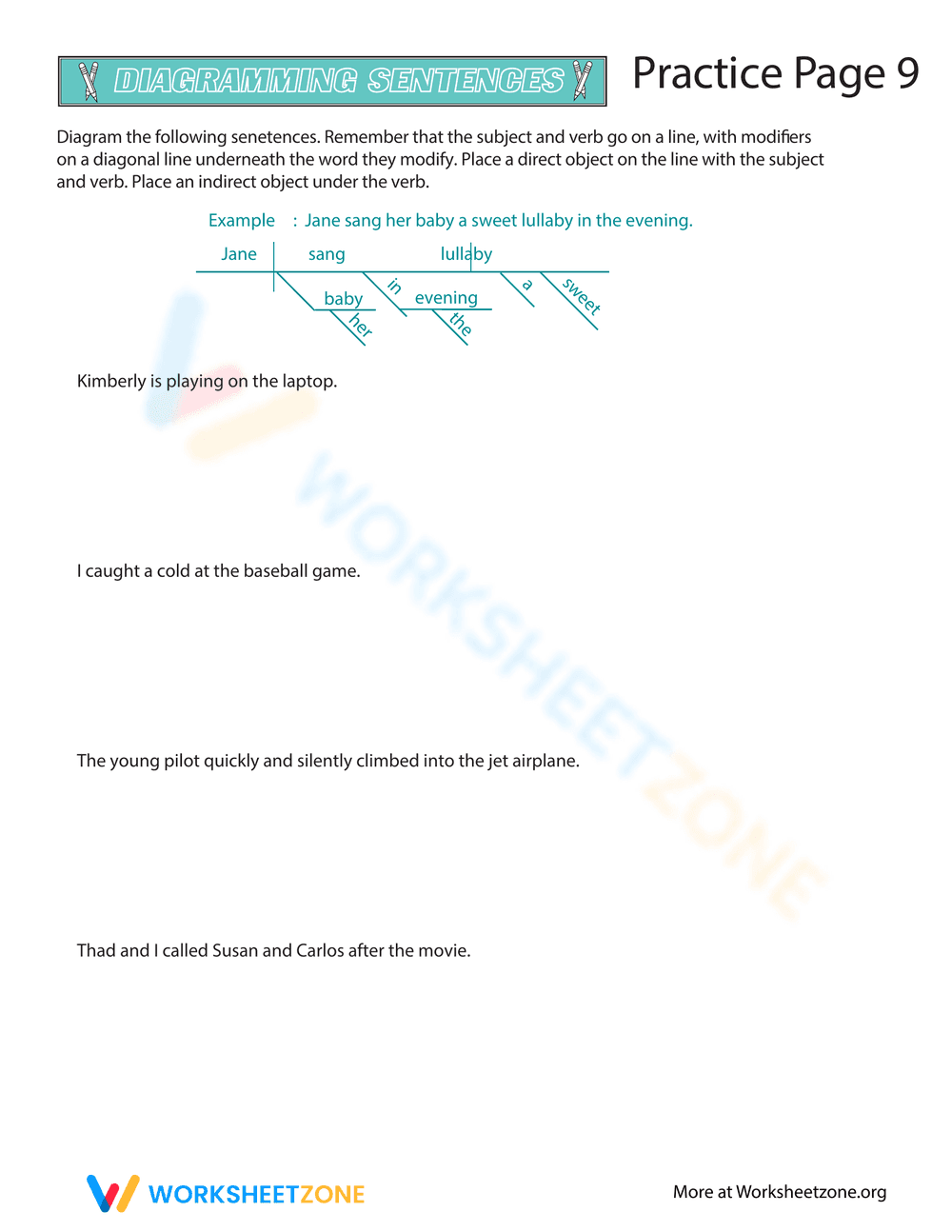
This is a sentence diagramming worksheet. It provides an example of how to diagram a sentence, specifically showing the subject, verb, direct object, and modifiers. The worksheet then provides four sentences for the student to diagram: 'Kimberly is playing on the laptop,' 'I caught a cold at the baseball game,' 'The young pilot quickly and silently climbed into the jet airplane,' and 'Thad and I called Susan and Carlos after the movie.'
Grade Level Suitability:
This worksheet is most suitable for grades 6-8. It requires a solid understanding of grammar concepts such as subjects, verbs, direct objects, indirect objects, and modifiers, which are typically taught in these grades. The complexity of diagramming requires analytical skills developed in middle school.
Why Use It:
This worksheet helps students visually represent the structure of sentences, reinforcing their understanding of grammar and sentence construction. Diagramming sentences can improve reading comprehension, writing skills, and analytical thinking by breaking down sentences into their component parts.
How to Use It:
Students should follow the example provided at the top of the worksheet. They need to identify the subject, verb, and any objects or modifiers in each sentence. Then, they should draw lines to represent the relationships between these elements, placing modifiers on diagonal lines beneath the words they modify.
Target Users:
This worksheet is ideal for middle school students who are learning or reviewing sentence diagramming. It can also be useful for older students or adults who want to improve their grammar skills or refresh their knowledge of sentence structure. Teachers can use it as a classroom activity or as homework.
This is a sentence diagramming worksheet. It provides an example of how to diagram a sentence, specifically showing the subject, verb, direct object, and modifiers. The worksheet then provides four sentences for the student to diagram: 'Kimberly is playing on the laptop,' 'I caught a cold at the baseball game,' 'The young pilot quickly and silently climbed into the jet airplane,' and 'Thad and I called Susan and Carlos after the movie.'
Grade Level Suitability:
This worksheet is most suitable for grades 6-8. It requires a solid understanding of grammar concepts such as subjects, verbs, direct objects, indirect objects, and modifiers, which are typically taught in these grades. The complexity of diagramming requires analytical skills developed in middle school.
Why Use It:
This worksheet helps students visually represent the structure of sentences, reinforcing their understanding of grammar and sentence construction. Diagramming sentences can improve reading comprehension, writing skills, and analytical thinking by breaking down sentences into their component parts.
How to Use It:
Students should follow the example provided at the top of the worksheet. They need to identify the subject, verb, and any objects or modifiers in each sentence. Then, they should draw lines to represent the relationships between these elements, placing modifiers on diagonal lines beneath the words they modify.
Target Users:
This worksheet is ideal for middle school students who are learning or reviewing sentence diagramming. It can also be useful for older students or adults who want to improve their grammar skills or refresh their knowledge of sentence structure. Teachers can use it as a classroom activity or as homework.


