


























1 / 5
0
Views
0
Downloads



0.0
0
0 Likes
Building Skills in Emotional Intelligence
0 Views
0 Downloads
Paste this activity's link or code into your existing LMS (Google Classroom, Canvas, Teams, Schoology, Moodle, etc.).
Students can open and work on the activity right away, with no student login required.
You'll still be able to track student progress and results from your teacher account.
Information
Description
What It Is:
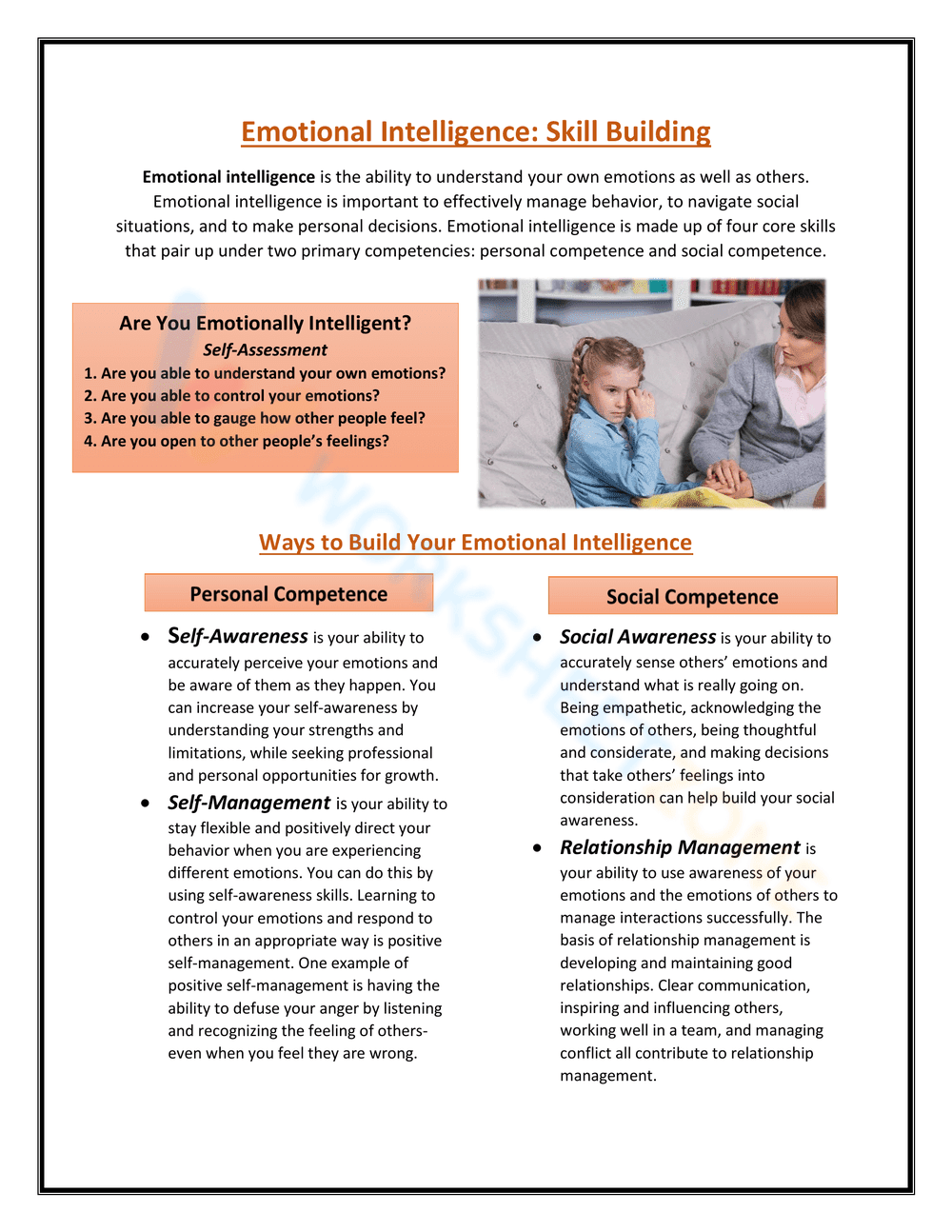
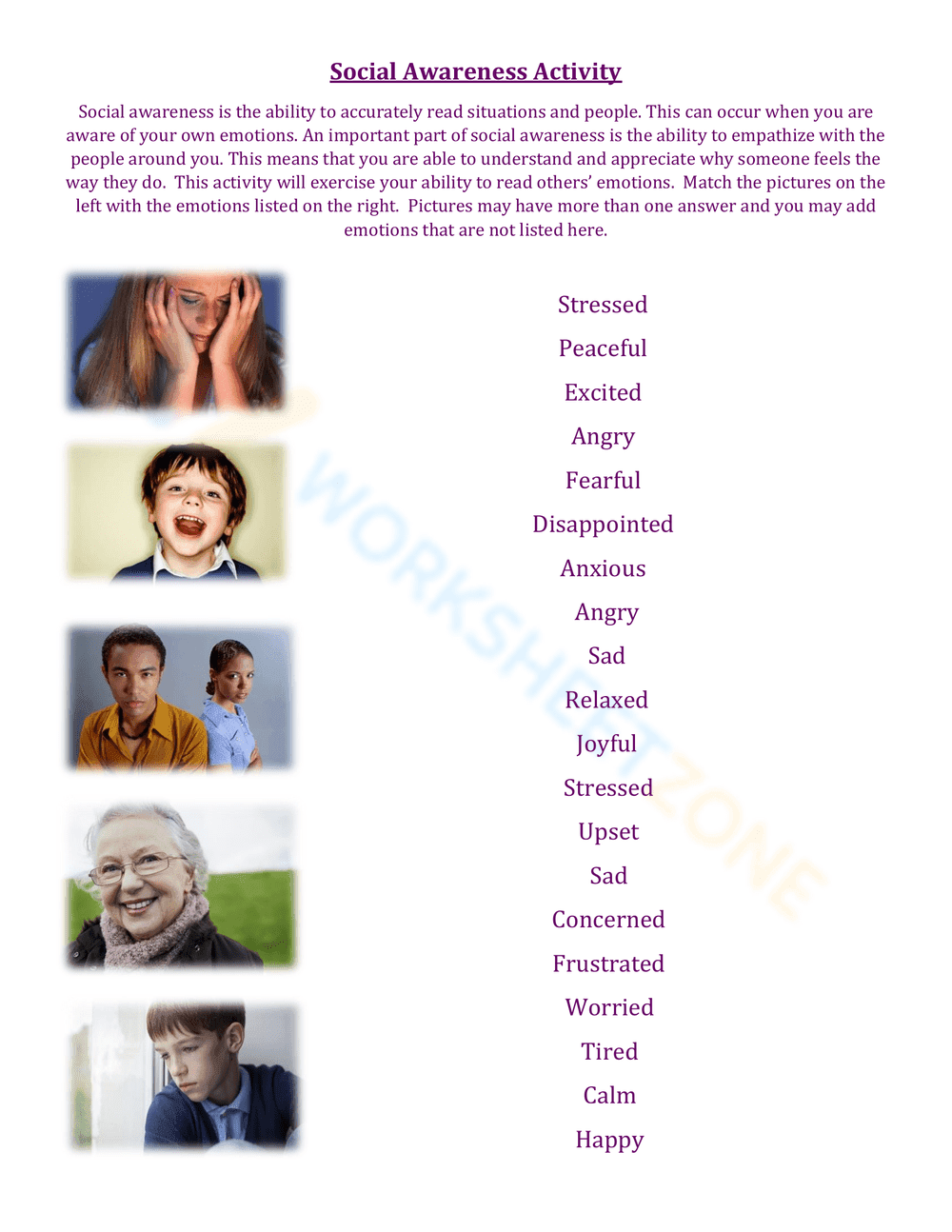
This is an educational worksheet focused on emotional intelligence. It includes a brief introduction to emotional intelligence, followed by a self-assessment section with questions about understanding and controlling emotions, and gauging others' feelings. The worksheet then describes ways to build emotional intelligence, dividing it into personal competence (self-awareness and self-management) and social competence (social awareness and relationship management). Each skill is defined and explained.
Grade Level Suitability:
This worksheet is suitable for grades 6-12, potentially even introductory college level. The language and concepts are complex enough to challenge older students, while the self-assessment aspect makes it relevant and engaging. The focus on self-awareness and relationship skills is particularly valuable for teenagers and young adults.
Why Use It:
This worksheet helps students understand the concept of emotional intelligence and its importance in personal and social life. It encourages self-reflection and provides practical ways to develop key emotional skills like self-awareness, self-management, social awareness, and relationship management. It promotes better understanding of oneself and others.
How to Use It:
Begin by reading the introduction to emotional intelligence. Then, complete the self-assessment section to evaluate your current emotional intelligence. Next, carefully read the descriptions of each skill (self-awareness, self-management, social awareness, relationship management). Reflect on how you can apply these skills in your daily life. The worksheet can be used individually or as part of a group discussion.
Target Users:
The target users are middle school, high school, and college students, as well as adults interested in improving their emotional intelligence. Counselors, educators, and trainers can use this worksheet as a tool for teaching emotional intelligence skills.
This is an educational worksheet focused on emotional intelligence. It includes a brief introduction to emotional intelligence, followed by a self-assessment section with questions about understanding and controlling emotions, and gauging others' feelings. The worksheet then describes ways to build emotional intelligence, dividing it into personal competence (self-awareness and self-management) and social competence (social awareness and relationship management). Each skill is defined and explained.
Grade Level Suitability:
This worksheet is suitable for grades 6-12, potentially even introductory college level. The language and concepts are complex enough to challenge older students, while the self-assessment aspect makes it relevant and engaging. The focus on self-awareness and relationship skills is particularly valuable for teenagers and young adults.
Why Use It:
This worksheet helps students understand the concept of emotional intelligence and its importance in personal and social life. It encourages self-reflection and provides practical ways to develop key emotional skills like self-awareness, self-management, social awareness, and relationship management. It promotes better understanding of oneself and others.
How to Use It:
Begin by reading the introduction to emotional intelligence. Then, complete the self-assessment section to evaluate your current emotional intelligence. Next, carefully read the descriptions of each skill (self-awareness, self-management, social awareness, relationship management). Reflect on how you can apply these skills in your daily life. The worksheet can be used individually or as part of a group discussion.
Target Users:
The target users are middle school, high school, and college students, as well as adults interested in improving their emotional intelligence. Counselors, educators, and trainers can use this worksheet as a tool for teaching emotional intelligence skills.


