


























1 / 3
0
Views
0
Downloads


0.0
0
0 Likes
Understanding Solubility Worksheet
0 Views
0 Downloads
Paste this activity's link or code into your existing LMS (Google Classroom, Canvas, Teams, Schoology, Moodle, etc.).
Students can open and work on the activity right away, with no student login required.
You'll still be able to track student progress and results from your teacher account.
Information
Description
What It Is:
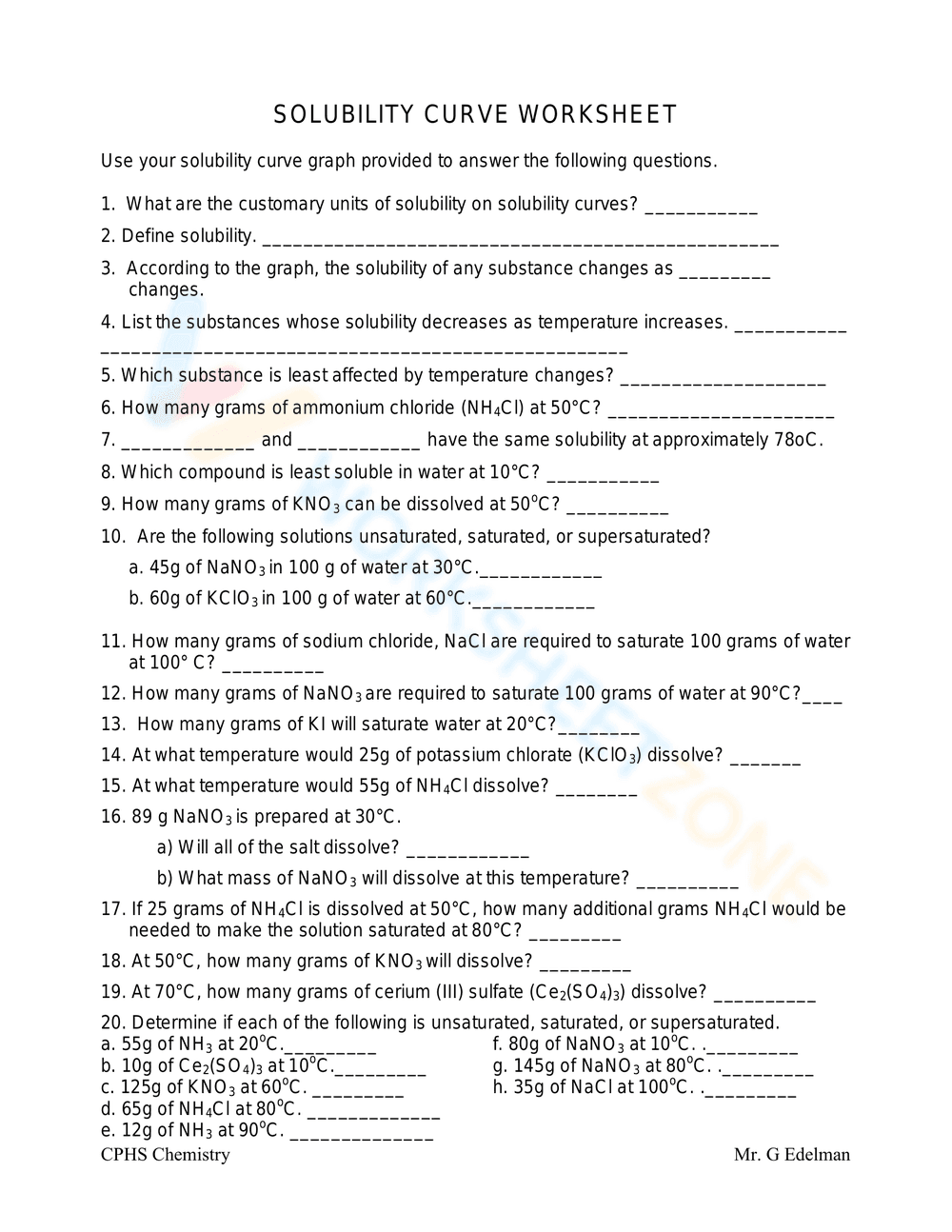
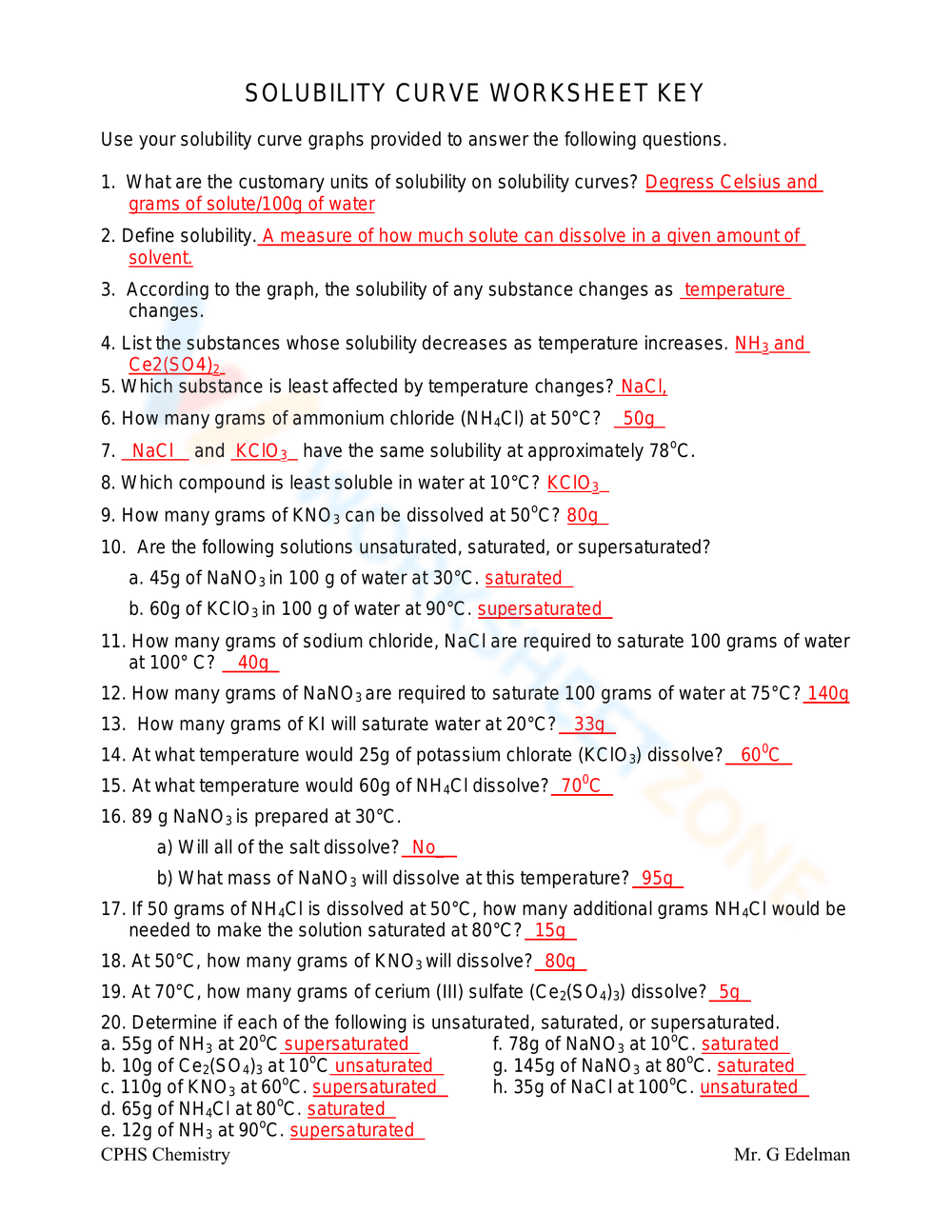
This is a solubility curve worksheet containing 20 questions related to solubility, saturation, and the effect of temperature on solubility. The questions require students to interpret solubility curves, define solubility, list substances based on solubility changes with temperature, calculate the amount of solute needed for saturation at different temperatures, and determine if solutions are unsaturated, saturated, or supersaturated. Specific substances mentioned include ammonium chloride (NH4Cl), sodium nitrate (NaNO3), potassium chlorate (KClO3), potassium iodide (KI), sodium chloride (NaCl), and cerium(III) sulfate (Ce2(SO4)3).
Grade Level Suitability:
This worksheet is suitable for high school chemistry students, specifically grades 9-12. The concepts of solubility, saturation, and interpreting graphs are typically introduced in high school chemistry courses. The calculations and analysis required in the questions necessitate a foundational understanding of chemistry principles.
Why Use It:
This worksheet reinforces understanding of solubility concepts, including saturation, unsaturation, and supersaturation. It develops skills in interpreting solubility curves and applying this knowledge to solve quantitative problems related to solution concentration. The worksheet also helps students understand the relationship between temperature and solubility.
How to Use It:
Students should use the solubility curve graph (presumably provided separately) to answer the questions. They need to define solubility, identify trends in solubility based on temperature, calculate amounts of solute needed for saturation, and determine the saturation status of given solutions. Students should show their work for calculations.
Target Users:
The target users are high school chemistry students learning about solutions and solubility. It is also useful for teachers as a practice or assessment tool for this topic. The worksheet can also be used for review or remediation for students struggling with these concepts.
This is a solubility curve worksheet containing 20 questions related to solubility, saturation, and the effect of temperature on solubility. The questions require students to interpret solubility curves, define solubility, list substances based on solubility changes with temperature, calculate the amount of solute needed for saturation at different temperatures, and determine if solutions are unsaturated, saturated, or supersaturated. Specific substances mentioned include ammonium chloride (NH4Cl), sodium nitrate (NaNO3), potassium chlorate (KClO3), potassium iodide (KI), sodium chloride (NaCl), and cerium(III) sulfate (Ce2(SO4)3).
Grade Level Suitability:
This worksheet is suitable for high school chemistry students, specifically grades 9-12. The concepts of solubility, saturation, and interpreting graphs are typically introduced in high school chemistry courses. The calculations and analysis required in the questions necessitate a foundational understanding of chemistry principles.
Why Use It:
This worksheet reinforces understanding of solubility concepts, including saturation, unsaturation, and supersaturation. It develops skills in interpreting solubility curves and applying this knowledge to solve quantitative problems related to solution concentration. The worksheet also helps students understand the relationship between temperature and solubility.
How to Use It:
Students should use the solubility curve graph (presumably provided separately) to answer the questions. They need to define solubility, identify trends in solubility based on temperature, calculate amounts of solute needed for saturation, and determine the saturation status of given solutions. Students should show their work for calculations.
Target Users:
The target users are high school chemistry students learning about solutions and solubility. It is also useful for teachers as a practice or assessment tool for this topic. The worksheet can also be used for review or remediation for students struggling with these concepts.


