


























1 / 4
0
Views
0
Plays


0.0
0
0 Likes
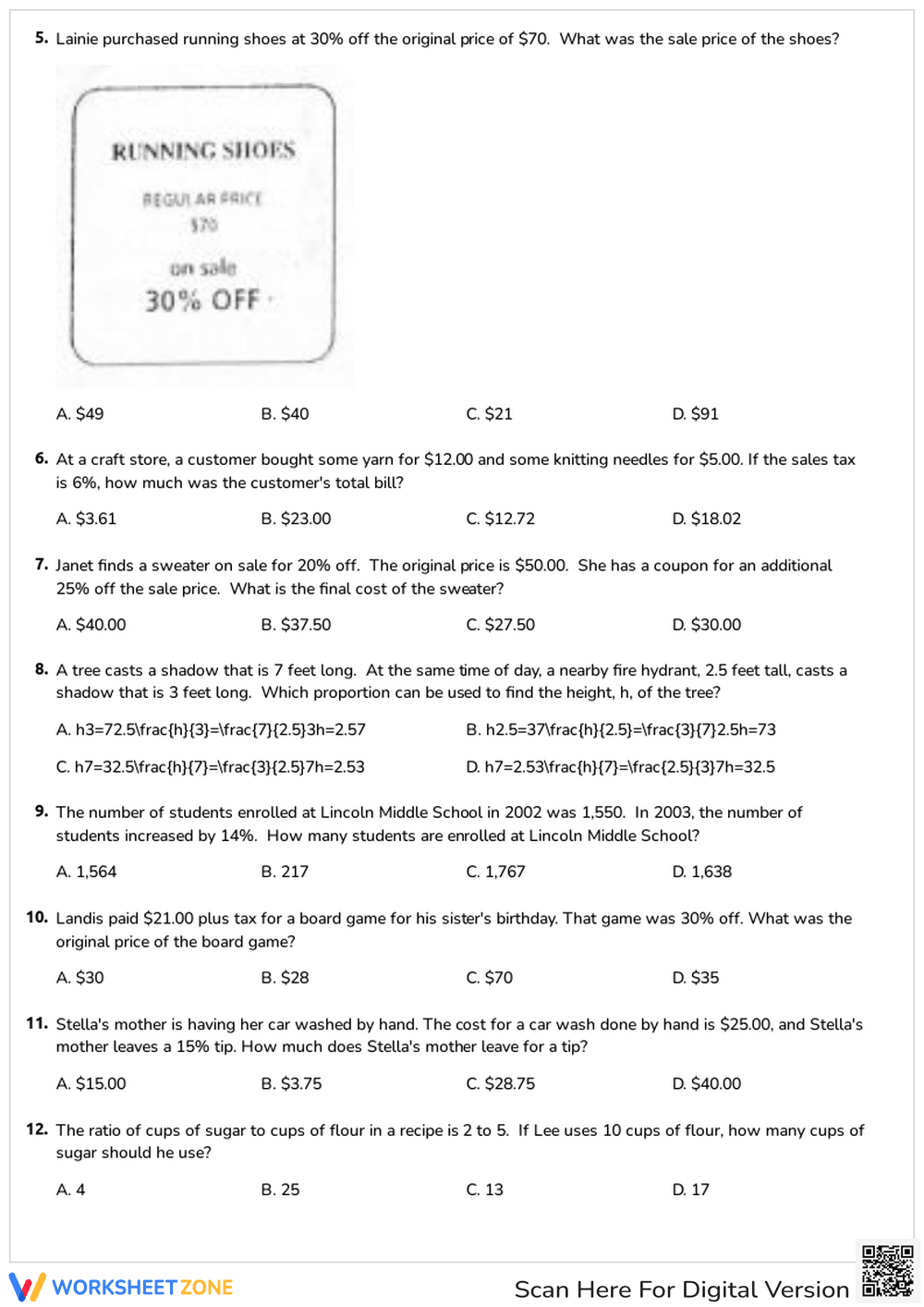
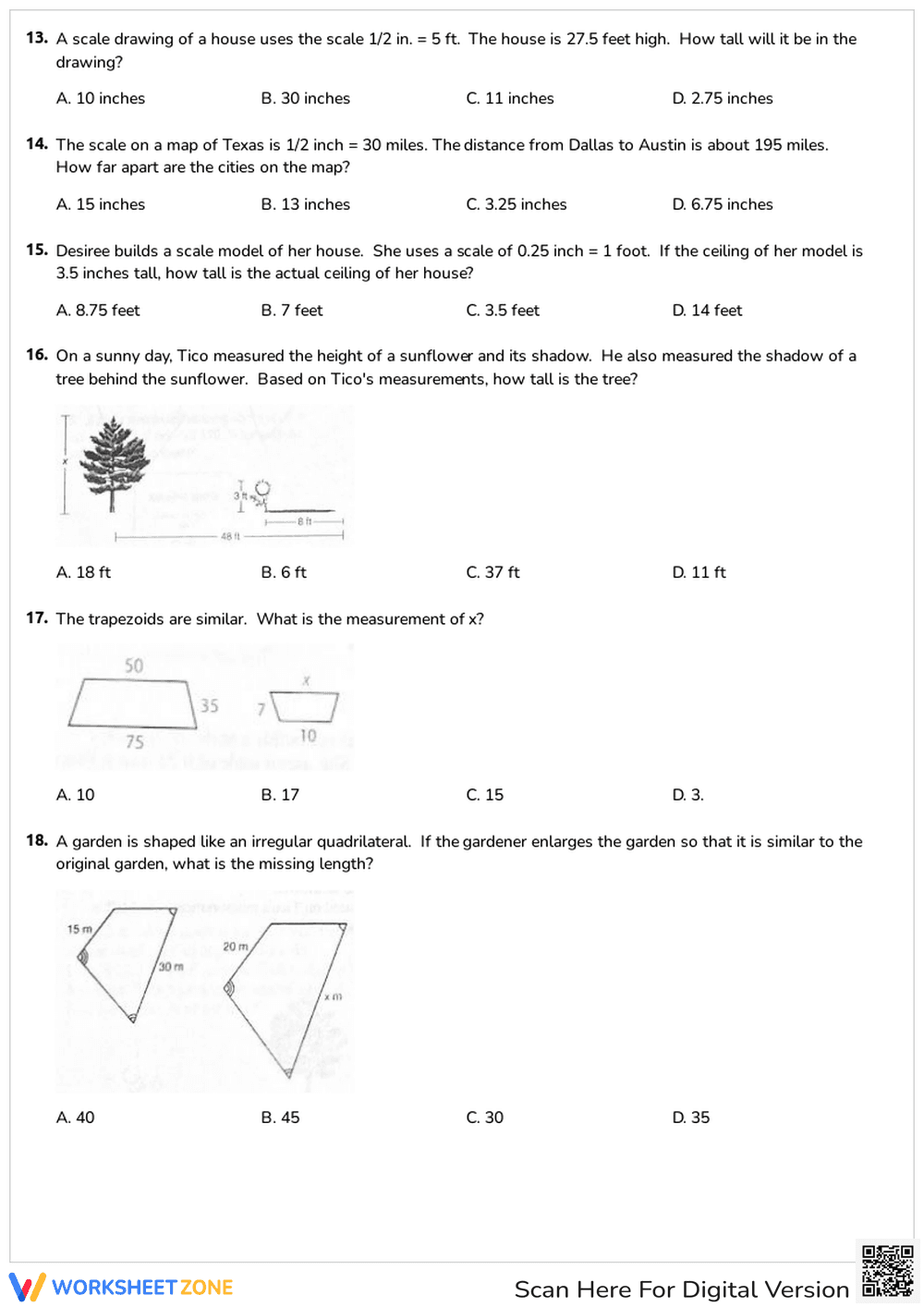
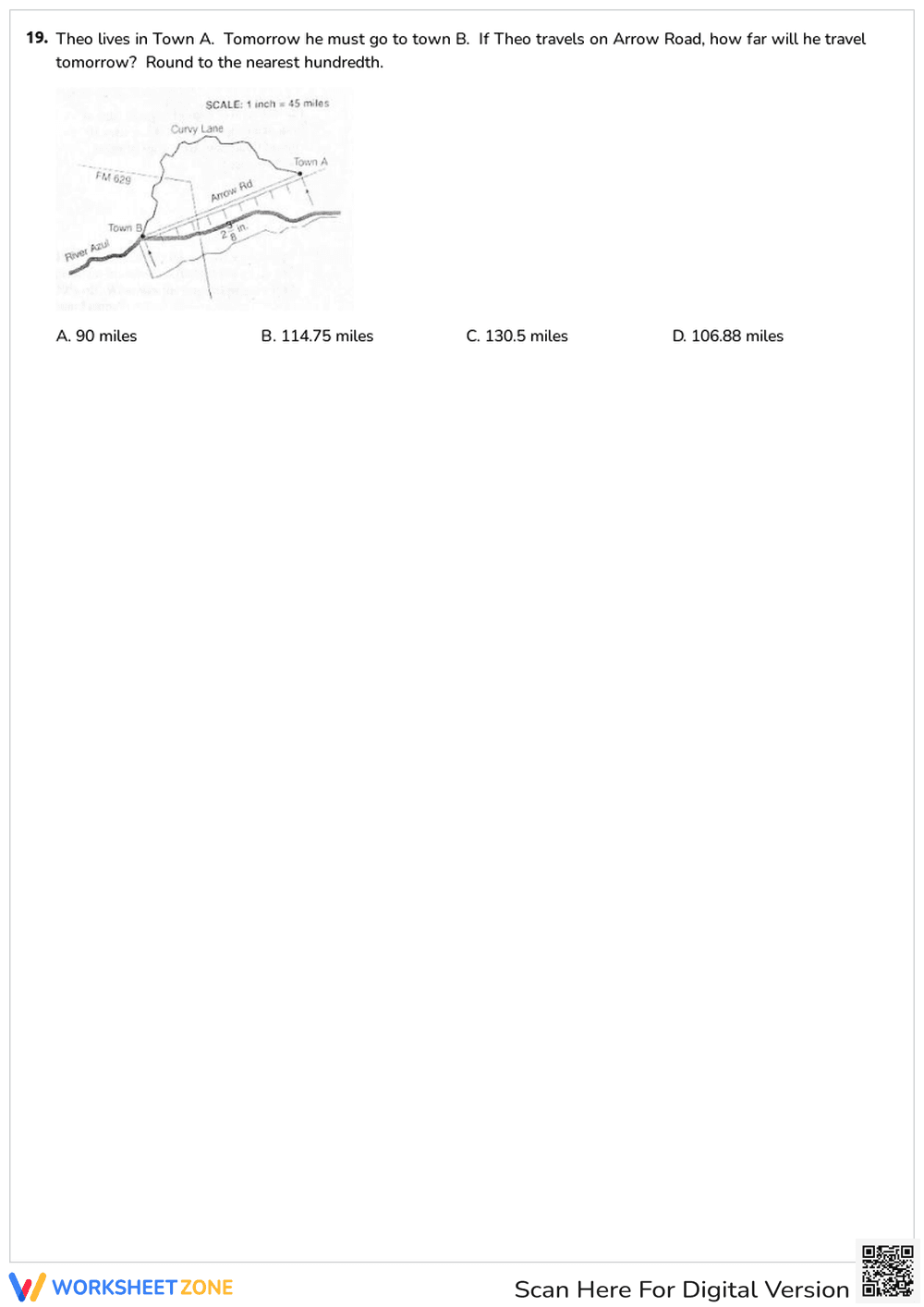
Math Ratios: Scale Drawings and Proportions
0 Views
0 Plays
Paste this activity's link or code into your existing LMS (Google Classroom, Canvas, Teams, Schoology, Moodle, etc.).
Students can open and work on the activity right away, with no student login required.
You'll still be able to track student progress and results from your teacher account.
Information
Description
What It Is:
This is a geometry worksheet featuring two quadrilaterals. The left quadrilateral is labeled with side lengths of 15m and 30m. The right quadrilateral is labeled with a side length of 20m, and another side is labeled 'x m'. Both quadrilaterals have corresponding angles marked as congruent, suggesting a similarity problem where students need to find the missing side length 'x'.
Grade Level Suitability:
This worksheet is suitable for grades 6-8. It requires an understanding of geometry, specifically similar shapes and proportions. Students should be familiar with setting up and solving proportions to find unknown side lengths.
Why Use It:
This worksheet reinforces the concept of similarity in geometric shapes. It helps students develop their problem-solving skills by applying the properties of similar figures to calculate unknown side lengths. It also strengthens their understanding of ratios and proportions in a visual context.
How to Use It:
Students should first identify the corresponding sides of the two similar quadrilaterals. Then, they should set up a proportion using the known side lengths (15m/20m = 30m/x m). Finally, they should solve the proportion for 'x' using cross-multiplication or other methods.
Target Users:
This worksheet is ideal for students who are learning about similar figures in geometry. It is also beneficial for students who need practice setting up and solving proportions in a real-world context. Teachers can use it for in-class activities, homework assignments, or review exercises.
This is a geometry worksheet featuring two quadrilaterals. The left quadrilateral is labeled with side lengths of 15m and 30m. The right quadrilateral is labeled with a side length of 20m, and another side is labeled 'x m'. Both quadrilaterals have corresponding angles marked as congruent, suggesting a similarity problem where students need to find the missing side length 'x'.
Grade Level Suitability:
This worksheet is suitable for grades 6-8. It requires an understanding of geometry, specifically similar shapes and proportions. Students should be familiar with setting up and solving proportions to find unknown side lengths.
Why Use It:
This worksheet reinforces the concept of similarity in geometric shapes. It helps students develop their problem-solving skills by applying the properties of similar figures to calculate unknown side lengths. It also strengthens their understanding of ratios and proportions in a visual context.
How to Use It:
Students should first identify the corresponding sides of the two similar quadrilaterals. Then, they should set up a proportion using the known side lengths (15m/20m = 30m/x m). Finally, they should solve the proportion for 'x' using cross-multiplication or other methods.
Target Users:
This worksheet is ideal for students who are learning about similar figures in geometry. It is also beneficial for students who need practice setting up and solving proportions in a real-world context. Teachers can use it for in-class activities, homework assignments, or review exercises.


