


























0
Views
0
Downloads

0.0
0
0 Likes
Understanding Body Language Worksheet Activity
0 Views
0 Downloads
Paste this activity's link or code into your existing LMS (Google Classroom, Canvas, Teams, Schoology, Moodle, etc.).
Students can open and work on the activity right away, with no student login required.
You'll still be able to track student progress and results from your teacher account.
Information
Description
What It Is:
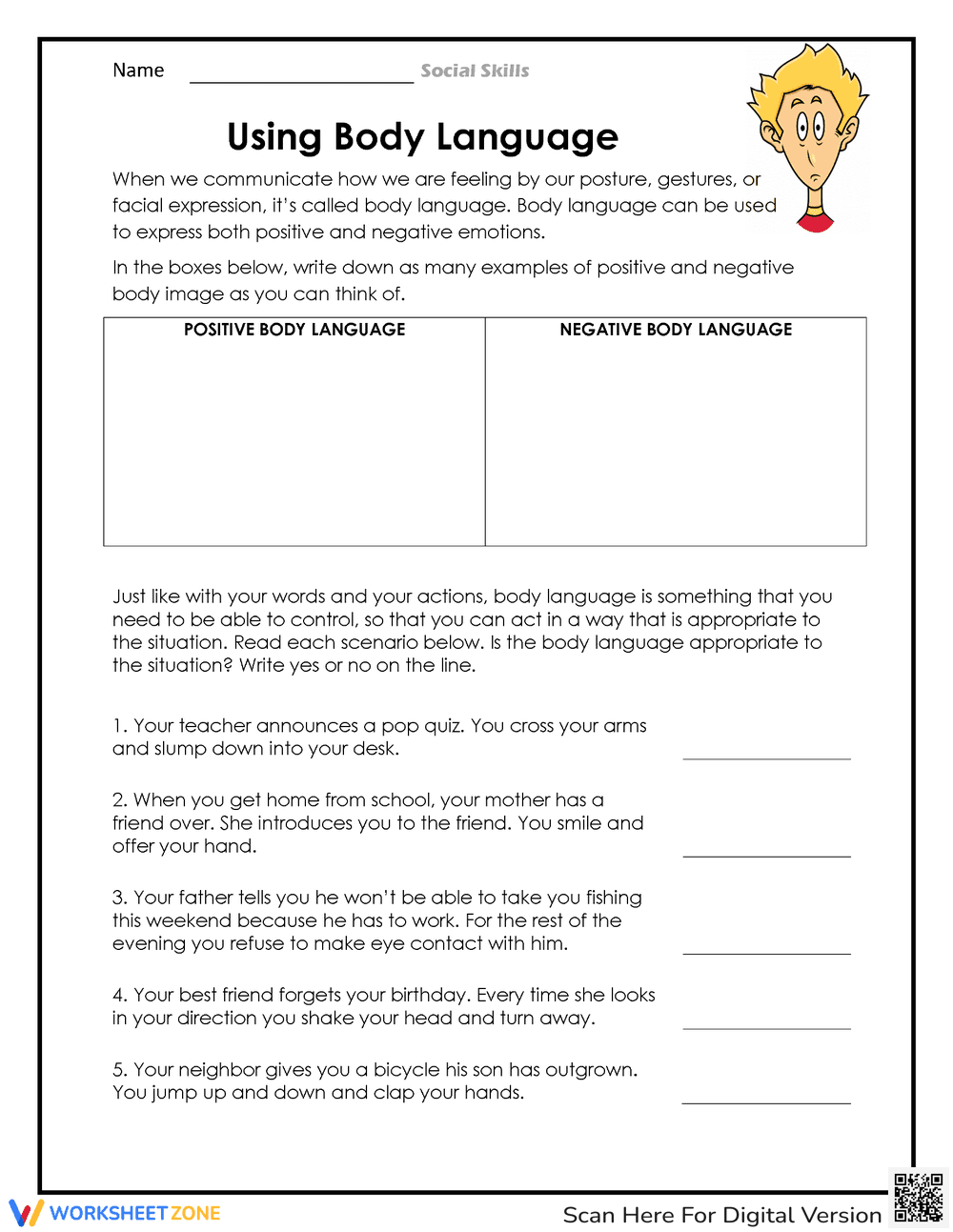
This is a social skills worksheet focused on understanding body language. The worksheet has two sections: one where students brainstorm examples of positive and negative body language, and another where students read scenarios and determine if the body language described is appropriate for the situation, answering 'yes' or 'no.' The scenarios include situations involving a pop quiz, meeting a friend, disappointing news, a forgotten birthday, and a kind neighbor.
Grade Level Suitability:
This worksheet is suitable for grades 2-4. The concepts of positive and negative emotions and appropriate reactions are typically introduced and reinforced in these grades. The scenarios are relatively simple and relatable for this age group.
Why Use It:
This worksheet helps students develop social-emotional learning skills by increasing their awareness of body language and its impact on communication. It encourages critical thinking about appropriate responses in different social situations and promotes empathy.
How to Use It:
First, have students brainstorm and list examples of positive and negative body language in the provided boxes. Then, read each scenario aloud and have students decide if the body language described is appropriate, writing 'yes' or 'no' on the line provided. Encourage discussion about why they chose their answers.
Target Users:
This worksheet is ideal for elementary school students, particularly those in grades 2-4. It can also be helpful for students with social skills challenges or those who need additional support in understanding nonverbal communication. It can be used by teachers, counselors, or parents.
This is a social skills worksheet focused on understanding body language. The worksheet has two sections: one where students brainstorm examples of positive and negative body language, and another where students read scenarios and determine if the body language described is appropriate for the situation, answering 'yes' or 'no.' The scenarios include situations involving a pop quiz, meeting a friend, disappointing news, a forgotten birthday, and a kind neighbor.
Grade Level Suitability:
This worksheet is suitable for grades 2-4. The concepts of positive and negative emotions and appropriate reactions are typically introduced and reinforced in these grades. The scenarios are relatively simple and relatable for this age group.
Why Use It:
This worksheet helps students develop social-emotional learning skills by increasing their awareness of body language and its impact on communication. It encourages critical thinking about appropriate responses in different social situations and promotes empathy.
How to Use It:
First, have students brainstorm and list examples of positive and negative body language in the provided boxes. Then, read each scenario aloud and have students decide if the body language described is appropriate, writing 'yes' or 'no' on the line provided. Encourage discussion about why they chose their answers.
Target Users:
This worksheet is ideal for elementary school students, particularly those in grades 2-4. It can also be helpful for students with social skills challenges or those who need additional support in understanding nonverbal communication. It can be used by teachers, counselors, or parents.


