


























1 / 5
0
Views
0
Downloads



0.0
0
0 Likes
Vector Addition Worksheet
0 Views
0 Downloads
Paste this activity's link or code into your existing LMS (Google Classroom, Canvas, Teams, Schoology, Moodle, etc.).
Students can open and work on the activity right away, with no student login required.
You'll still be able to track student progress and results from your teacher account.
Information
Description
What It Is:
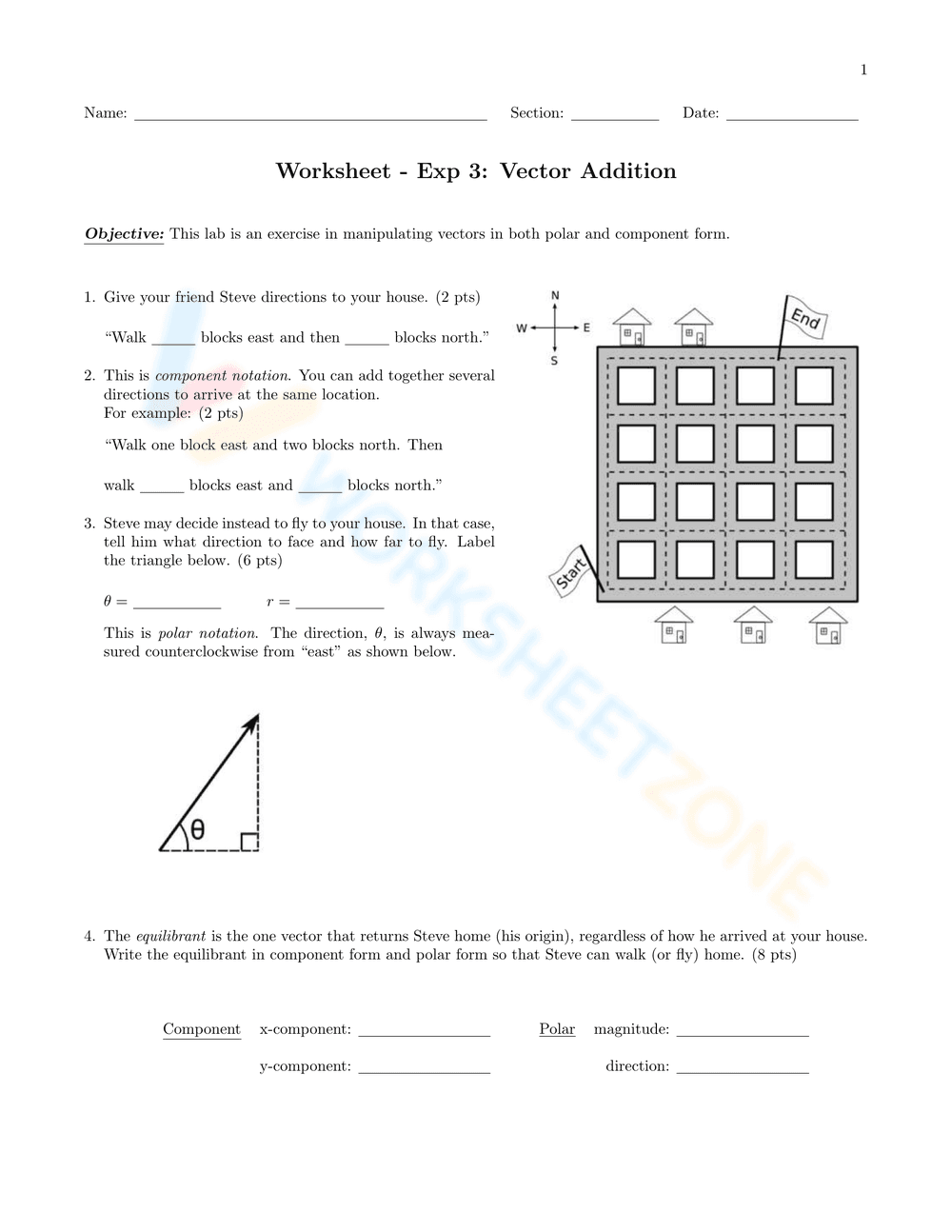
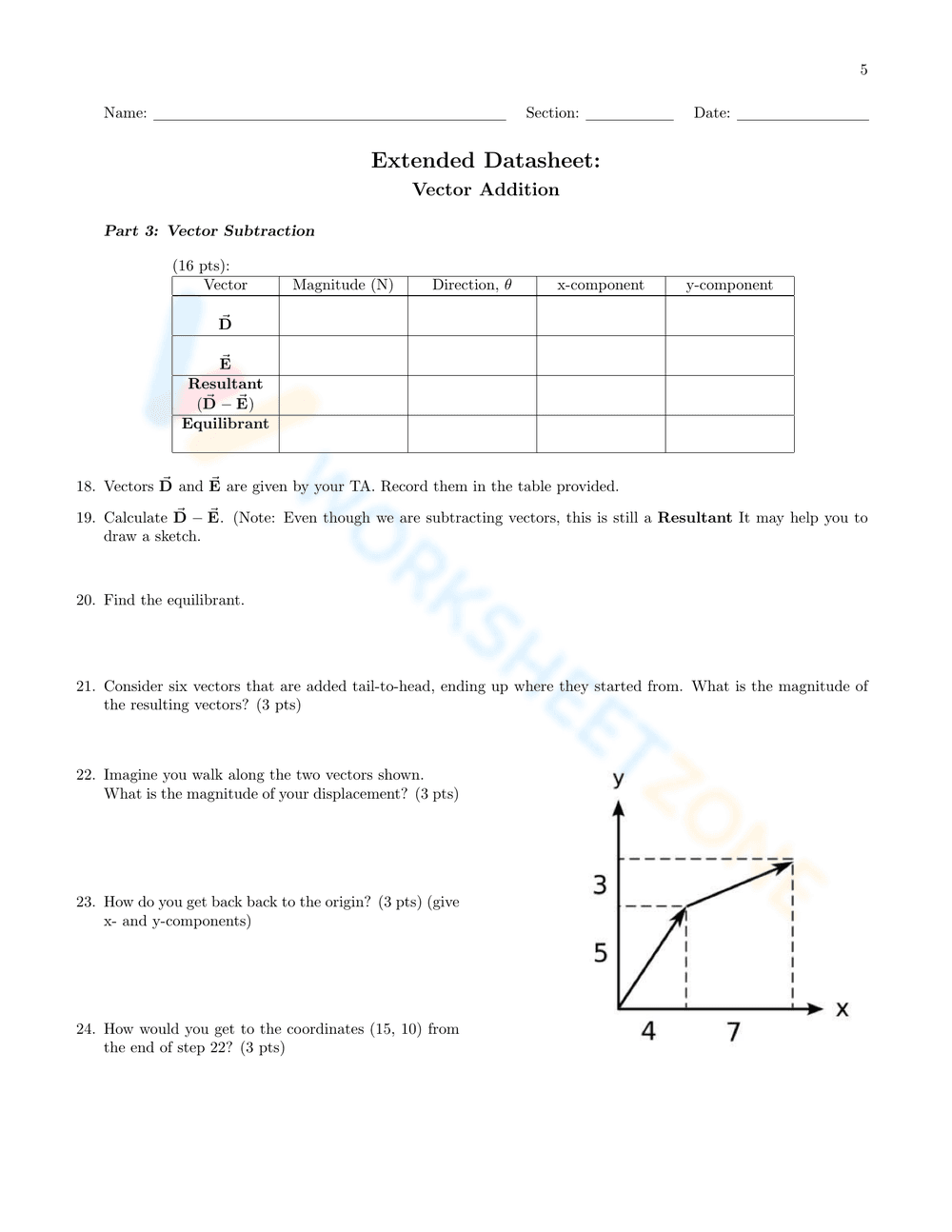
This is a vector addition worksheet where students manipulate vectors in both polar and component form. The worksheet includes problems where students give directions to a location on a grid, convert directions to component notation, and calculate the direction and distance to a location using polar notation, including labeling a right triangle. It also requires calculating the equilibrium vector.
Grade Level Suitability:
This worksheet is suitable for high school students, specifically grades 9-12, taking physics or pre-calculus courses. The concepts of vector addition, component form, and polar notation are typically introduced at this level.
Why Use It:
This worksheet reinforces understanding of vector addition in both component and polar forms. It helps students visualize vectors, translate between different representations, and apply vector concepts to real-world scenarios like navigation. It also introduces the concept of equilibrium vector.
How to Use It:
Students should follow the instructions to give directions on the grid, convert those directions to component notation, calculate the resultant vector in polar form using the provided triangle, and determine the equilibrium vector. They will need to fill in the blanks and label the triangle.
Target Users:
The target users are high school students studying physics or pre-calculus, and teachers looking for practice problems on vector addition.
This is a vector addition worksheet where students manipulate vectors in both polar and component form. The worksheet includes problems where students give directions to a location on a grid, convert directions to component notation, and calculate the direction and distance to a location using polar notation, including labeling a right triangle. It also requires calculating the equilibrium vector.
Grade Level Suitability:
This worksheet is suitable for high school students, specifically grades 9-12, taking physics or pre-calculus courses. The concepts of vector addition, component form, and polar notation are typically introduced at this level.
Why Use It:
This worksheet reinforces understanding of vector addition in both component and polar forms. It helps students visualize vectors, translate between different representations, and apply vector concepts to real-world scenarios like navigation. It also introduces the concept of equilibrium vector.
How to Use It:
Students should follow the instructions to give directions on the grid, convert those directions to component notation, calculate the resultant vector in polar form using the provided triangle, and determine the equilibrium vector. They will need to fill in the blanks and label the triangle.
Target Users:
The target users are high school students studying physics or pre-calculus, and teachers looking for practice problems on vector addition.


