


























1 / 5
0
Views
0
Downloads



0 Likes
Updated Vector Addition Practice Worksheet
0 Views
0 Downloads
Paste this activity's link or code into your existing LMS (Google Classroom, Canvas, Teams, Schoology, Moodle, etc.).
Students can open and work on the activity right away, with no student login required.
You'll still be able to track student progress and results from your teacher account.
Information
Description
What It Is:
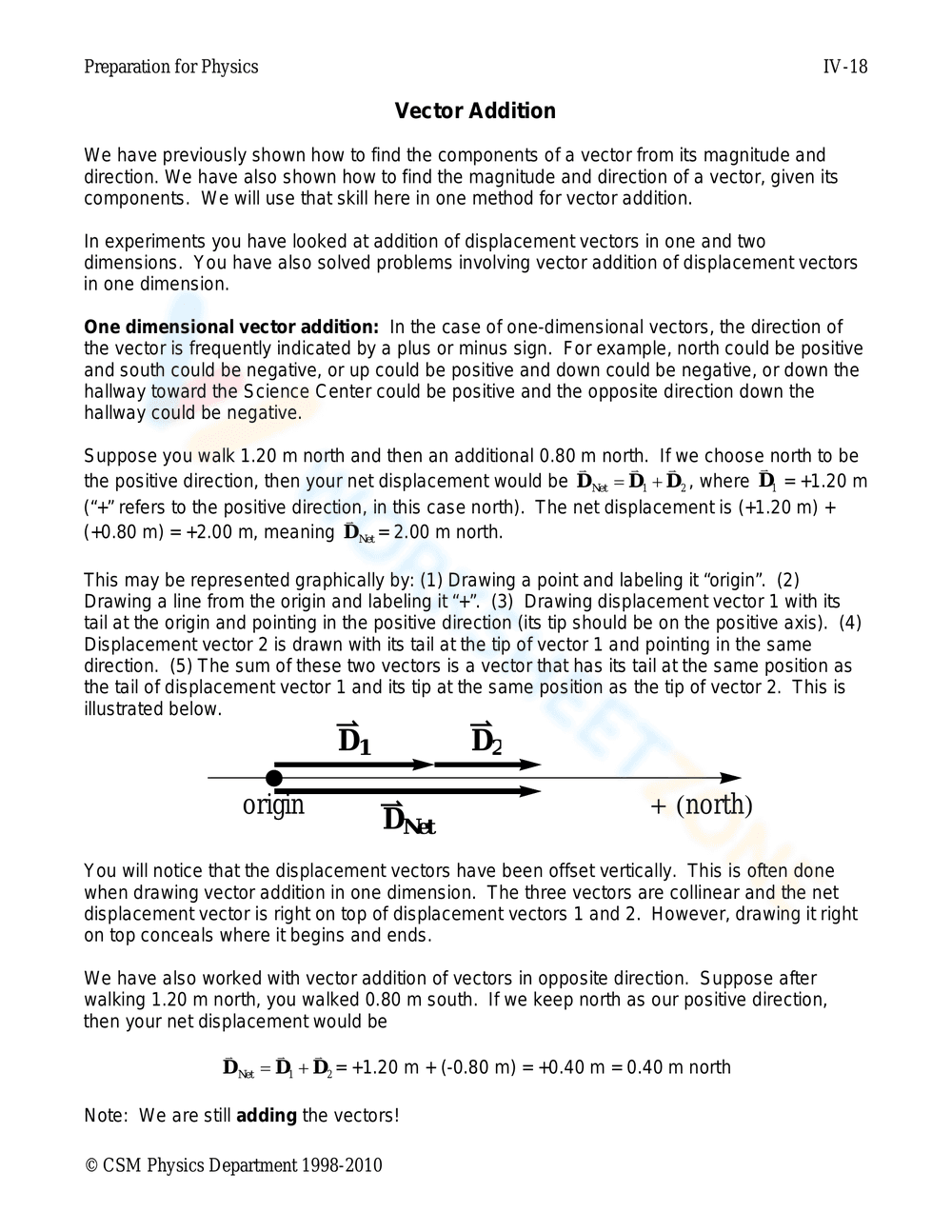
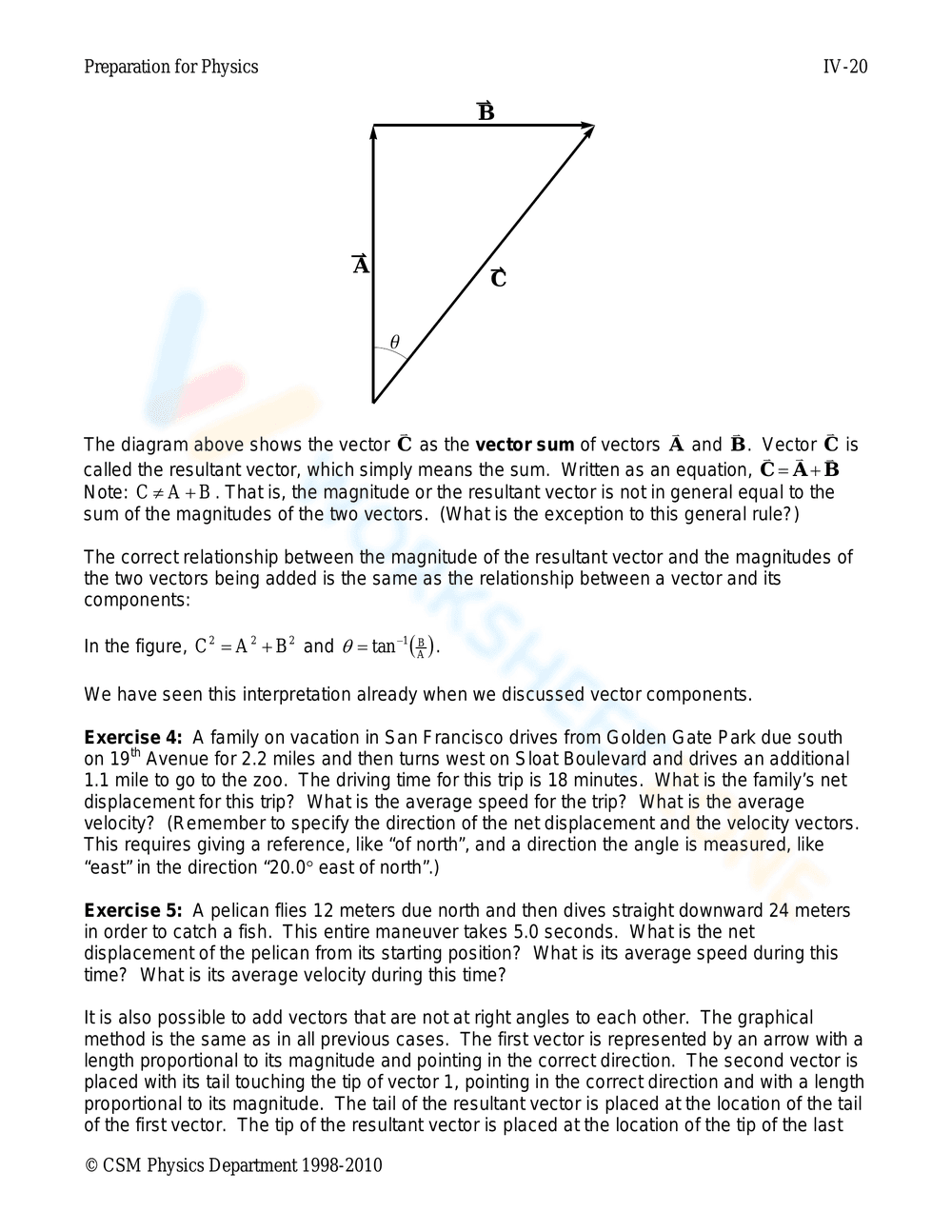
This is a physics worksheet focused on vector addition in one dimension. It explains how to represent vectors with positive and negative signs to indicate direction, and it demonstrates how to add displacement vectors graphically and numerically. The worksheet includes examples of walking north and south, showing how to calculate net displacement. A diagram illustrates how to draw vectors with tails at the origin and tips pointing in the positive direction to visually represent vector addition.
Grade Level Suitability:
This worksheet is suitable for high school physics, specifically grades 9-12. The concepts of vector addition, displacement, and the use of positive and negative signs to indicate direction are typically introduced at this level. The mathematical calculations are straightforward but require an understanding of basic physics principles.
Why Use It:
This worksheet helps students understand the fundamental concepts of vector addition in one dimension. It provides a clear explanation of how to represent direction with positive and negative signs and how to calculate net displacement. The graphical representation helps students visualize the process of vector addition, reinforcing their understanding.
How to Use It:
Students should read the explanations and examples carefully. They can then practice adding displacement vectors numerically, paying attention to the signs. The graphical representation section can be used as a guide for drawing vector diagrams to visualize the addition process. The worksheet can be used for individual practice, classroom instruction, or as a review tool.
Target Users:
The target users are high school physics students who are learning about vector addition. It's also useful for teachers who need a resource for explaining and illustrating the concepts of vector addition in one dimension. Students who need a review of basic vector concepts will also benefit.
This is a physics worksheet focused on vector addition in one dimension. It explains how to represent vectors with positive and negative signs to indicate direction, and it demonstrates how to add displacement vectors graphically and numerically. The worksheet includes examples of walking north and south, showing how to calculate net displacement. A diagram illustrates how to draw vectors with tails at the origin and tips pointing in the positive direction to visually represent vector addition.
Grade Level Suitability:
This worksheet is suitable for high school physics, specifically grades 9-12. The concepts of vector addition, displacement, and the use of positive and negative signs to indicate direction are typically introduced at this level. The mathematical calculations are straightforward but require an understanding of basic physics principles.
Why Use It:
This worksheet helps students understand the fundamental concepts of vector addition in one dimension. It provides a clear explanation of how to represent direction with positive and negative signs and how to calculate net displacement. The graphical representation helps students visualize the process of vector addition, reinforcing their understanding.
How to Use It:
Students should read the explanations and examples carefully. They can then practice adding displacement vectors numerically, paying attention to the signs. The graphical representation section can be used as a guide for drawing vector diagrams to visualize the addition process. The worksheet can be used for individual practice, classroom instruction, or as a review tool.
Target Users:
The target users are high school physics students who are learning about vector addition. It's also useful for teachers who need a resource for explaining and illustrating the concepts of vector addition in one dimension. Students who need a review of basic vector concepts will also benefit.


