


























1 / 4
0
Views
0
Downloads


0 Likes
Updated Practice: Vector Addition Worksheet
0 Views
0 Downloads
Paste this activity's link or code into your existing LMS (Google Classroom, Canvas, Teams, Schoology, Moodle, etc.).
Students can open and work on the activity right away, with no student login required.
You'll still be able to track student progress and results from your teacher account.
Information
Description
What It Is:
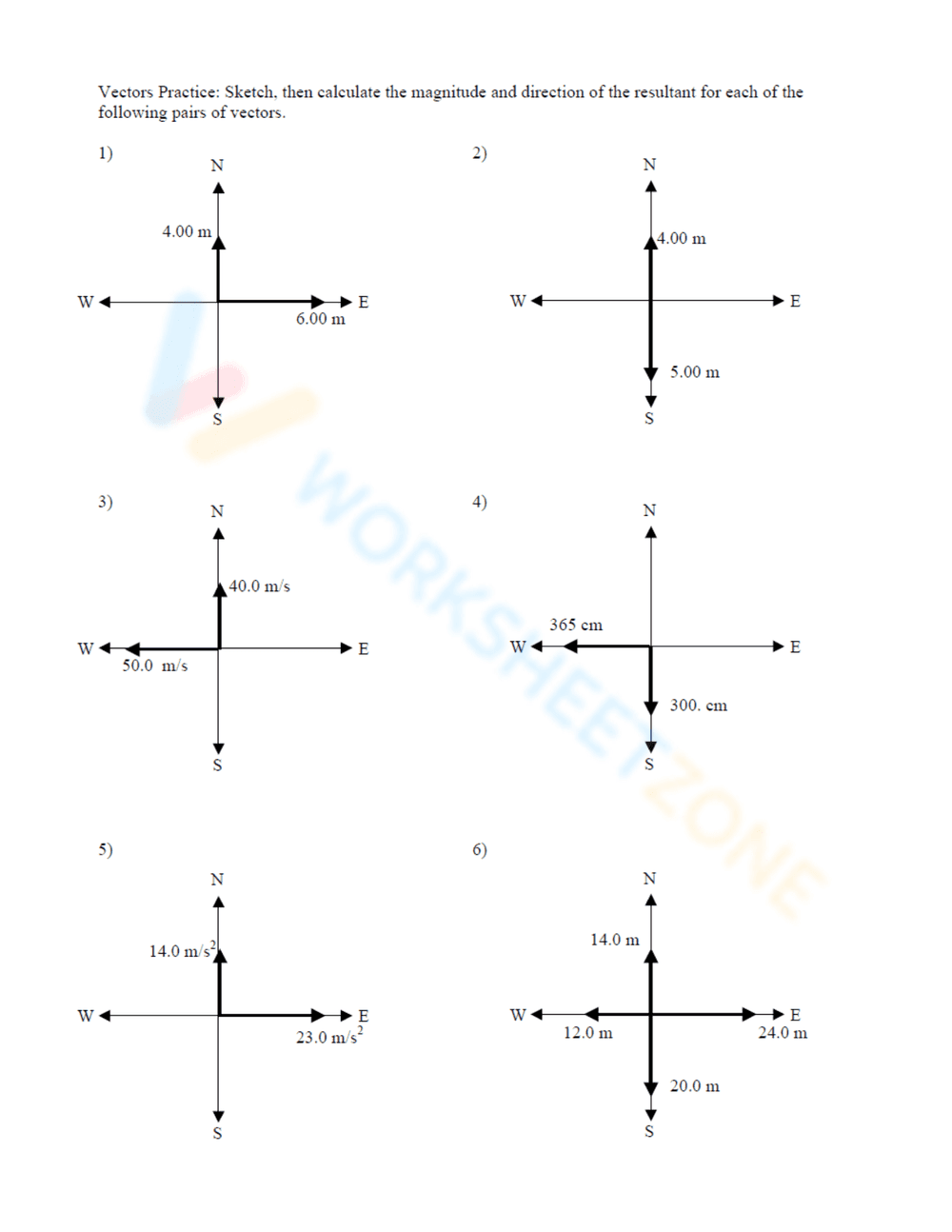
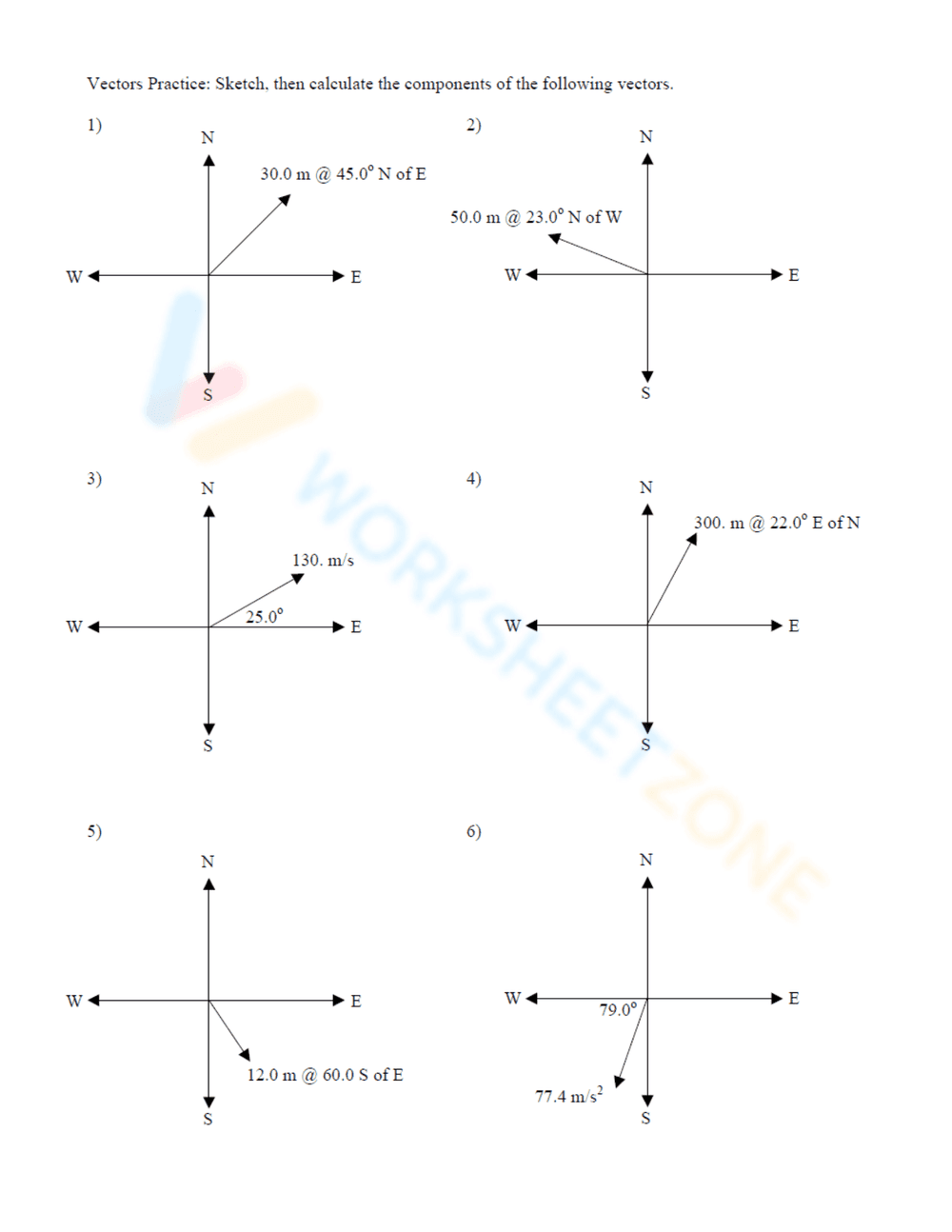
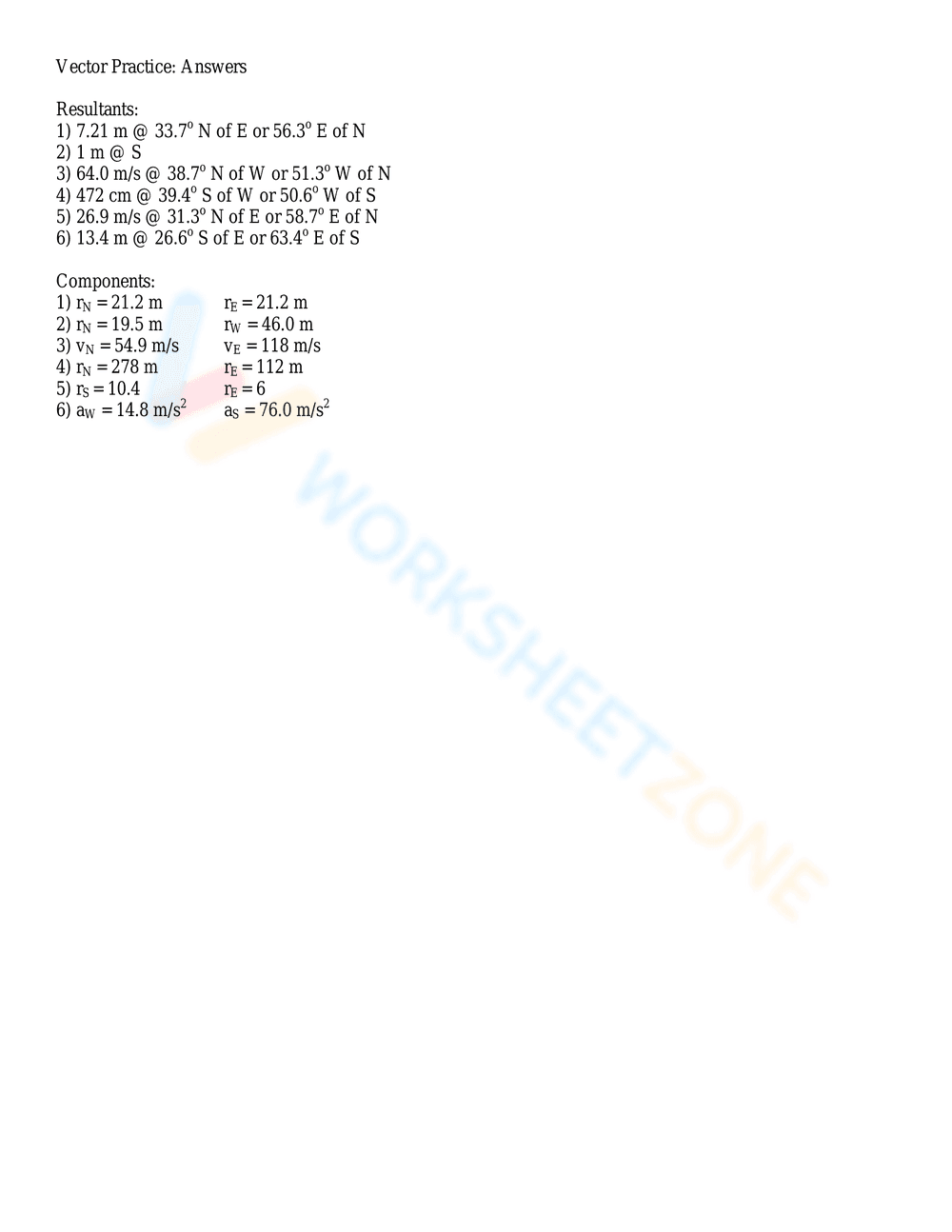
This is a 'Vector Addition Worksheet'. It provides a series of problems where students are asked to graphically add pairs of vectors within designated boxes. The directions specify to show the vector addition process and indicate the resultant vector with a dotted line and arrowhead. An example is provided at the top showing how to add two vectors and label the resultant vector 'R'. If there is no resultant, the instructions say to write 'no R'. The worksheet is divided into six boxes for solving problems.
Grade Level Suitability:
This worksheet is suitable for high school physics or introductory college physics courses (grades 9-14). It assumes students have a basic understanding of vectors and graphical addition techniques.
Why Use It:
This worksheet reinforces the concept of vector addition using a graphical method. It helps students visualize how vectors combine and determine the resultant vector's magnitude and direction. It promotes problem-solving skills in physics and provides practice in applying vector concepts.
How to Use It:
Students should carefully examine each pair of vectors in the boxes. They need to graphically add the vectors, showing the process of combining them. The resultant vector should be drawn with a dotted line and include an arrowhead to indicate direction. The resultant vector should be labeled 'R'. If the vectors cancel each other out resulting in no resultant vector, the student should write 'no R' in the box.
Target Users:
The target users are high school and early college students studying physics or related science subjects. It is beneficial for students learning about vector addition, graphical methods, and resultant vectors. It can also be used for homework, in-class practice, or review exercises.
This is a 'Vector Addition Worksheet'. It provides a series of problems where students are asked to graphically add pairs of vectors within designated boxes. The directions specify to show the vector addition process and indicate the resultant vector with a dotted line and arrowhead. An example is provided at the top showing how to add two vectors and label the resultant vector 'R'. If there is no resultant, the instructions say to write 'no R'. The worksheet is divided into six boxes for solving problems.
Grade Level Suitability:
This worksheet is suitable for high school physics or introductory college physics courses (grades 9-14). It assumes students have a basic understanding of vectors and graphical addition techniques.
Why Use It:
This worksheet reinforces the concept of vector addition using a graphical method. It helps students visualize how vectors combine and determine the resultant vector's magnitude and direction. It promotes problem-solving skills in physics and provides practice in applying vector concepts.
How to Use It:
Students should carefully examine each pair of vectors in the boxes. They need to graphically add the vectors, showing the process of combining them. The resultant vector should be drawn with a dotted line and include an arrowhead to indicate direction. The resultant vector should be labeled 'R'. If the vectors cancel each other out resulting in no resultant vector, the student should write 'no R' in the box.
Target Users:
The target users are high school and early college students studying physics or related science subjects. It is beneficial for students learning about vector addition, graphical methods, and resultant vectors. It can also be used for homework, in-class practice, or review exercises.


