


























0
Views
0
Downloads

0.0
0
0 Likes
Understanding Oxymorons: Definition and Examples
0 Views
0 Downloads
Paste this activity's link or code into your existing LMS (Google Classroom, Canvas, Teams, Schoology, Moodle, etc.).
Students can open and work on the activity right away, with no student login required.
You'll still be able to track student progress and results from your teacher account.
Information
Description
What It Is:
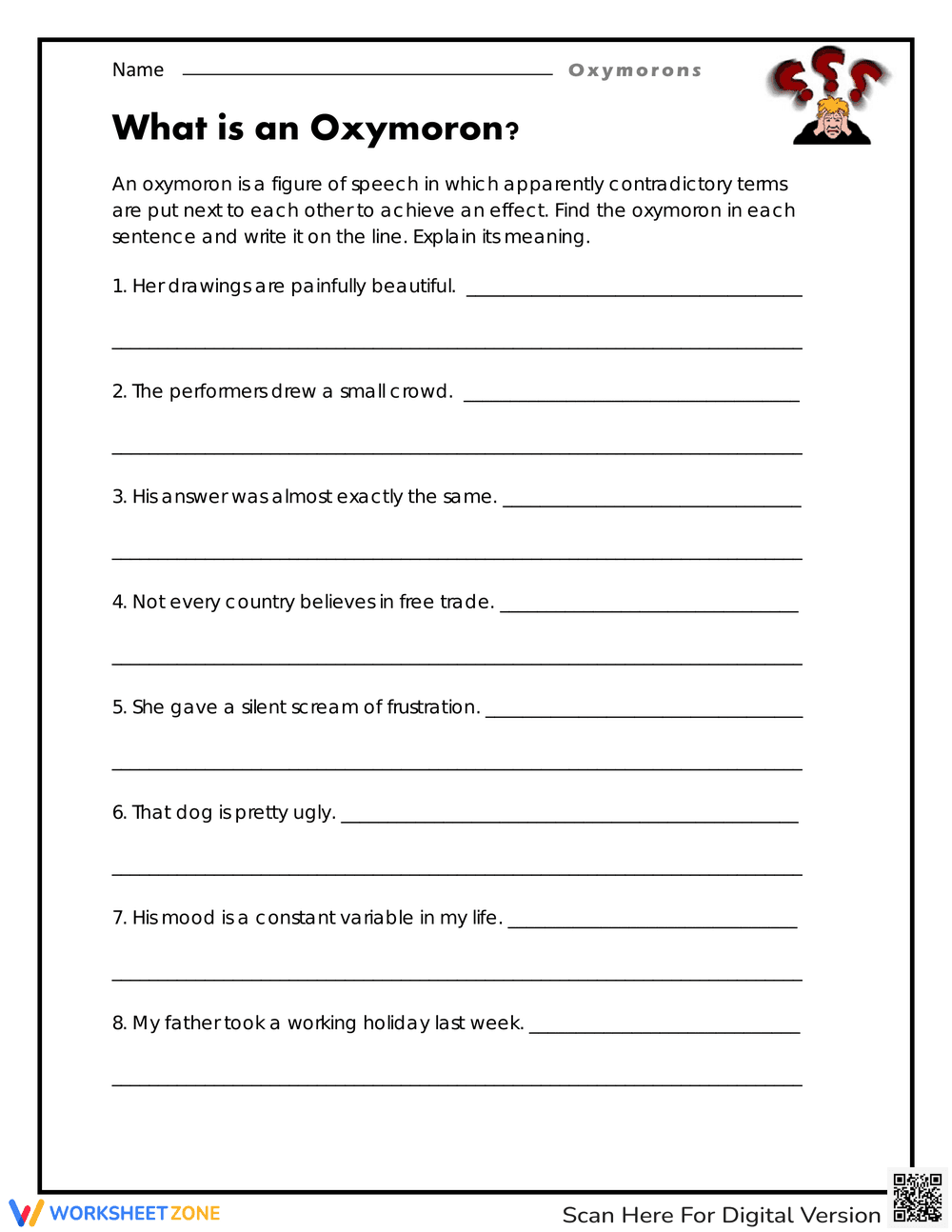
This is a worksheet designed to teach students about oxymorons. It starts with a definition of an oxymoron as a figure of speech using contradictory terms. The worksheet then presents eight sentences, each containing an oxymoron. Students are instructed to identify the oxymoron in each sentence and explain its meaning on the provided lines.
Grade Level Suitability:
This worksheet is suitable for grades 6-8. The concept of oxymorons requires a certain level of understanding of language and figurative speech, typically developed in middle school. The vocabulary and sentence structure are also appropriate for this age range.
Why Use It:
This worksheet helps students understand and identify oxymorons, a type of figurative language. It improves reading comprehension, vocabulary, and critical thinking skills by requiring students to analyze sentences and explain the meaning of the oxymorons within them. It reinforces understanding of contradictory terms and their effect in writing.
How to Use It:
First, read the definition of an oxymoron at the top of the page. Then, for each numbered sentence, identify the oxymoron. Finally, write an explanation of the meaning of the oxymoron on the line provided.
Target Users:
This worksheet is ideal for middle school students learning about figurative language, specifically oxymorons. It's also beneficial for students who need practice with reading comprehension and vocabulary development. Teachers can use it as a classroom activity, homework assignment, or review exercise.
This is a worksheet designed to teach students about oxymorons. It starts with a definition of an oxymoron as a figure of speech using contradictory terms. The worksheet then presents eight sentences, each containing an oxymoron. Students are instructed to identify the oxymoron in each sentence and explain its meaning on the provided lines.
Grade Level Suitability:
This worksheet is suitable for grades 6-8. The concept of oxymorons requires a certain level of understanding of language and figurative speech, typically developed in middle school. The vocabulary and sentence structure are also appropriate for this age range.
Why Use It:
This worksheet helps students understand and identify oxymorons, a type of figurative language. It improves reading comprehension, vocabulary, and critical thinking skills by requiring students to analyze sentences and explain the meaning of the oxymorons within them. It reinforces understanding of contradictory terms and their effect in writing.
How to Use It:
First, read the definition of an oxymoron at the top of the page. Then, for each numbered sentence, identify the oxymoron. Finally, write an explanation of the meaning of the oxymoron on the line provided.
Target Users:
This worksheet is ideal for middle school students learning about figurative language, specifically oxymorons. It's also beneficial for students who need practice with reading comprehension and vocabulary development. Teachers can use it as a classroom activity, homework assignment, or review exercise.


