


























1 / 2
0
Views
0
Downloads


0.0
0
0 Likes
Understanding Figurative Language
0 Views
0 Downloads
Paste this activity's link or code into your existing LMS (Google Classroom, Canvas, Teams, Schoology, Moodle, etc.).
Students can open and work on the activity right away, with no student login required.
You'll still be able to track student progress and results from your teacher account.
Information
Description
What It Is:
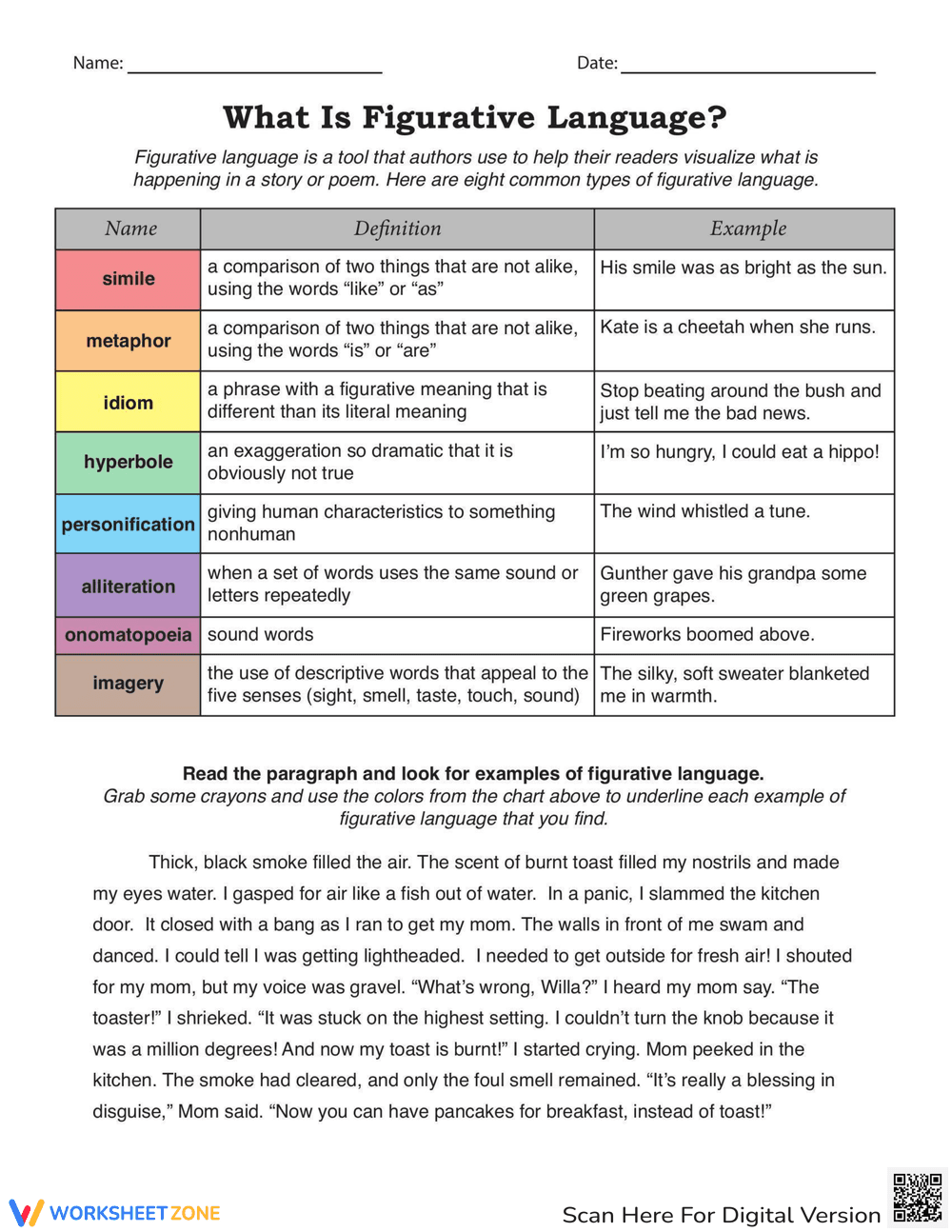
This is an educational worksheet focused on teaching figurative language. It includes a table defining eight types of figurative language: simile, metaphor, idiom, hyperbole, personification, alliteration, onomatopoeia, and imagery, with examples for each. Below the table is a paragraph where students are instructed to identify and underline examples of figurative language using crayons that correspond to the colors in the table.
Grade Level Suitability:
This worksheet is suitable for grades 4-6. The concepts are introduced in a clear and organized manner, and the activity of identifying figurative language within a paragraph is appropriate for this age group's reading comprehension skills. The examples are also relatable and easy to understand.
Why Use It:
This worksheet helps students understand and identify different types of figurative language. It improves reading comprehension, vocabulary, and analytical skills. The color-coding activity makes learning more engaging and memorable.
How to Use It:
First, review the table defining each type of figurative language and its example. Then, read the paragraph provided. Using crayons or colored pencils that match the colors in the table, underline the examples of each type of figurative language found in the paragraph.
Target Users:
The target users are elementary and middle school students (grades 4-6) who are learning about figurative language in their English or Language Arts classes. It's also helpful for teachers looking for a visually appealing and engaging resource to teach this concept.
This is an educational worksheet focused on teaching figurative language. It includes a table defining eight types of figurative language: simile, metaphor, idiom, hyperbole, personification, alliteration, onomatopoeia, and imagery, with examples for each. Below the table is a paragraph where students are instructed to identify and underline examples of figurative language using crayons that correspond to the colors in the table.
Grade Level Suitability:
This worksheet is suitable for grades 4-6. The concepts are introduced in a clear and organized manner, and the activity of identifying figurative language within a paragraph is appropriate for this age group's reading comprehension skills. The examples are also relatable and easy to understand.
Why Use It:
This worksheet helps students understand and identify different types of figurative language. It improves reading comprehension, vocabulary, and analytical skills. The color-coding activity makes learning more engaging and memorable.
How to Use It:
First, review the table defining each type of figurative language and its example. Then, read the paragraph provided. Using crayons or colored pencils that match the colors in the table, underline the examples of each type of figurative language found in the paragraph.
Target Users:
The target users are elementary and middle school students (grades 4-6) who are learning about figurative language in their English or Language Arts classes. It's also helpful for teachers looking for a visually appealing and engaging resource to teach this concept.


