


























0
Views
0
Downloads

0.0
0
0 Likes
Biotic and Abiotic Factors Worksheet
0 Views
0 Downloads
Paste this activity's link or code into your existing LMS (Google Classroom, Canvas, Teams, Schoology, Moodle, etc.).
Students can open and work on the activity right away, with no student login required.
You'll still be able to track student progress and results from your teacher account.
Information
Description
What It Is:
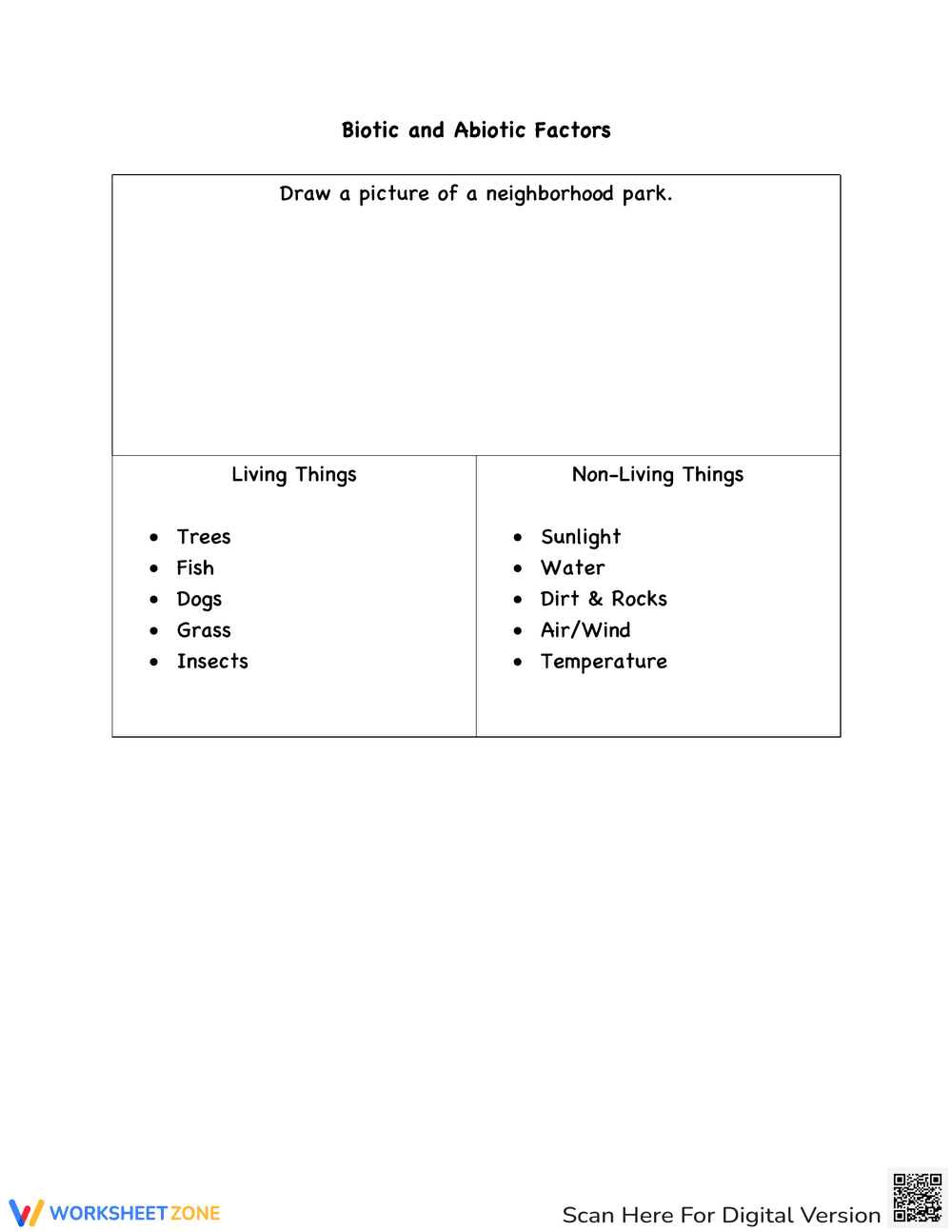
This is a worksheet about biotic and abiotic factors. The worksheet prompts the student to draw a picture of a neighborhood park. Below the drawing area are two columns, one labeled 'Living Things' which lists trees, fish, dogs, grass and insects. The other column is labeled 'Non-Living Things' and lists sunlight, water, dirt & rocks, air/wind and temperature.
Grade Level Suitability:
This worksheet is suitable for grades 2-4. The concepts of living and non-living things are typically introduced in these grades. The drawing activity and the list of items are accessible to this age group.
Why Use It:
This worksheet reinforces the understanding of biotic (living) and abiotic (non-living) factors in an ecosystem. It encourages students to visualize these concepts in a familiar environment, promoting engagement and comprehension.
How to Use It:
First, have the student draw a picture of a neighborhood park in the provided space. Then, guide them to identify and label the living and non-living things in their drawing, relating them to the lists provided in the columns.
Target Users:
This worksheet is ideal for elementary school students learning about ecosystems, habitats, and the difference between living and non-living things. It is also useful for teachers seeking a simple and engaging activity to assess student understanding of these concepts.
This is a worksheet about biotic and abiotic factors. The worksheet prompts the student to draw a picture of a neighborhood park. Below the drawing area are two columns, one labeled 'Living Things' which lists trees, fish, dogs, grass and insects. The other column is labeled 'Non-Living Things' and lists sunlight, water, dirt & rocks, air/wind and temperature.
Grade Level Suitability:
This worksheet is suitable for grades 2-4. The concepts of living and non-living things are typically introduced in these grades. The drawing activity and the list of items are accessible to this age group.
Why Use It:
This worksheet reinforces the understanding of biotic (living) and abiotic (non-living) factors in an ecosystem. It encourages students to visualize these concepts in a familiar environment, promoting engagement and comprehension.
How to Use It:
First, have the student draw a picture of a neighborhood park in the provided space. Then, guide them to identify and label the living and non-living things in their drawing, relating them to the lists provided in the columns.
Target Users:
This worksheet is ideal for elementary school students learning about ecosystems, habitats, and the difference between living and non-living things. It is also useful for teachers seeking a simple and engaging activity to assess student understanding of these concepts.


