


























1 / 5
0
Views
0
Downloads




0 Likes
Analyze Karyotypes with This Quiz Worksheet
0 Views
0 Downloads
Paste this activity's link or code into your existing LMS (Google Classroom, Canvas, Teams, Schoology, Moodle, etc.).
Students can open and work on the activity right away, with no student login required.
You'll still be able to track student progress and results from your teacher account.
Information
Description
What It Is:
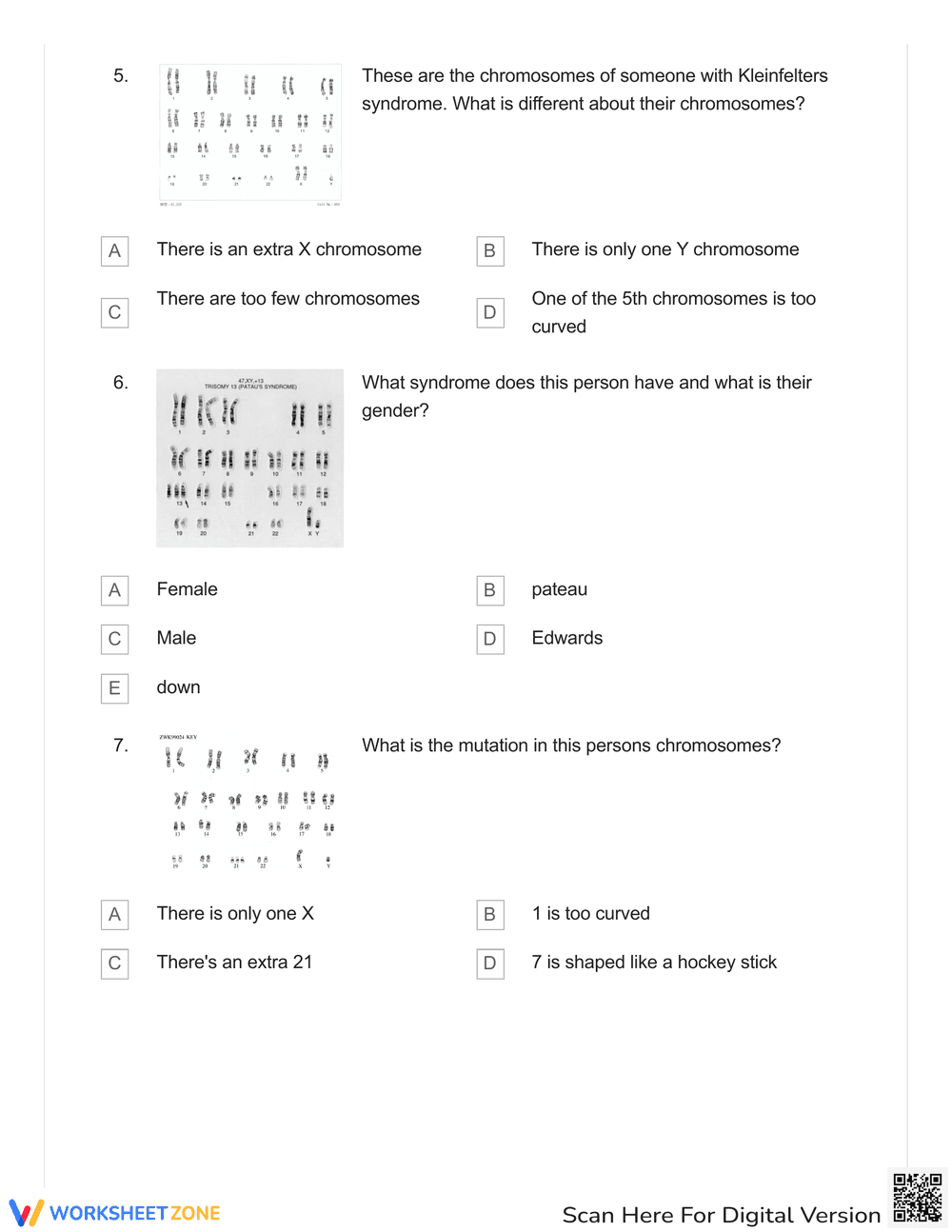
This is a 'Karyotype Quiz' worksheet containing 16 questions. The visible questions involve identifying autosomes, determining biological sex from a karyotype, identifying mutations in a karyotype with Turner syndrome, and determining the number of chromosomes in human somatic cells. The worksheet uses multiple-choice questions and karyotype diagrams. There are also blanks for the student's name, class, and date.
Grade Level Suitability:
This worksheet is suitable for high school biology, specifically grades 9-12. It requires an understanding of chromosomes, karyotypes, genetic disorders, and human biology concepts typically taught in these grades.
Why Use It:
This worksheet helps students assess their knowledge of karyotypes, chromosome structure, and genetic disorders. It reinforces understanding of how to interpret karyotype diagrams to identify sex and detect abnormalities like Turner syndrome. It tests understanding of basic chromosome numbers and types.
How to Use It:
Students should read each question carefully and select the correct answer from the multiple-choice options provided. For questions involving karyotypes, students need to analyze the diagram to identify abnormalities or determine sex. The completed worksheet can be used for self-assessment or graded by the teacher.
Target Users:
The target users are high school biology students, particularly those studying genetics and chromosomes. It can also be used as a review tool for students preparing for biology exams or standardized tests.
This is a 'Karyotype Quiz' worksheet containing 16 questions. The visible questions involve identifying autosomes, determining biological sex from a karyotype, identifying mutations in a karyotype with Turner syndrome, and determining the number of chromosomes in human somatic cells. The worksheet uses multiple-choice questions and karyotype diagrams. There are also blanks for the student's name, class, and date.
Grade Level Suitability:
This worksheet is suitable for high school biology, specifically grades 9-12. It requires an understanding of chromosomes, karyotypes, genetic disorders, and human biology concepts typically taught in these grades.
Why Use It:
This worksheet helps students assess their knowledge of karyotypes, chromosome structure, and genetic disorders. It reinforces understanding of how to interpret karyotype diagrams to identify sex and detect abnormalities like Turner syndrome. It tests understanding of basic chromosome numbers and types.
How to Use It:
Students should read each question carefully and select the correct answer from the multiple-choice options provided. For questions involving karyotypes, students need to analyze the diagram to identify abnormalities or determine sex. The completed worksheet can be used for self-assessment or graded by the teacher.
Target Users:
The target users are high school biology students, particularly those studying genetics and chromosomes. It can also be used as a review tool for students preparing for biology exams or standardized tests.


