


























1 / 9
0
Views
0
Downloads





0.0
0
0 Likes
Karyotyping Lab
0 Views
0 Downloads
Paste this activity's link or code into your existing LMS (Google Classroom, Canvas, Teams, Schoology, Moodle, etc.).
Students can open and work on the activity right away, with no student login required.
You'll still be able to track student progress and results from your teacher account.
Information
Description
What It Is:
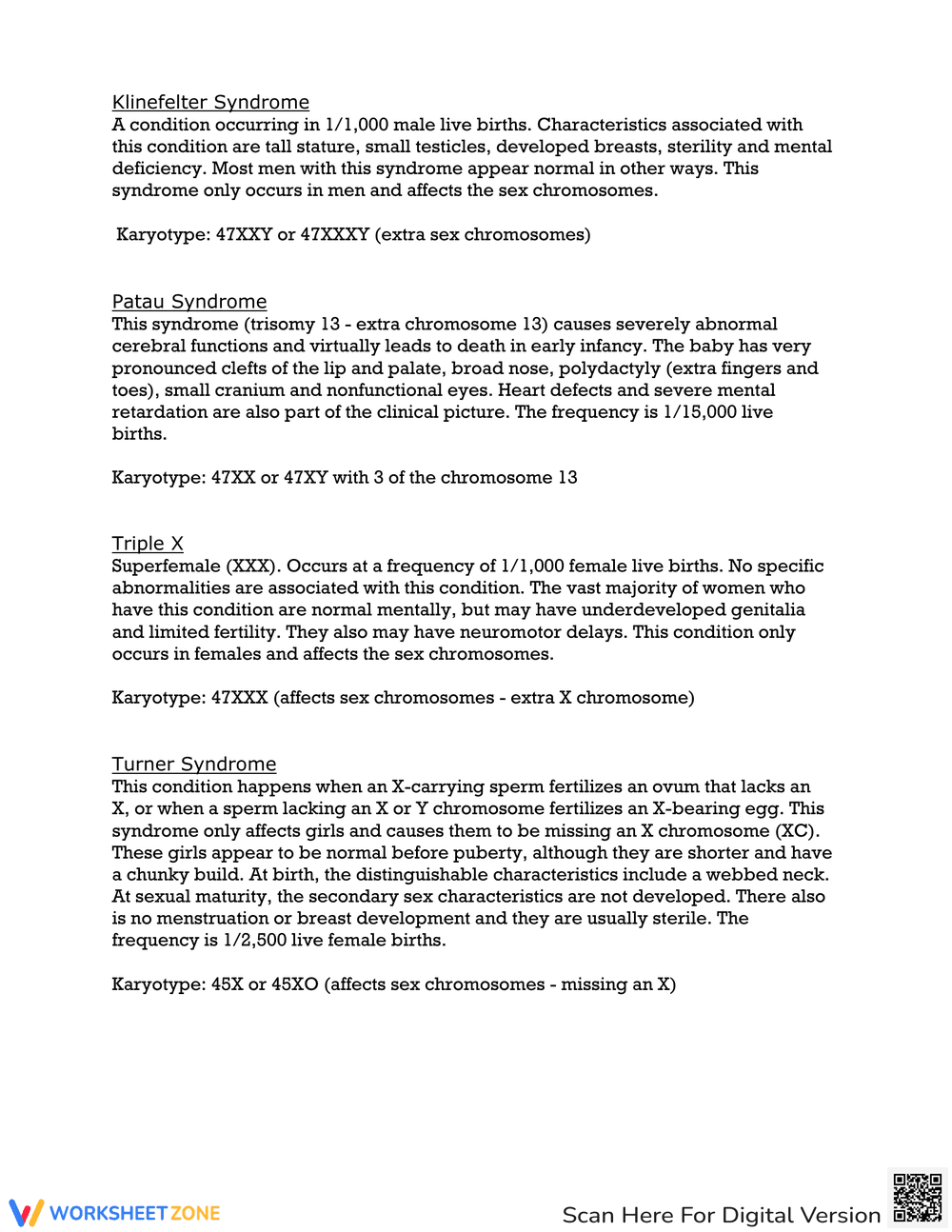
This is a karyotyping lab worksheet. It includes an introduction explaining karyotyping, which is a photograph of an organism's chromosomes arranged in homologous pairs. The worksheet explains how to compare a patient's karyotype to a normal one to identify abnormalities, focusing on the total number of chromosomes, homologous pairs, and sex chromosomes. The procedure section instructs students to cut out chromosome rectangles, arrange them into homologous pairs using a reference sheet, glue or tape them onto a layout worksheet, and answer discussion questions about chromosome disorders.
Grade Level Suitability:
This worksheet is suitable for high school biology or introductory college biology courses (grades 9-13). The concepts of chromosomes, karyotypes, homologous pairs, and genetic disorders require a foundational understanding of biology typically taught at the high school level.
Why Use It:
This worksheet allows students to actively learn about karyotyping and chromosome abnormalities. It provides hands-on practice in creating a karyotype, reinforcing understanding of chromosome structure, homologous pairs, and the identification of genetic disorders through visual analysis. It encourages critical thinking through discussion questions related to karyotypes and chromosome disorders.
How to Use It:
First, students should read the introduction to understand karyotyping. Then, they should cut out the chromosome rectangles from the provided scatter sheet. Using the karyotype reference sheet as a guide, they should arrange the chromosomes into homologous pairs. Next, glue or tape the chromosome pairs onto the karyotype layout worksheet. Finally, answer the discussion questions using the background information and the constructed karyotype.
Target Users:
The target users are high school and early college students studying biology, genetics, or related fields. This worksheet is also useful for educators teaching these subjects and looking for a hands-on activity to illustrate karyotyping and chromosome abnormalities.
This is a karyotyping lab worksheet. It includes an introduction explaining karyotyping, which is a photograph of an organism's chromosomes arranged in homologous pairs. The worksheet explains how to compare a patient's karyotype to a normal one to identify abnormalities, focusing on the total number of chromosomes, homologous pairs, and sex chromosomes. The procedure section instructs students to cut out chromosome rectangles, arrange them into homologous pairs using a reference sheet, glue or tape them onto a layout worksheet, and answer discussion questions about chromosome disorders.
Grade Level Suitability:
This worksheet is suitable for high school biology or introductory college biology courses (grades 9-13). The concepts of chromosomes, karyotypes, homologous pairs, and genetic disorders require a foundational understanding of biology typically taught at the high school level.
Why Use It:
This worksheet allows students to actively learn about karyotyping and chromosome abnormalities. It provides hands-on practice in creating a karyotype, reinforcing understanding of chromosome structure, homologous pairs, and the identification of genetic disorders through visual analysis. It encourages critical thinking through discussion questions related to karyotypes and chromosome disorders.
How to Use It:
First, students should read the introduction to understand karyotyping. Then, they should cut out the chromosome rectangles from the provided scatter sheet. Using the karyotype reference sheet as a guide, they should arrange the chromosomes into homologous pairs. Next, glue or tape the chromosome pairs onto the karyotype layout worksheet. Finally, answer the discussion questions using the background information and the constructed karyotype.
Target Users:
The target users are high school and early college students studying biology, genetics, or related fields. This worksheet is also useful for educators teaching these subjects and looking for a hands-on activity to illustrate karyotyping and chromosome abnormalities.


